This is possibly a bit extreme, imo. In a world that is ever increasingly digital, responsible exposure is without a doubt necessary; However, it seems that one could also inadvertently foster naiveté and ignorance of our digital reality, which has its own potential pitfalls. The "right" answer is probably somewhere in the middle. As usual.
He watches some age appropriate TV daily. He started gaming but probably gets in around a total of 5 hours a month on the switch. It will be the hardest thing not to give into. Right now it’s not allowed on weekdays. And only with restrictions on weekends (eg. All other activities take priority). No smaller screens except on travels it’s a treat. He will get a laptop next year for school but I’m going to try to encourage PC use as a tool/utility and not so much for consumption/media. Phone might be hard but our current community of parents has kind of made a pact so I hope we can stick to it. We will hold out as long as possible and still put some restrictions on it. Thankfully he’s pretty logical and listens to our reasoning and understands the “rules” and doesn’t whine or get rebellious about it (thus far)
It’s not like we’re Amish or shun media.
I'd be interested in reading any more you've previously written on the subject, or any other sources you've based your guidelines on!
I’ve not written on the topic. The main advice I can give is to always be prepared to channel their energy/boredom. We take a backpack of small toys and sticker books and putty/play dough into dine in restaurants. My kid really likes to know what to expect so we prepare him when we know he has to do something boring. Like we went to a funeral when he was 2 and we explained to him that we dressed up to show our respect and we have to sit still and be quiet to show respect. We told him adults might be crying because they’re sad. That’s kind of a weird extreme example but we do small versions of this pretty often.
Find ways to explain to them that even if other kids do something “we don’t do that”. This varies by kid and age. Be consistent and make sure everyone he is with understands (parents, grands, etc). Or set conditions, like only at grandmas or only on weekends. We set a lot of timers. You can play Mario for 20 minutes, he’s gotten to where he just says “yay! Hey Google, set a timer for 20 minutes” lol
I'm guessing it's the "no phone..." part, but that's what seems most important to me. Having an always-available endless entertainment device is a powerful drug. There is a reason we disallow nicotine, alcohol, and cannabis until brains have reached a certain level of maturity / development.
My oldest is 8. He rocks Manjaro and loves (open source) games. We do python lessons together, even though I'm only a hobbyist myself. But compared to the above poster I also have similar goals / limitations for screentime that we try (and struggle) to adhere to, and my wife and I don't plan to allow a smartphone for our son until high school at the earliest.
I don't think disallowing a smartphone is an extreme parenting move. But perhaps I'm misinterpreting what you thought was extreme?
https://en.wikipedia.org/wiki/Bowling_Alone
A book published in 2000 based on an essay from 1995. I remember my sister took a university course on it.
The Internet only replaced social interactions for a tiny group of enthusiasts at that point and "phones" were the size of small briefcases and were novelties in cars at that point (1995).
Declining socialization has been happening for _decades_ and people are overly focused on smartphones as a cause.
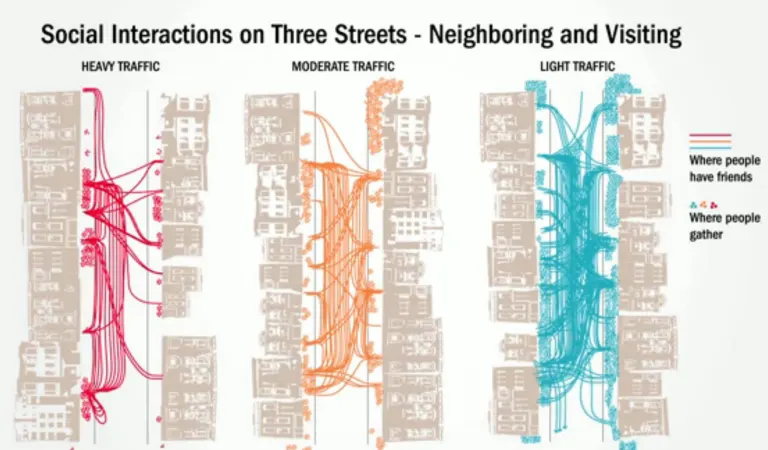
https://www.fastcompany.com/90653986/traffic-devastates-loca...
As we've become richer, we've bought more cars, we drive them more often, and to further locations. The amount of vehicle traffic and parked cars in neighborhoods have long exceeded the limit for how much you can have before streets become unsafe. This is why children can't go outside unsupervised anymore: there are too many cars, going too fast, and too many parked cars that are too good at hiding children about to run into the road.
You have to get rid of the cars, or limit their use somehow. Eliminate on-street parking. Get rid of monster trucks and SUVs that can only see the ground 22 feet away. More speed bumps and traffic calming.
This really isn't it. People think their kids are going to get murdered/kidnapped/assaulted. "It's 10PM, do you know where your children are?" was a local news promo. You had "news magazine" TV shows designed to frighten parents which were just tragedy porn for attention.
"My kid is going to get hit by a car" isn't why kids don't go out and play any more, it's the news manipulating culture for decades.
Your kid is going to be so alienated from the other kids...
As it’s picking up steam, I’ve been hearing stories recently about how our local “school district decided to ban phones from classrooms” and just yesterday it was “the school will no longer allow food delivery services to drop off food”. Like, educators, WTF, why was that ever an option? In my days long ago, 80s-90s primary school, there was a zero tolerance policy for this stuff. Why was it ever deemed allowable? I can see letting kids keep their phone in their locker or create some storage solution for it. For emergency purposes. But in emergencies, the parent should be able to call the office and they can fetch the kid. It worked just fine in the days of landlines.
It’s hard for me to understand the parenting styles that demanded and allowed this stuff to take place, because I’m sure it was parent driven. But there’s so much else to the parenting styles that are contributing to all this stuff. Banning outdoor play and independence is why they’re online so much and why the arcades and third places all disappeared.
I say all this as a parent of an almost 6 year old boy, doing everything I can to shield him from the wacky parenting style that seems to be the norm and provide him places of community and activities away from screens. He won’t have a phone until he drives, or maybe just a basic flip phone if we think we need a communication line to reach him when he’s a bit older.