The example brutalist churches in another post here look like someone doing a horrible experiment in the Sims made buildings without bothering to use anything but some default wall texture they found buried in the dev tools that doesn’t even tile very well, because they just needed a place to torture Sims in and don’t care what it looks like.
Yeah, that comes off as oppressive.
Early modern churches direct you to the preacher.
Modern churches direct you to the architect. (Or building repair services depending on whom you ask.)
https://static.dezeen.com/uploads/2024/04/sacred-modernity-b...

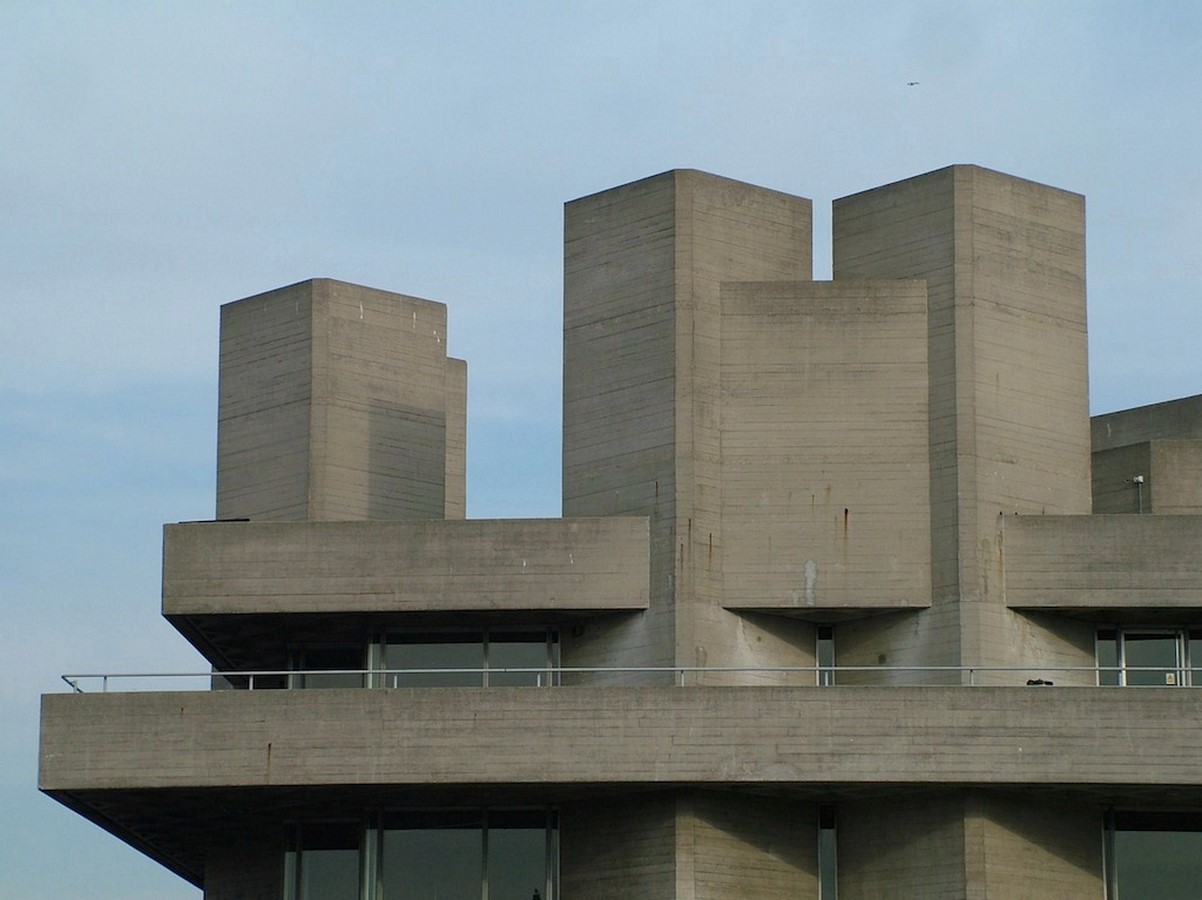
You think this is well thought.
> hulking concrete bunkers like some of the institutional brutalism you see.
Please make more thoughtful responses in the future.
Please think more next why people disagree with your opinion. Also see it as a hind to be more thoughtful why brutalism is so unpopular.
I always find it weird when people have this „everyone hates it“ attitude with no real commentary whatsoever.
Do you live in a area with brutalism ? (if not , why do you like it?) Have you ask random passengers about their opinion?
But I am happy to know that brutalist churches in Germany will be destruct at first than older churches.
A point of brutalism is "form follows function and "showcase the bare building materials" (1) - in other words, that's how the material looks, naturally. Bare, unpainted concrete is in fact more natural and honest than painted concrete. And brutalism deliberately leans into that naturalism (of modern materials).
I am still buffed they are people defending brutalism. It is one of the biggest mistake in Architecture and one day these buildings will vanish.
You are confused, describing is not the same as defending.
> It is one of the biggest mistake in Architecture
I don't necessary agree, but I didn't even take a position on that.
> and one day these buildings will vanish.
Over enough time, so will all buildings. But the sturdy one will last longer.
Including, I should mention, most of those in TFA.
I also think in the sense of how a church in 1500 was not a relic of the past the way we view a church from 1500 today. I would say a church from 1500 was much closer to what the churches in this article would have been in 1500.
Of course, there is a real issue that while I find these amazingly beautiful I would never go to one because I am not the least bit Christian or religious.
I've generally found the Brutalist buildings in Texas rather ugly on the exterior at least, but did find a sense of comfort in occupying them; perhaps there's something cave-like and solid about their atmosphere. I did enjoy visiting the Water Gardens; I think it's a good expression of the style.
However, many of the churches pictured here are on another level. Something about the austere concrete juxtaposed to the wooden pews (and speaking as someone raised Catholic, it's hard to imagine a pew brutal enough to satisfy god) works quite well for me. I'm really impressed by some of these.
When there is enough space, such as in a church, library, public transport infra etc, the concrete monoliths suddenly become more distant and less threatening and you can really appreciate the effect of being in some kind of ancient future ruin.
I disagree. Brutalism is based on dropping any pretense of the material used to construct the building. No shiny glass veneer or facade, just concrete buildings reveling their concreteness with no artifice. If large middle age cathedrals are supposed to inspire a sense of the devine, then IMO brutalist churches inspire a sense of guilelessness.
When people talk about the divine, especially in the Abrahamic traditions, it's common to talk about what God isn't. (negative theology). You shouldn't make an image of God. To approach the divine is to remove everything that isn't divine and experiencing what is left over.
And I think that's fantastically realized in the austerity of these churches. I've visited some of them, my favorite one isn't actually mentioned here, it's a pretty small church outside of Osaka, the Church of Light by Tadao Ando. (https://youtu.be/7ZtfYOD5I8M)
These church spaces eschews color and decoration and instead shape the light and the space itself to give you a feeling of the divine.