Trade dress is the wonky red-headed step-cousin of the family that fills the gaps between the three; you might think of it as a trademark on design elements that trigger consumer recognition. [...] Apple's claim is that the iPhone's box and design scream "Apple" to consumers just as strongly as the word "iPhone."
Consequences matter, the intent and spirit of the law matter — lobbying, laws, case law, patents and injunctions are decided by humans — which is why it's important to counteract the claim you quote, that this is about protecting customers from being confused about what they're buying.
Trade dress law is well-established, and Apple itself has a history of successfully pursuing trade dress claims in the Northern District of California. In 2000 the company sued both eMachines and a company called Future Power for knocking off the iMac's trade dress, winning injunctions in both cases and eventually getting extremely restrictive settlements that effectively removed the infringing products from the marketplace.
The eOne: http://lowendmac.com/imac/eone.shtml
Article about the case: http://zdnetasia.com/apple-stops-sales-of-imac-knockoffs-130...
Here is what makes community designs a step up from other roadblocks against competitors: http://www.osnews.com/story/25056/The_Community_Design_and_y...
This is closer to flipping the Pepsi logo upside-down and selling cola, then bitching about how unfair the patent and trademark system is.
A closer analog would be selling, say, a cola in a 12 oz. blue, red and white can with white lettering: http://goo.gl/q5k8n
This case mirrors the eMachines case where they were selling something that looked pretty similar to an iMac.
How can consumers be confused about what they're buying? Even if their software appears similar, one device has a large Apple logo on the back and is sold almost entirely through a different retail chain.
http://allthingsd.com/20120323/best-buy-is-selling-nearly-as...
Vodka, water, same color. iPhone, Galaxy S.. not even the same color. Just a vaguely similar shape. Heh.
Also outside of the US (and pretty sure in the US as well) the same retail chains will sell all types of tablets including iPads.
I don't believe design patents hinge on whether the consumer would be confused; that's for trademarks. Design patents are for protecting the aesthetic idea, just like regular patents are for protecting a technological idea.
That combination of features is not unique.

The JooJoo does not include three of these items: the "square icons" on the home screen, the dock of, again, "square icons", and the "metallic surround framing the perimeter of the top surface". Thus, this doesn't apply (at all) to the JooJoo.
On the other hand, the original Galaxy S phone did seem to apply to each one on the list: http://cdn3.sbnation.com/imported_assets/844649/2011-04-19ap... — metallic border, check; rounded square icons, check; dock of round squares, check; rounded rectangle shape, check; equal sides of black borders, check; dominated by screen, check.
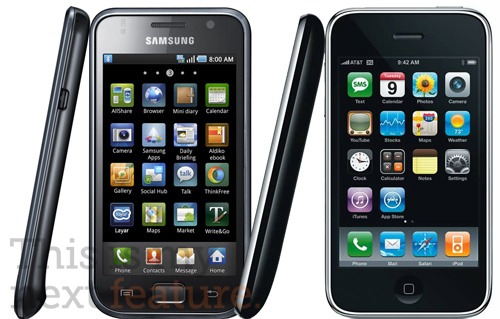
A good example for mobile devices would be the jeans, bags, sun glasses etc. Where resemblance to fashionable brand matters however the logo or tag matters the most.
All that said, I am fine with my Rasberry PI and Linux.
Nilay Patel, in the Verge article linked by Android Community:
Now, some of these are a little ridiculous when taken individually — is Apple going to sue every digital photo frame maker that puts equal size black borders around the screen as well? — but in the end, the main question for the court will be whether or not Samsung has used all of these elements in a way that's likely to confuse consumers about what they're buying.
(Edit: is this wrong? If not, why downvote?)