Edit: There is archaelogical evidence from the stone age of shared work, namely in the form quarries in which the stone for the stone tools, axes, spear and arrow tips and the like, have been collected.
- Agriculture: 10,000 years ago - Hunter-gatherers: 200,000 years ago
And yes, that is a constant threat for the few true hunter-hatherer societies still left. Or why do you think they are so few in number? Hint, it is not an abundance of food.
it was not an easy life, for sure. but, "constant malnutrition" is also incorrect.
Then it wasn't play.
Similarly in hunter gatherer societies you don't see many malnourished individuals, you see graves.
it also suggests that we in modern society are basically domesticated/in a zoo compared with our hunter-gatherer ancestors, which doesn't really sound like the better option to me
No, but struggle is.
And now we're bringing that back with the lack of money causing the exact same thing, though IMO it's more offensive because the food needed to resolve the problem is literally right in front of the starving people, they just can't have it because they have earned insufficient value credit.
Or, if they have enough for it, they can have nutrient-void shaped corn "food" that their bodies can't process and will make them fat while also simultaneously not actually sustaining them and leaving them even worse off by some measures.
Missionaries and colonisers, at least that was the case in this part of the world.
Before M&C hunter-gatherers were everywhere: https://mgnsw.org.au/wp-content/uploads/2019/01/map_col_high...
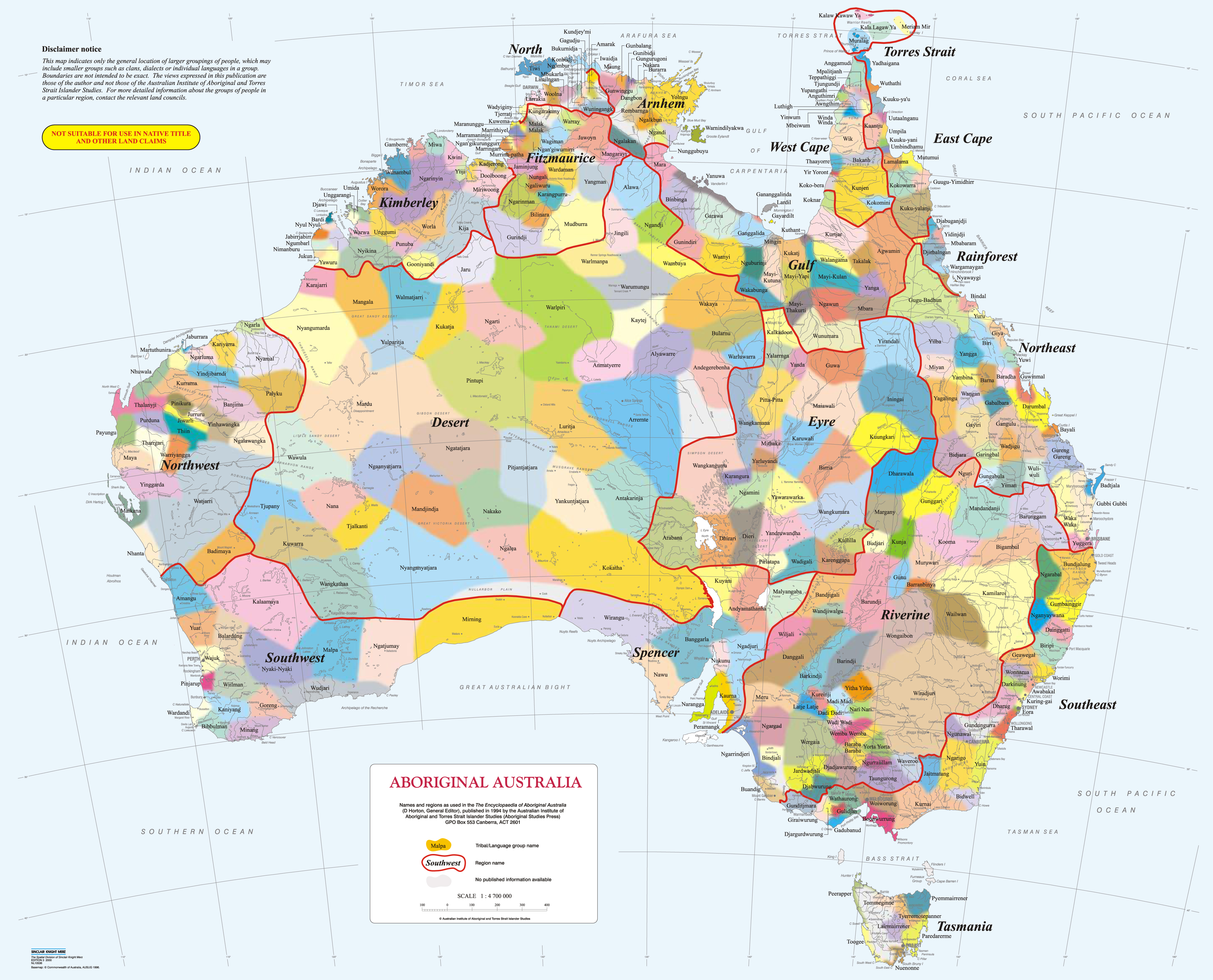
Afterwards, not so much.
Native - "What, we're just healthy"
That's the wrong part. I believe there's no known history of famine in hunter-gatherers. That only really became a thing with agriculture.
Hunter-gatherer populations were small; there was plenty of food generally speaking. Which is why relatively so little time had to be spent acquiring it, in comparison with the back-breaking worth of agriculture.
Of course, once agriculture started using up all the land that was previously being used for hunting and gathering, well then hunting and gathering was no longer viable. But that was something new with the introduction of agriculture.
"Here, we analyse famine frequency and severity in a large cross-cultural database, in order to explore relationships between subsistence and famine risk. This is the first study to report that, if we control for habitat quality, hunter–gatherers actually had significantly less -- not more -- famine than other subsistence modes."
carry on.
Pardon my word play on applying the word "play" to a society that constantly faced severe consequences of literal hunger...
Perhaps we could all spend less time generating empty rhetoric online and more time engaged in what we claim to be via logic, our real concerns
It feels really disingenuous when all the pearl clutching office workers go home to video games not a soup kitchen. Spend their weekends hiking not nursing the sick, fixing poorer people’s homes.
Modern day infantilized office worker crowd is the most off putting group of people I’ve ever encountered.
Never saved random string I set password to and am logging off now
Violence has been attested to in many of the remains that made it to modern people for study.
Division of labor in hunter gatherers is the only real way to explain Gobekli.
Contemporary evidence puts figures of about 25% of Hunter gatherers men dying violently and 15% of women and children: https://onlinelibrary.wiley.com/doi/full/10.1002/evan.21446
"Small- and medium-scale collective violence, in the form of confrontations between neighboring groups, may be as old as humankind [e.g.,1, 2]. By contrast, larger-scale organized and sanctioned lethal violence between sociopolitical groups (i.e., warfare), seems to be associated with certain socio-economic conditions that generally accompanied the shift to a farming economy,3 such as higher population densities and greater degrees of sedentism4, 5, in parallel to the increasing importance of resource ownership and property that led to the concentration of resources and power [e.g.,6, 7]."
[1]https://www.nature.com/articles/s41598-023-43026-9
The references above:
1. Fry, D. P. Cooperation for survival: Creating a global peace system. In War, Peace and Human Nature: The Convergence of Evolutionary and Cultural Views (ed. Fry, D. P.) 543–558 (Oxford University Press, 2013).
2. Kim, N. C. & Kissel, M. Emergent Warfare in Our Evolutionary Past (Routledge, 2018).
3. Fibiger, L., Ahlström, T., Meyer, C. & Smith, M. Conflict, violence and warfare among early farmers in Northwestern Europe. PNAS 120(4), e2209481119 (2023).
4. Ferguson, R. B. Archaeology, cultural anthropology, and the origins and intensifications of war. In The Archaeology of Warfare: Prehistories of Raiding and Conquest (eds Arkush, E. & Allen, M.) 469–523 (University Press of Florida, 2006).
5. Fry, D. P. & Soderberg, P. Lethal aggression in mobile forager bands and implications for the origins of war. Science 341, 270–273 (2013).
6. Golitko, M. LBK Realpolitik: An Archaeometric Study of Conflict and Social Structure in the Belgian Early Neolithic (Archaeo Press, 2015).
7. Bogaard, A., Fochesato, M. & Bowles, S. The farming-inequality nexus: New insights from ancient Western Eurasia. Antiquity 93(371), 1129–1143 (2019).
8. Chenal, F., Perrin, B., Barrand-Emam, H. & Boulestin, B. A farewell to arms: a deposit of human limbs and bodies at Bergheim, France, c. 4000 BC. Antiquity 89, 1313–1330 (2015).
Which is more violent? 10 people killed out of a tribe of 100? Or 100 people being killed out of a city state of 10,000 people? The latter is 10x more violent in raw numbers, but it's a lower rate of violent death.
Yes, agricultural societies had larger populations and had the ability to organize larger armies than hunter gatherers. That's not doubted by anthropologists or historians. The point is that the small scale hunter gatherers violence was still more violent proportional to the population than warfare in agricultural societies.
You’re talking about brief intermittent literal “sticks and stones” based “warfare.”
The entire transition into the neolithic was based on violent and persistent coercive usurpation of land and resources.
So what was intermittent became persistent and over arching. For example, slavery is a nonstop, coercive warfare condition.
Further warfare itself became larger scale, bloodier and more impactful on your average citizen, with entire populations killed as opposed to people here and there in select group of class.
I can tell you that the brutality of modern wars, and when I talk about modern, I’m talking about Rwanda, World War II, the Japanese invasion in China etc…
These are unmatched in pre-agricultural periods if for no other reason than the technology and depravity of concept (copper bulls are uniquely terrifying creations of pain) didn’t exist yet.
So neither the scope, type, nor scale of persistent warfare will ever match the period 0-2000AD
My whole point (and the point of the body of research cited above), is that this "brief intermittent" warfare was, proportionally, more lethal than both agricultural and industrialized warfare.
Again, which is deadlier: a group of 10 people killed out of a society of 100 people. Or a group of 100 people killed out of a society of 100,000 people? Yes, warfare with literal sticks and stones kills fewer people than organized agricultural armies. But pre-agricultural populations were so much smaller that the proportion of people killed violently was larger than in agricultural societies.
> For example, slavery is a nonstop, coercive warfare condition.
About a quarter of hunter-gatherer societies practices hereditary slavery [1], so this is also applicable to hunter gatherers.
>These are unmatched in pre-agricultural periods if for no other reason than the technology and depravity of concept (copper bulls are uniquely terrifying creations of pain) didn’t exist yet.
They were unmatched in absolute terms because populations of agricultural societies were way larger than hunter gatherers. Again, in proportional terms, pre-agricultural societies were substantially more violent.
The takes you're describing here were popular from the 1950s through around the 1970s, and it's easy to see why the "noble savage" perspective was compelling: If humankind was inherently good and peaceful, and it was society that made humanity into violent beings then we could undo these changes. But after evidence about pre-agricultural violence became more clear, this view has become a lot less popular outside of activist academics. It's sobering to realize that the 20th century was the most peaceful century in human existence so far, but that's the academic consensus.
I also disagree with your calculus. 1 million deaths is worse than 10 irrespective of the overall denominator.
Even if I granted your hypothesis, there are more people pervasively living under coercive threat of death than any other time in history.
However it is my claim that pervasive violence was caused by QME via the creation of domination based systems. You can read my thesis here:
https://kemendo.com/Myth-of-Scarcity.html
So far every expert in this field that reads it thinks it is likely correct.
To wit, Riane Eisler read this and asked me to edit and submit the IJPS so I expect (hope) that it will take off from there and real anthropologists can test the hypothesis further to give it more power.
Your thesis focuses almost entirely on resource scarcity, not the prevalence of violence.
> However it is my claim that pervasive violence was caused by QME via the creation of domination based systems. You can read my thesis here:
And your claim has a massive hole in its logic: Proportionally (that is, how many people out of 1000 died violently) violence decreased with the advent of agriculture, not increased. The violence that did exist was larger in scale but so were populations. Violence became less pervasive with the advent of agriculture, not more. Your claims are based on the false premise that agricultural societies were more violent than hunter-gatherer societies.
The idea that violence was less pervasive in pre-agricultural societies was the popular view (the Rousseauan view, if you've read the literature) for a while up until the 1970s. But it is pretty firmly contradicted by the available evidence we have today. Both archaeological and case studies of existing hunter gatherer populations show rates of violence substantially larger than both agricultural societies, and industrial societies - on the order of 5-10x more violent than the 20th century despite two world wars. You can still find academics that insist on the Rousseauan views on hunter-gatherers, because they've used that assumption as the foundation for a large body of their work. But that doesn't make it true.
Look at all the references I gave you, so unless you wanna bring references then I’m done
> In any case, the rate is clearly elevated compared to overall crude prevalence rates of individuals with unhealed trauma estimated for the European Neolithic, which are on the order of 2–5%.
To recap:
Hunter-gatherers: 10-20% rate of people die violent deaths.
Agriculturalists: 2-5%
Industrialized societies: 1-2%, maybe even under 1%
See War In Human Civilization by Azar Gat for a detailed explanation of the shift in warfare between hunter gatherers, agriculturalists, and industrial societies. The proportion of people who died violent deaths was way higher in hunter gatherer societies,
I saw that paragraph with a ton of endnotes, but it didn't even engage with the core point: That the rate of violence was larger in hunter gatherer societies than in agricultural societies.
> Small- and medium-scale collective violence, in the form of confrontations between neighboring groups, may be as old as humankind [e.g.,1, 2]. By contrast, larger-scale organized and sanctioned lethal violence between sociopolitical groups (i.e., warfare), seems to be associated with certain socio-economic conditions that generally accompanied the shift to a farming economy,3 such as higher population densities and greater degrees of sedentism4, 5, in parallel to the increasing importance of resource ownership and property that led to the concentration of resources and power
Again it doesn't matter if the warfare grows in scale if the population grows even larger. What percentage of hunter gatherers dies violently at the hands of other humans? What percentage of agriculturalists died at the hands of other humans? This question isn't even touched on here. Again, if all you're trying to say is that warfare grew in scale in agricultural societies absolutely yes we agree! But the population grew even larger, and thus the overall rate of violence went down.
Again which is deadlier: a group of 10 people killed out of a society of 100 people. Or a group of 100 people killed out of a society of 100,000 people? The reason why I keep asking you this, is because if all you're trying to claim is that warfare grew larger and more organized in agricultural societies, but overall violent mortality went down then we have no disagreement. But if your claim is that people are less likely to die violently in hunter-gatherer societies than in agricultural societies, then no, that's not what the existing consensus is.
What you described is a pop-culture idea of pre-history, nothing like what the actual research and literature shows.
I suggest you start with Claude Lévi-Strauss' but that's only if you're interested in spending years learning, The Dawn of Everything is more recent and more accessible most likely.