Every device/vehicle/system now needs to be connected to the internet and needs you to download an app.
Is that for the consumer? No. That's for the manufacturer.
For milking be reselling your data and/or spying on you and/or charging extra because they can and/or the capability to turn any device into literal trash by not providing updates or bug fixes to a half-baked alpha software that it shipped with.
Blame your government. There could and should be laws against that or at the very least incentives to prevent it.
In a democracy the government is a proxy for the people. I blame the people. If the majority was conscious of their rights (or at least what these rights should be) the governments would have no choice and they'd bring laws that protect these rights. Yes, no democracy is perfect, there are lobbyists, corruption etc, but if the large majority of the population wants something all these lobbying and corruption can only delay it.
The issue with the government(s) is a symptom, not a cause. The cause is that the majority of people have no spine. They'll sell their privacy and rights gladly for a tiny bit of perceived convenience, entertainment or status. It's like this famous saying "people that are willing to sacrifice freedom for safety deserve neither". Substitute privacy/ownership for freedom and convenience/entertainment for safety and it will still be true.
Neither me nor my partner own a smartwatch/health band. Why? Because we literally found no brand that could be used without setting up silly "online accounts" and having our personal details (including health) harvested. The pine watch is an exception, but last time I checked the software was not ready for daily use.
Personally, despite the above, I'm a "long term optimist". I think people eventually will learn to value their privacy, their right to ownership/repair and they will stop buying and using devices and software that infringe on these rights. But not before a generation or two come and go.
Consider other revolutions in human condition. For example the industrial revolution. It brought magnificent benefits, but also (especially initially) it was horrible for many people including children. Eventually the masses started paying attention and worker rights were established, but not a second before the majority was ready to sacrifice a lot to fight for it. It will. Be like this with our "digital revolution".
Psychology is a science that studies human behavior, and like all sciences it works mostly. As a result, human minds can be easily hacked by those with the motivation to do so. Psychological science can be employed, things like A/B testing are very effective with enough data, which our digital systems easily provide. Ads are the wholesome version of that, because they are overt. We know the ads are trying to change the way we think and act. Corporate news is an example of the less wholesome side of using psychological science against humans. The humans aren’t to blame. Humans are animals and easy to hack, and our economy is largely, mostly I’d say, based on people hacking/behavioral engineering.
Which boils majority democracy down to the median level of education.
How does that mean they have no spine? It sounds like they made a decision on what was more valuable to them. You could argue that they might not have been fully informed. But I think the reality is that they just don't care that much because they don't feel harmed by it.
I could easily see things going the other way, where the lack of digital privacy becomes even more of an unquestioned norm. These things can hold in a kind of equilibrium as long as the entities that hold the power don't use it to cause perceived harm above a threshold. We have the technology to do a lot more scanning of license plates, facial recognition, automated speeding tickets, etc. I'm kind of an optimist in that I think people will generally maintain this balance.
And greed starts to become an issue when managers think they need a raise.
But to be fair, if you're not an engineer is there much else you can take pride in other than driving up profits by whatever means?
What about the incalculable environmental factor for all of this? Nobody cares.
Schematics for things sold, are never trade secrets.
e.g. Apple's fixed glass trackpads
Also by definition they cannot be 'invalidated' since trade secrets are never 'validated' in the first place, unlike patents, copyrights, or trademarks.
That's not how trade secrets work. If you give me a device, and I figure out how that part of it goes together, the trade secret dies. There is no protection except an attempt at secrecy, and once someone is retail sold hardware, they may do anything they choose with it, thus the idea of trying to maintain a secret, when it is in someone else's hands, is silly.
Also by definition they cannot be 'invalidated' since trade secrets are never 'validated' in the first place, unlike patents, copyrights, or trademarks.
Trade secrets are valid, until they no longer are. Copyright (in many jurisdictions) require no validation either, they're merely valid upon creation.
You can't dodge this point, which you appear to be doing as I never claimed copyright law is the same in all jurisdictions worldwide, nor was it implied.
If you don't understand how these things work, it's better to not make bizarre claims.
What on earth are you even talking about?
Regardless, you can invalidate anything. EG, one can make a claim "Hey, that manufacturing process is my trade secret!", and that claim can most certainly be invalided. It can also be validated.
This:
> Trade secrets are valid, until they no longer are. Copyright (in many jurisdictions) require no validation either, they're merely valid upon creation.
Some types of copyright requires approval via some organized entity in many jurisdictions, that is easily discoverable via a quick Google search by any passing reader. The prior comment appears like a deflection from the main point, since the fact that some jurisdictions operate differently is simply irrelevant as I never claimed otherwise, nor was that implied anywhere in the preceding comment chain.
Like I said you can't avoid the fact that 'invalidating' trade secrets makes no sense. They can be revealed, they can become so widely known that the label no longer applies, and so on.
But 'validity' whether legal, logical, etc., can not apply to them.
And in any case there are many real world products which so far have not been reverse engineered to a sufficient degree to recreate, such as the fixed glass trackpad previously mentioned. If you can prove otherwise then I would welcome a link.
In terms of validation, I have no idea why you think one cannot invalidate someone claiming to have a trade secret. You can literally invalidate anything, someone is trying to assert as valid.
A bottle blonde could claim that is their original hair colour, and one could invalidate that claim too.
You seem stuck on an internal definition of 'validate'. Your internal definition seems wrong.
Anyways I agree this is a tangent from the main comment chain, if that's what your implying. I included the last paragraph for that reason:
> And in any case there are many real world products which so far have not been reverse engineered to a sufficient degree to recreate, such as the fixed glass trackpad previously mentioned. If you can prove otherwise then I would welcome a link.
The classic example was during the 90s. A company was building a new factory, and as a result, it was open to the air. A competitor, wanting to legally discover how the manufacturing process of the company was orchestrated, flew over the construction site, taking photos, pictures.
The competitor claimed, that they obtained such information without trickery. The company said that they had taken reasonable precautions, to conceal their manufacturing process, with employee NDAs, and security around the construction site, yet ... that there was absolutely no precaution which could be taken to protect from plane or satellite, and thus, the took all reasonable precautions. That the plane + photos were akin to someone sneaking into the factory, and taking photos as well.
The company won, their trade secret was protected.
The point of this illustrative story, is that reasonable attempts at secrecy of things such as manufacturing processes must be attempted.
A key part of a trade secret is in its name, secret. You cannot keep a secret in public, and even if you do, for a brief period of time, you are not attempting to conceal it if everyone and their dog may look at it. Nothing you sell to a consumer is a trade secret. Nothing. Not a single thing.
You may have a trade secret in how that product was made, but you do not have a trade secret in how that product fits together. At all. A schematic of a circuit board is not a trade secret, and this is the context you started this conversation on.
To speak to this, if anyone, ever, discovers how to take apart and repair this glass trackpad you discuss, there is no trade secret, and no judge will ever ever help anyone enforce protections on the same.
To put it another way, and going back to the example at start of this message, if you hold tours of your factory with trade secret manufacturing processes in it, you no longer have trade secret manufacturing processes. Your competitors may tour it at whim, as part of the tour group, and use such information to derive and copy your no longer enforceable trade secrets.
That's simply how it works.
And there's nothing more public than selling something to the public.
I think you are confused, because Apple may claim it's a 'trade secret', in how they manufacturer said glass trackpad. But the part in consumer hands is not a trade secret. You can put the blasted thing under an x-ray, an electron microscope, and yes these are valid ways to examine things, and there's literally even remotely a trade secret to enforce from this angle.
This, any schematics provides are not going to invalidate what already exists.
I won't bother looking back at this any more, for two reasons. First, it's falling off the first page of my comments I look at, for replies. And second, your over the top, absurd attack on a correct use of the word 'valid' is quite odd, and smacks of a lack of good faith.
You've said your part, I've said mine, and I don't see much value beyond my extended attempt to discuss my reasoning re: trade secrets, how I believe they work, etc. above.
Oh, one final note. I've noticed some larger corporations, and some dark corners of the legal profession attempt to shift the line in terms of rights. We've seen absurd attempts at this in the last 20 years, and we've seen industry practices which are in effect for 10 to 20 years, in terms of IP shot down again and again.
Part of me suspects you may have fallen into a trap, where perhaps Apple claims something they cannot claim, such as extending trade secrets to devices held in people's hands. If they are, they will fail in this, unless there is a deep legislative change, and even then I doubt it won't be kicked, and you should not listen to such absurd claims.
They don't, at least not for modern products of some intricacy.
Going back to the example of Apple's glass trackpad, there's a decent chance that literally every Macbook ever sold with it has a unique trackpad, because some transistor(s) were slightly off, due to manufacturing tolerances, requiring slightly different resistor(s) to compensate, etc..., and so on.
And there are hundreds of components just in the trackpad.
So even in the literal sense of examining it under various microscopes and so on, I think it's pretty fair to say that it's secret enough for it to be very very difficult to recreate.
But this all seems like arguing at windmills, because in practice, Apple's shareholders, board, management, employees, suppliers, customers, and competitors behave as if it was a trade secret. Which is more then sufficient for all practical purposes most HN readers are concerned with.
People have a right to know what they're buying. Companies are testing legal and cultural boundaries, silently changing functionality and usability by altering software or access to required services after sale.
It's not "too complex", it'd just be a hassle if people knew.
If you don't Microsoft, one of the wealthiest corporations in existence, will steal your copy of minecraft that you purchased elsewhere.
Sorry if this isn't on topic, I'm very salty over the migration.
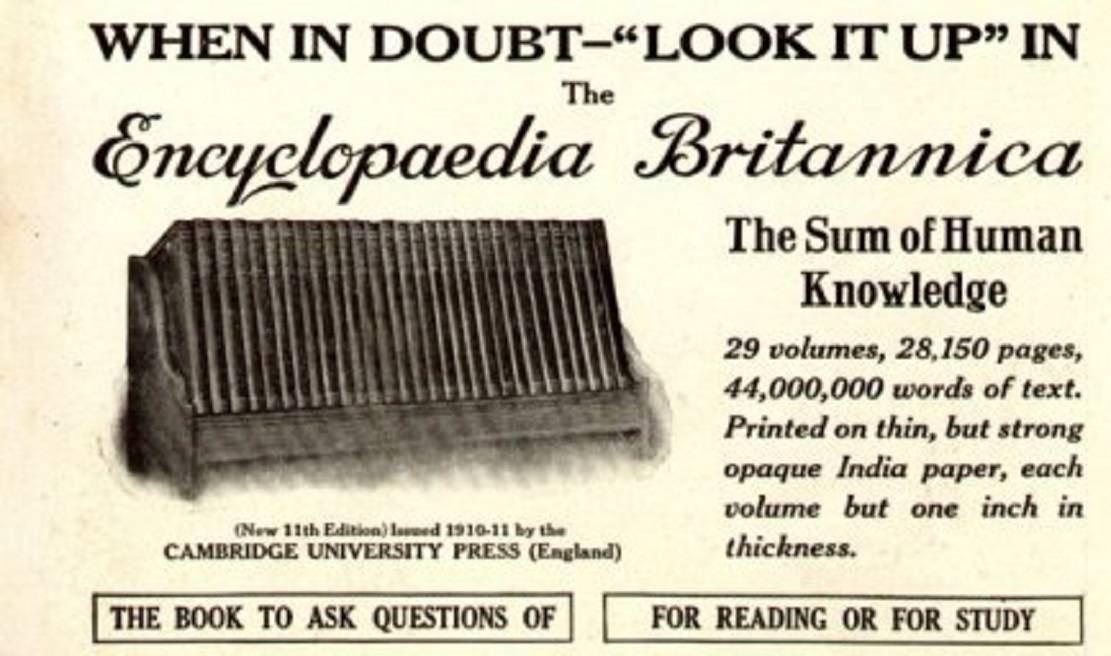
A valve radio had ~50 discrete components[1]. The first semiconductors had triple that number of components in a square millimeter in 1971[2], a modern CPU is in the tens or hundreds of millions of transistors per square millimetre. That's more components than the Encyclopedia Britannica had words in 29 volumes[3]. How are you going to 'know what you're buying' if you don't know anything about the bit which makes up most of the complexity and does most of the work? How are 'people' going to know anything about the CPU by getting lumbered a dozen bookshelves worth of schematics?
[1] One 1960s valve radio schematic found from Google: https://1.bp.blogspot.com/-Is9qxCCu2S8/VmZ44qHP1nI/AAAAAAABQ...

[2] https://en.wikipedia.org/wiki/Transistor_count#Transistor_co...
[3] https://patricktreardon.com/wp-content/uploads/2016/06/Encyc...
Even a fairly old ARM based CPU such as in the Pi 4, has billions of transistors. And miles of wiring.
But that's still a different argument to the one I was responding to which was "People have a right to know what they're buying" - and the claim that products are "not too complex" for that. At the point we turn it to a diagram which says "fuse connects to System-on-Chip blob ground pin 0 and data pin 7. Button board connects to blob ground pin 0 data pin 8" are we any closer to "knowing what we're buying" in a meaningful way?
My Commodore64 had full motherboard schematics in the manual, and I had a 90s tube TV with schematics inside the back of the case.
This change, lack of docs/schematics has happened over a mere 20 years.
And if I remember correctly, the tech. manual was something like $20.00 (in circa 1984 dollars, roughly $58 today, and you got about 400 pages of paper, printed on both sides.
So while schematics did not "come with the product in the retail packaging" one could obtain them with only the trouble of ordering a ~$20 (at the time) "book".
As someone who found computing in general through the joy of taking broken electronic things apart and trying to fix them, it does sadden me too when I see a black blob over a circuit board but most people are just happy they're cheap and easy to replace and toss em away. Most developers I know today can't understand basic electrical circuits, even though they are the very foundation of everything we do. But like my previous analogy, most would rather just see the magic happen when they install something, write a little bit of code, and see results.
Some of us do value privacy, security, and even the underlying things that make stuff work. We're in the minority. The vast majority of people simply don't even care. I've tried explaining it to my wife, or my mother, that some piece of software might track them, know about them, restrict them, whatever, and the opinion I usually get back is "Oh, it doesn't already do that?" People joke about Facebook ads being something they just talked about all the time and it doesn't even phase them that the reality is very near to that.
People simply don't care enough to make a change in the laws that would prevent things like this.
A sneak peek may be coming with what some states are doing to police travel for abortion. Does the algorithm think you might be pregnant? Congratulations, you may now be stopped on state lines and charged with a crime because you are driving someone one state over. Even if you have no intent of getting an abortion you may have to prove that in court if a prosecutor is feeling particularly self righteous today.
People in the US are not accustomed to totalitarian politics. We have rights. But loss of those rights are one populist demagogue away.
When that happens all that surveillance and remote control will suddenly become as relevant as Antarctica’s Thwaites glacier would become if it fell in the ocean.
(Left wing populist demagoguery and authoritarianism are possible too. I’m just picking on the right wing sort because it’s the kind that has traction most recently. But that too can change.)
I'm turning to the opinion that if we really want to fix this, we need to have government mandates that "takeout" style exports are provided by every company/service, in a standard machine-readable format.
If you collect and store any personal data about a user, there needs to be a standard way for them to request a usable copy.
Then allow third parties to build tools that work with those to educate users, which is why standard and usable format are key criteria. E.g. "visualize what X knows about you"
It's the details that would motivate people, but the details are precisely what's invisible right now.
(Disclaimer: talking from a US-centric viewpoint, for the majority of states that don't have digital privacy rights)
That’s the neat thing! For most people, you don’t! Until it breaks and you need to fix it, and the manufacturer is out-of-business. But then you can present that strange schematic to your local electronics repairer who can fix it up with a few spare commodity components.
Today? Everything is cheap, you can fedex something across continents in a matter of a few days. When the TV is broken, fuck it, a new one is a click and a day of waiting time away, free delivery included. Computers? Phones? Just the same.
Building products that last or are repairable just isn't competitive enough any more. Yes, there are niches like Fairphone, Framework and Pine, but that's the point: they are niches for nerds who care and are able and willing to spend the money.
On top of that, technology has gotten ever smaller and smaller. Up until a decade or two ago, most electronics was through-hole stuff that even a complete dunderhead could repair with a soldering iron, a bit of solder and some tweezers. Modern SMT? That needs highly specialized machines and an awful lot of knowledge about stuff like temperature ramps, not to mention passive components being as small as a tiny piece of sand. And if you want to verify signal integrity, some random scope won't cut it either at modern high speed buses.
I also hack and repair modern stuff, and it is so common to open up a product just to end up staring at an epoxy blob. User manuals hold no mention of service tips, but instead are near-useless "quick start" guides that might review functionality, if the manufacturer is feeling generous.
Modern tech seems so remarkably spiteful toward the consumer and consumers themselves just seem to roll with it. Sometimes I hear them use arguments like "Company X doesn't want Company Z making knock-offs" as though these knock-off manufacturers aren't already expert reverse engineers. I feel the locking down of consumer tech is more about forcing the consumer into a state of dependancy on the manufacturer than it is about protecting any intellectual properties. They conflate "repeate business" with customers being forced to return for repairs or replacements instead of willfully returning because they trust the quality and brand.