News for hackers. Stuff that matters.
Re:$60/MWh for advanced nuclear electricity is achievable: G... by tgsovlerkhgsel on Monday April 03, 2023 @06:36PM (#35432291)
Also in the article: "Utility-scale solar-plus-storage costs are about $45/MWh; wind power costs are $30/MWh; and stand-alone utility-scale solar costs are at $32/MWh"

Wikipedia has higher numbers, but still comparable. And "technology proponent says technology can achieve X" is a really bad selling point if another technology already delivers X, especially if the new technology is going to face social hurdles.

Re:$60/MWh for advanced nuclear electricity is achievable: G... by PaulHoule on Monday April 03, 2023 @06:40PM (#35432355)
i don’t know if i believe the $45/MWh figure for solar+storage just yet. Maybe someday, maybe not far in the future, but grid scale storage isn’t scaled out that far in 2023 so far as i know.
Re:$60/MWh for advanced nuclear electricity is achievable: G... by hedora on Monday April 03, 2023 @08:18PM (#35433325)
Yeah; a home sized battery is about 33kWh. Assuming 3000 cycles, that’s 100MWh, lifetime.

If you know anyone selling that (installed, with solar panels) for $4500, I’d like to hear about it.

Re:$60/MWh for advanced nuclear electricity is achievable: G... by yazaddaruvala on Monday April 03, 2023 @08:41PM (#35433470)
Here is some data from 2019 about cheap solar+storage. Per unit, it is always cheaper to build a factory than do home installation.

https://pv-magazine-usa.com/2019/09/10/los-angeles-commissio...

Re:$60/MWh for advanced nuclear electricity is achievable: G... by r00fus on Monday April 03, 2023 @08:45PM (#35433507)
That's 3000 cycles before it gets to 80% efficient. Also battery studies in EVs have shown the cycle count to vastly underestimate the degradation.
Re:$60/MWh for advanced nuclear electricity is achievable: G... by hedora on Monday April 03, 2023 @09:09PM (#35433669)
Yeah, but at about a cycle a day, that’s 10 years, which is when the warranty in all the other stuff gets dicey.
Re:$60/MWh for advanced nuclear electricity is achievable: G... by cagenut on Monday April 03, 2023 @10:12PM (#35434095)
obviously this isn't installed, nor 4500, but in case you weren't aware of how close things are getting already:

https://signaturesolar.com/complete-all-in-one-off-grid-sola...

of course utility scale beats that handily.

Re:$60/MWh for advanced nuclear electricity is achievable: G... by DennisP on Monday April 03, 2023 @07:20PM (#35432766)
I see a lot of solar+storage quotes that don't bother saying how much storage. Usually it's four hours of storage at most. That's enough to smooth out the duck curve and get your daytime demand covered, but not enough to get through a windless night.

Building enough nuclear for baseload demand, and enough solar+storage for the extra daytime demand, seems ideal to me until we get much cheaper scalable storage.

Re:$60/MWh for advanced nuclear electricity is achievable: G... by seiferteric on Monday April 03, 2023 @07:29PM (#35432880)
It's a great point. Even in my spot in northern California this winter, it's been so cloudy this year, I can't imaging an all solar+storage grid would have worked out well this year. In this case having electricity that costs 45% more when it's cloudy is a lot better than none at all. Actually this gave me an idea, it would be really neat to have an comprehensive simulator of power grids that incorporated weather, demand spikes etc. to play around with different energy source mix to get an idea of what actually works and when it fails as well as total cost, environmental impact etc.
Re:$60/MWh for advanced nuclear electricity is achievable: G... by mikeyouse on Monday April 03, 2023 @07:56PM (#35433141)
> Even in my spot in northern California this winter, it's been so cloudy this year, I can't imaging an all solar+storage grid would have worked out well this year.

The electricity demand in the winter is much lower than the summer demand, especially in California due to residential AC.

> Actually this gave me an idea, it would be really neat to have an comprehensive simulator of power grids that incorporated weather, demand spikes etc. to play around with different energy source mix to get an idea of what actually works and when it fails as well as total cost, environmental impact etc.

There's a gentleman in Australia who does ~this for their market -- 5 hours of storage is enough to get to a 99% renewable grid there;

https://twitter.com/DavidOsmond8/status/1640959088887730176

Re:$60/MWh for advanced nuclear electricity is achievable: G... by seiferteric on Monday April 03, 2023 @08:43PM (#35433489)
With heat pumps coming online and gas being phased out that might not be true for very long. Also is 99% even close to good enough? That would be like 4 days a year without power right?
Re:$60/MWh for advanced nuclear electricity is achievable: G... by Godel_unicode on Monday April 03, 2023 @09:06PM (#35433649)
And induction cooktops, and home charging BEVs overnight…
Re:$60/MWh for advanced nuclear electricity is achievable: G... by seiferteric on Monday April 03, 2023 @09:18PM (#35433730)
my back of the envelope calculation based on current human energy usage and battery production, it would take more than 150 years to manufacture 5 hours storage capacity. Of course manufacturing capacity is increasing and efficiency improves with electrification, but so is energy consumption, plus you have to factor in battery replacements during that time... Ya its going be tough to do that.
Re:$60/MWh for advanced nuclear electricity is achievable: G... by syntheweave on Monday April 03, 2023 @09:49PM (#35433948)
It's a more complex calculation than that because not all the energy storage is going to use battery electric. Pumped storage hydro is often pointed to as one option for mass quantities over a long durations, and somewhat more esoteric stuff like low-friction flywheels comes up for "capacitor" type loads where what's needed is a cycle of a few minutes.

The advantage of the batteries is specifically in power density, which makes them suited for mobility and consumer convenience. But the more you get into seriously optimizing electrical storage for scale, the less it's going to be about one specific mode.

Re:$60/MWh for advanced nuclear electricity is achievable: G... by mikeyouse on Monday April 03, 2023 @09:53PM (#35433958)
No offense to your envelope, but that feels like a silly assumption. We produced ~15GWH of batteries in 2010 and now that takes us something like 3 weeks? Planned capacity additions will make that a daily production amount by 2030, and each subsequent cell is cheaper than the one before. This also assumes Li Ion as the only game in town. Plenty of other more likely options (flow batteries, hydro, etc) are feasible on a 15-year horizon.

5 Hours of electricity is something like 13 TWh, so if we get to 5,500 GWh annual production by 2030, it would take ~2.5 years to provide 5 hours of global electricity storage. Handicap it all and double the electricity requirement and halve the annual production figures and it's still only 10 years' capacity to go to a 99% carbon-free grid.

Re:$60/MWh for advanced nuclear electricity is achievable: G... by seiferteric on Monday April 03, 2023 @10:07PM (#35434055)
No 13 TWh is just our current _electricity_ consumption for 5 hours. We are talking about replacing all energy consumption like heating with electric heat pumps etc. This would be closer to 100TWh. And google says our current production is around 600GWh of batteries per year. 91.89 TWh / 600 GWh/year = 153 years.

Yes there is pumped storage, but I wonder how much more of that there really is to develop? Plus damns are environmental disasters of their own. The other storage methods are speculative at best. I just wanted to push back a bit on the idea that "just" need solar + storage as many people seem to believe. It is a big ask, and I think we will need more. If we don't want gas plants, then nuclear could be a good option.

Re:$60/MWh for advanced nuclear electricity is achievable: G... by mikeyouse on Monday April 03, 2023 @10:20PM (#35434143)
Nah, that's ignoring that this hypothetical is in a world with mostly renewable power generation. E.g. most of the energy in that mix you're referring to is oil/natural gas/coal -- and over half of that is lost before it reaches the first power pole or the drive wheels. Vastly more efficient electric devices will greatly reduce the amount of energy needed. E.g. a heat pump with COP of 4 needs 1/4th the energy as burning natural gas in a high-efficiency furnace. Yes it shifts that energy demand from natural gas to electricity, but total energy consumption still drops. Similarly, a gas Corolla getting 40mpg equals about 1.2 miles/kwh, whereas a Tesla Model Y is more like 3.5 miles/kwh, so again, even though there's an increase in electricity consumption, total energy consumption decreases by ~2/3.

My other point stands though -- even if you grant a much larger electricity demand, you can't just look at today's battery production capacity. There are pipeline projects that will 10x that by 2030 (which is what happened in the past 10 years). Even with pessimistic assumptions, you get to pretty reasonable time frames pretty quickly.

Re:$60/MWh for advanced nuclear electricity is achievable: G... by seiferteric on Monday April 03, 2023 @10:35PM (#35434239)
Yes efficiency improves with electrification (I said so above) but step back for a second. The premise of this was that 5 hours storage would be "good enough" but my original point is that with change in electricity usage brought on by bevs, heat pumps etc, that this may not be the case forever. What if it is 10 hours? Or 20? Also, you have to keep in mind developing countries rapidly growing energy demands. And yes, battery production will increase, probably exponentially.. until it doesn't, everything is an S-Curve in reality, so it all depends on what we can realistically produce.
Re:$60/MWh for advanced nuclear electricity is achievable: G... by Dylan16807 on Monday April 03, 2023 @11:41PM (#35434754)
> everything is an S-Curve in reality

The only thing that limits battery production is demand. There will be plenty of materials available and plenty of machine-makers exist. That S will go as big as we need.

Re:$60/MWh for advanced nuclear electricity is achievable: G... by akiselev on Tuesday April 04, 2023 @05:40AM (#35437175)
That's the kind of logic that got us here.
Re:$60/MWh for advanced nuclear electricity is achievable: G... by Dylan16807 on Tuesday April 04, 2023 @02:16PM (#35443824)
The "there will be plenty of oil" logic got us here because it was right, so I'm not sure what you're implying. It doesn't reflect negatively on batteries unless ability to scale up is inherently bad, and I don't think it is.
Re:$60/MWh for advanced nuclear electricity is achievable: G... by mikeyouse on Monday April 03, 2023 @09:35PM (#35433851)
The premise isn't that you'd just sit in the dark when there isn't enough renewable + storage -- you'd run nat gas peaker plants or some carbon-based source for those 1% of times when it's needed -- would still almost entirely decarbonize the grid.
Re:$60/MWh for advanced nuclear electricity is achievable: G... by liketochill on Tuesday April 04, 2023 @09:52AM (#35439618)
How do you make it worthwhile for someone to have a natural gas peaker plant ready to run at any time for only 1% of hours in a year? Where does that cost figure in the tradeoff between renewables + batteries vs nuclear?
Re:$60/MWh for advanced nuclear electricity is achievable: G... by mikeyouse on Tuesday April 04, 2023 @01:18PM (#35442924)
We have really good insight into week-ahead curves for wind and solar, and high quality prediction for day-ahead production, so it wouldn't need to be ready "at any time" like its usage would be a surprise. And you incentivize it like anything else, providing either a $/kwh figure that makes it economical for them to capture their costs or subsidize the construction and standby nature of them like we currently do with black start generators (https://www.kut.org/energy-environment/2021-08-05/if-the-tex...).

It's hard to make a reliable cost prediction comparing nuclear vs. wind/solar + batteries since we don't know how to build nuclear any more.

Vogtle 3/4 are going to cost maybe $40 billion when all's said and done? With OpEx, you get to something like $0.18/kwh. That's more than 5x the cost of unsubsidized wind or solar installations which would buy you a bunch of storage.

Re:$60/MWh for advanced nuclear electricity is achievable: G... by liketochill on Tuesday April 04, 2023 @11:41PM (#35448998)
I agree the reserve mechanisms provide the incentive to pay generators to exist with an entire gas turbine, generator, switchgear, operations staff, health and safety staff, maintenance staff, transformer, interconnection, land, environmental permits, hr and accounting departments to be “available” but not generate except in the time that renewables can’t. The only difference in cost for the plant to exist and not run but be ready and to run is the cost of the fuel.

So we still have to pay for dispatchable generation if we want to have power on a calm cloudy day week. We can add that cost to the cost of the storage and overbuilding of capacity that allows solar or wind to deliver rated power overnight. Or live with blackouts

Re:$60/MWh for advanced nuclear electricity is achievable: G... by mikeyouse on Wednesday April 05, 2023 @12:02AM (#35449141)
> The only difference in cost for the plant to exist and not run but be ready and to run is the cost of the fuel.

Which is over 50% of the cost of running a combined cycle plant (page 12: https://www.lazard.com/media/sptlfats/lazards-levelized-cost...) -- but also misses that you'd need far fewer plants if you build renewable + storage generation to match the 99% use case so the total cost spend on peakers would drop dramatically even if some were still needed to provide backup generation.

Also has the added benefit of almost entirely decarbonizing power generation.

Re:$60/MWh for advanced nuclear electricity is achievable: G... by TaylorAlexander on Monday April 03, 2023 @09:19PM (#35433735)
> The electricity demand in the winter is much lower than the summer demand, especially in California due to residential AC.

My mom's house doesn't need A/C but it does need a lot of heat in the winter. We looked at moving her to solar/battery and an electric heat pump instead of her gas furnace. With even a tiny bit of trees nearby and otherwise pretty good exposure we were told it was going to be hard to make it worth it. Her demand in the winter would be pretty high.

Re:$60/MWh for advanced nuclear electricity is achievable: G... by PaulDavisThe1st on Monday April 03, 2023 @11:21PM (#35434586)
We generate 3x our needs in summer; 1/3 of our needs in winter, when we are running electric air source heat pumps at 6000' in northern NM. If we had a passivhaus-level home, I think it could be possible to satisfy the winter heat requirements with the solar we have, but not with anything less (and even then, it would be challenging).
Re:$60/MWh for advanced nuclear electricity is achievable: G... by TaylorAlexander on Monday April 03, 2023 @11:28PM (#35434653)
Interesting, I appreciate the information. What is the nominal capacity of your solar array?
Re:$60/MWh for advanced nuclear electricity is achievable: G... by PaulDavisThe1st on Monday April 03, 2023 @11:37PM (#35434733)
6.7kW

We typically generate 800kW - 1300kW per month (more in the summer). Our panels are angled at 30 degrees to slightly preference winter generation.

Re:$60/MWh for advanced nuclear electricity is achievable: G... by TaylorAlexander on Tuesday April 04, 2023 @12:00AM (#35434874)
Great, thanks!
Re:$60/MWh for advanced nuclear electricity is achievable: G... by tcfhgj on Monday April 03, 2023 @07:46PM (#35433064)
there aren't windless night's when you increase the area you are looking at
Re:$60/MWh for advanced nuclear electricity is achievable: G... by DennisP on Monday April 03, 2023 @07:52PM (#35433106)
Sure, but there are windless nights over fairly large areas sometimes, and the US is pretty bad at building long-distance transmission. Some projects have languished for decades.
Re:$60/MWh for advanced nuclear electricity is achievable: G... by Tade0 on Tuesday April 04, 2023 @06:58AM (#35437702)
There also really aren't windless nights 220m above ground level, or where the hub of a Haliade-X 14MW turbine sits - especially offshore.
Re:$60/MWh for advanced nuclear electricity is achievable: G... by cagenut on Monday April 03, 2023 @10:05PM (#35434034)
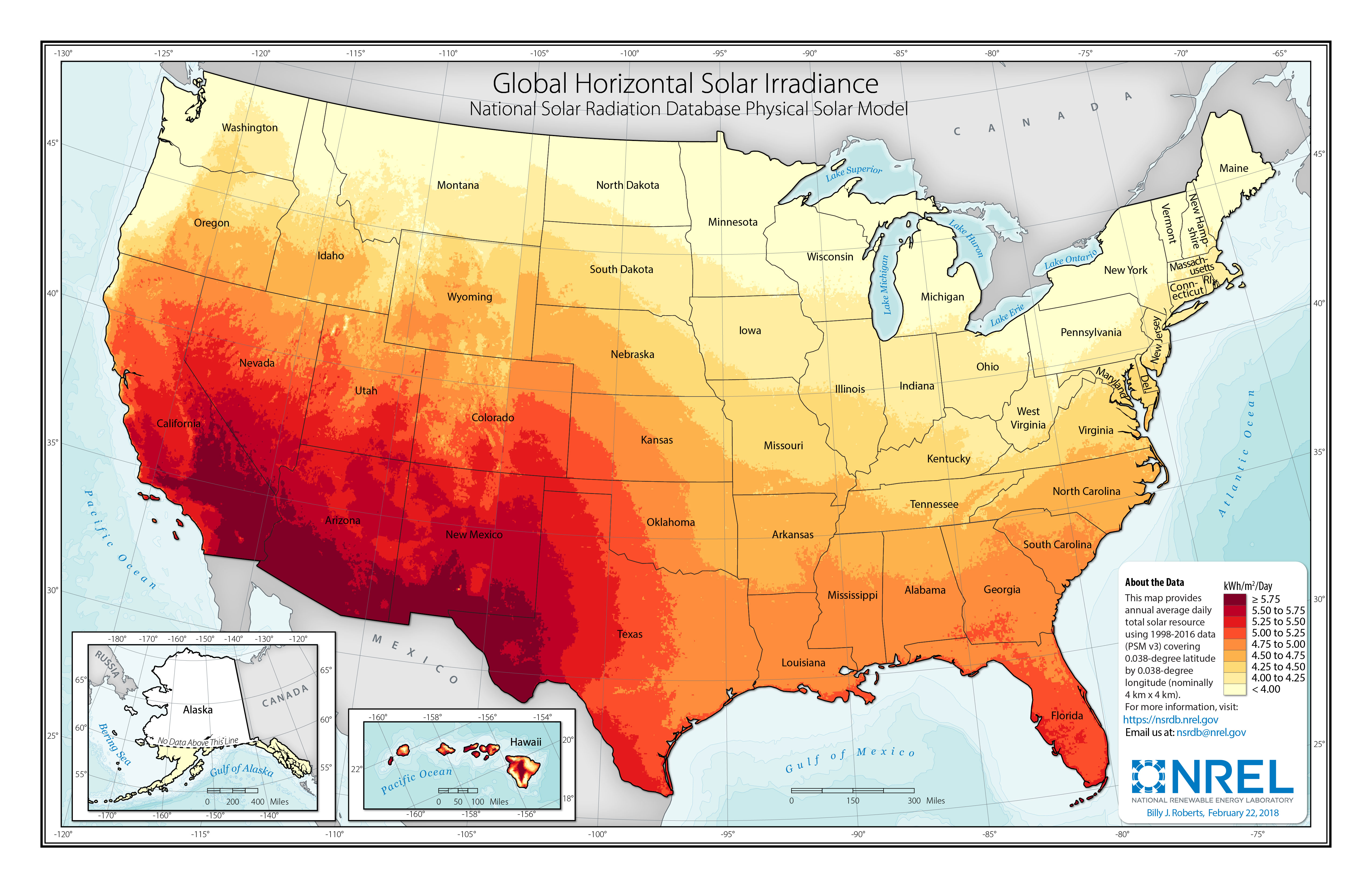
you misunderstand how the "+4" storage design works for solar. a 1MW solar plant nameplate capacity will only produce 1M for an hour or two a day, the hours before and after that peak will be some fraction, the sum total off the area under the curve works out to between 3 and 5 hours depending on latitude and weather[1].

so when you design a utility solar system with "+4" storage, what you're really doing is creating a "one days worth of full production" buffer. that can be used to run the output at a fixed rate while the buffer builds and empties every day (its never that simple but thats the basic principle). for example a 100MW farm with 400MWH of storage can in the simplest sense produce 16MW constantly (all through the day and night). in practice there's plenty of other stuff on most grids so they don't do a full battery cycle every night, but rather use the buffer to be able to meet day ahead and dispatchability contracts for a very cloudy day or a lightly cloudy week.

now don't get me wrong, obviously that still doesn't put it in the same reliability category as nuclear, but it closes like 80% of the gap in practice. its not better, but it is clearly on track to be 'good enough'.

[1] https://www.nrel.gov/gis/assets/images/solar-annual-ghi-2018...
Re:$60/MWh for advanced nuclear electricity is achievable: G... by Ekaros on Tuesday April 04, 2023 @06:28AM (#35437466)
Anyone who don't include cost of seasonal storage in renewable pricing is malicious or stupid. That is what really matters, not the spot price. We use power in winters and nights.

Then again people freezing to death is certainly effective way to lower co2 emissions, maybe this is their hidden agenda.

Re:$60/MWh for advanced nuclear electricity is achievable: G... by tomatocracy on Tuesday April 04, 2023 @07:47AM (#35438105)
Most battery storage being built (at least in the UK, which is the market I'm most aware of) isn't even 4 hours - it's generally 1 hour, moving towards 2. A lot was built to target the "dynamic containment" (frequency response) market primarily and not the daily peak/off-peak cycle.
Re:$60/MWh for advanced nuclear electricity is achievable: G... by lucb1e on Monday April 03, 2023 @07:21PM (#35432776)
It does seem a lot simpler to plop down a bunch of concrete in roughly the same area as today's fossil fuel plants take, compared to rewiring and repurposing a third of a country to get enough solar panels and wind turbines in place (the latter while keeping residence distance requirements in mind). Not sure if that is factored into the feasibility when people talk about how expensive it is.

I agree that it doesn't make economic sense in an ideal world with twice as much space per capita and/or a lot more time to find and purchase ideal nooks and crannies and wire them up, but that would require moving to planet B. Note I'm not talking about nearly-empty USA, Australia, northern Africa, etc. here; rather, take 2-3 random European countries (highest emissions per capita after north america, so you know, the place that needs to get change happening) and you're very unlikely to hit only ones where not most/all of the land already is already allocated to some purpose.

I also agree it's likely already too late to get started on new nuclear plants, like, it's nearly so late that we might as well just go solar and wind for the rest of the way. But I don't think it's quite at that point yet, considering for example that regions in southern germany with big-ish distance requirements for wind turbines are placing nearly none (and germany is not even one of the countries that I would count among those that are out of space), it's apparently that full already and they've got like 80% of the way to go in phasing out fossil fuels.

Honestly the main hope I have these days is solar panels on crop fields becoming a real thing. That would grant a level of scale (and somewhat protects from crop failure causes like hail and drought) that would make me see this energy transition as feasible without nuclear (pushing the recycling problem onto the next generation, but better to deal with a billion worn panels than a billion displaced people (both figures are figurative)), but so far there's little adoption.

Re:$60/MWh for advanced nuclear electricity is achievable: G... by ClumsyPilot on Monday April 03, 2023 @07:33PM (#35432923)
> you're very unlikely to hit only ones where not most/all of the land already is already allocated to some purpose

Thats is the wrong problem - numerous farmers in Britain want wind turbines, they want extra source of income and they are willing to put in their own money. They know the turbines dont take any land away from farming - only fraction of a percent.

They are not allowed to install wind turbines on their own land from their own money, because the british government has banned turbines over a certain, non-viable height, on land.

Even when you want a small turbines installed, it takes 4 years of planning permissions and legal battles.

If we allowed every farmer to install windfarm of their land without interference, we'd solve half the problem.

We are dooming ourselved to disaster out of purely aesthetic concerns.

Re:$60/MWh for advanced nuclear electricity is achievable: G... by scarby2 on Monday April 03, 2023 @07:53PM (#35433120)
They're also doing the same with the green belt, housing and businesses in general.

Farmers are being told they need to diversity but they can't have wind turbines, they can't have businesses that need any kind of premises, they can't build housing on their less productive land. Something has to give at some point.

Everyone agrees they need to do something but many governments are intent on doing nothing

Re:$60/MWh for advanced nuclear electricity is achievable: G... by ksec on Friday April 07, 2023 @11:03AM (#35482278)
I wish we could start a thread about all the problems in UK. From HN.
Re:$60/MWh for advanced nuclear electricity is achievable: G... by eldaisfish on Monday April 03, 2023 @07:25PM (#35432826)
We need a combination of the two. A single point of failure is not ideal design. One increasingly common weather event and your power grid loses a massive source of energy. Distributed energy is good because it allows life to continue, in a limited fashion.

For western europe at least, off shore wind is a great alternative, as are smaller wind turbines on farms. Much of western europe is in the path of the trade winds and so is a great place for wind power.

It is not too late for nuclear. Nuclear is an excellent stop-gap measure while we figure out how to transition to large-scale renewables.

Re:$60/MWh for advanced nuclear electricity is achievable: G... by lucb1e on Tuesday April 04, 2023 @03:52PM (#35445043)
I agree with you. As I said, it's not too late yet for it to make sense to break ground, but we love hugging deadlines it seems...
Re:$60/MWh for advanced nuclear electricity is achievable: G... by eldaisfish on Monday April 03, 2023 @07:21PM (#35432783)
The major caveat with those numbers is that they ignore time and the knock-on costs from ignoring time.

Variable and uncertain power generation creates a problem on the electricity grid and the source of the problem does not pay for the solution. Everyone else does. Those energy costs you quote imply that variable generation (wind, solar) do not set the price of energy, which they do not.

The problem with computing a solution is that it depends on where you are, which season you are in and what the rest of the power grid looks like.

Re:$60/MWh for advanced nuclear electricity is achievable: G... by stefan_ on Monday April 03, 2023 @07:30PM (#35432896)
Indeed they ignore time; to build a nuclear power plant today means committing to a power generation price for 30 years or not making back your investment. You can see why no one is making that bet against solar + storage.
Re:$60/MWh for advanced nuclear electricity is achievable: G... by credit_guy on Monday April 03, 2023 @07:54PM (#35433129)
Let's look at cost per kWh. I know it's a trivial division by 1000, but people pay their utility bill by the kWh, not by the MWh.

So, in the first 2 months of 2023 the average American paid $0.17 per kWh [1], up from $0.15 one year before. Overall, a lot of people would be happy to pay $0.06/kWh. You are saying solar and wind could come at $0.045 and $0.03. That's great, but 2 cents per kWh is not really something people pay attention too all that much.

[1]https://www.bls.gov/regions/midwest/data/averageenergyprices...

Re:$60/MWh for advanced nuclear electricity is achievable: G... by jillesvangurp on Monday April 03, 2023 @10:38PM (#35434272)
Discussions about this topic tend to get a bit hand wavy very quickly and few people seem to be able to apply any rational system thinking to the whole debate. That's true for proponents and opponents. I've been reading through, and occasionally commenting on threads on this topic on hacker news for a while now. So, I've seen all the arguments. From both sides. There are usually a few bright people commenting but a lot of others seem to lose the ability to do math or conveniently reason under some closed world assumptions. Or just dismiss the notion of math entirely. Basically, anyone focusing on a single technology as a holy grail tpye solution is probably barking up the wrong tree. The notion of system thinking is having a mix of everything that's already being done and evolving that in a direction where less of it is going to involve fossil fuels.

Let's consider a few technologies that already exist (in addition to wind and solar) and work at scale or can be made to work at scale that can be freely combined with wind and solar.

- Pumped hydro. As of yet one of the most widely used energy storage on grids in e.g. the US. There's about 22 GW and about 0.5TWH of it on the grid. A lot of it was, ironically, installed decades ago when nuclear plants started coming online and something had to be done with the massive amounts of energy that they produced. It's relatively expensive and it can't be done everywhere. But it's proven technology and its there already. There are lots of smaller scale trials with all sorts of gravity batteries. Not all of them practical of course. Though using e.g. mine shafts seems like it should work.

- Cables. We can use cables to move power around by the GW. It's an old technology. Has been around for as long as we've had electricity. This can be done over thousands of kilometers using modern technology. Examples: cables are already running between Norway, Germany, and the UK and more are being planned between e.g. Morocco and the UK, Australia and Singapore. A single cable can provide roughly the capacity of a largish nuclear reactor. I think the Moroccon cables are going to be 1.8GW each for example. The current plan is to have four of those. Cables aren't cheap. But they are probably comparable to largish nuclear plants in terms of the amount of power they can move and in cost. And they last for a very long time once you have them. Great argument if you hear people make the point that the wind doesn't blow all the time and the sun doesn't come out in the winter. True locally but cables fix the locality problem. Cloudy UK can rely on sunny Morocco. Wind starved central Europe can use off shore wind.

- Geothermal. There are lots of places where people are already exploiting geothermal energy. It seems more interesting to use for heating than for electricity but both are a thing. Digging deep for higher temperature gradients is expensive. But there also are a few newer projects involving heat pumps that don't require that.

- Grid batteries. These are currently being deployed by the gwh and probably soon twh. This is a rapidly growing market. Mostly this seems to be with relatively expensive batteries that provide hours, not weeks of storage. But interest in much cheaper but more voluminous battery chemistries that might be used for longer term storage is picking up as well. Too early to pick any winners here but there's simply too much of this stuff going on to dismiss it.

- Domestic batteries and EV batteries. Love them or hate them, these are being mass produced and installed as well. Tens of millions of EVs are going to require batteries to be produced by the twh per year and that's going to be a reality within a decade. The volume of batteries on the road is soon going to exceed the yearly energy consumption in a lot of places. That would be a problem if those vehicles would be moving 100% of the time. Which of course they don't. Domestic batteries are not far behind this but those too are starting to add up as their cost is going down. So despite there being so much battery on the road, we may not actually have much of a case for vehicle to grid technology to actually tap into that reserve. Because we'll have plenty of other batteries permanently connected to the grid. Either way, hard to dismiss any storage that is going to measured in many twh.

None of thesse things of course are free and relying on them exclusively is not a solution. Especially considering that some of these are actually quite expensive. But the reality is we are already doing those at gw scale and soon at tw scale. And it's all happening on the same interconnected grid.

Cost is not a constant and there's a trend for mass production to get cost down for a lot of these things. This is true for nuclear as well. At least hypothetically because our current nuclear production capacity is too low to show any signs of a learning effect so far (if anything it seems to have gotten more expensive over time). But hypothetically cost would come down if we did more of it.

But the simple fact is that by virtue of people installing solar and wind at break neck speed there's going to be no shortage of vast amounts of excess power peaks that can be moved around and stored. Which does raise the question what the point is of focusing on expensive nuclear projects in a lot of places.

System thinking is the notion that we can use all of these solutions, and more, to create a highly resilient and robust, interconnected grid. Nuclear can certainly play a role in that and it looks like it will. But it's probably going to be a much smaller one than some people would like us to think.

Re:$60/MWh for advanced nuclear electricity is achievable: G... by michaelt on Tuesday April 04, 2023 @06:34AM (#35437518)
> But the simple fact is that by virtue of people installing solar and wind at break neck speed there's going to be no shortage of vast amounts of excess power peaks that can be moved around and stored. Which does raise the question what the point is of focusing on expensive nuclear projects in a lot of places.

Here in the UK, our solar output varies hugely between summer and winter, and due to our climate we use a lot of heating during the winter. Currently in the form of gas heating, in the future presumably heat pumps.

And while batteries are workable to store daytime solar power for evening use, cycling the battery 365 times a year, summer-to-winter battery storage would only cycle once per year - making the capital cost 365x higher.

It's a shame nuclear is as expensive as it is, as a year-round zero-carbon power source would be a very convenient thing to have!