Supplement MCT oil. This turns into keytones in the body. See The Complete Book of Ketones by Mary Newport for all the science. She's got into it for Alzheimers, but the applicability is wider than that.
Go gluten-free and casein-free. That's eliminating wheat and dairy in your diet. Both of these turn into a form of morphine in the body. Look up glutomorphine and casomorphine. A slightly easier diet to stick to than keto. This cured my aspergers.
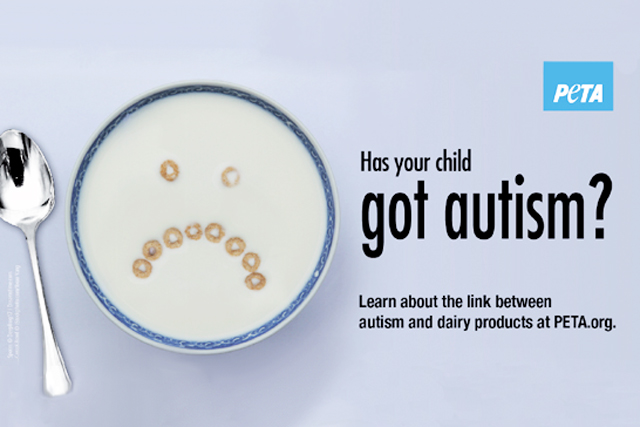
This cure for Autism is broadly related to the leaky gut hypothesis of autism, rather infamously propagated by Andrew Wakefield in the 90s more generally and Jenny McCarthy more specifically went after gluten/casein in the 2000s. PETA made an infamous ad saying that milk causes Autism [1] because milk has Casein. This is to say that enough noise got made about this specific claim it got researched a bit.
Generally this diet has specifically been studied for autism treatment and the efficence of it's efficacy is very lacking for me [2][3]
This all being said, this doesn't necessarily mean that nobody can benefit from a casein or gluten free diet, there's simply insufficient evidence to say that autistic people benefit from such a diet particularly often, and people who avoid milk and bagels are less autistic.
[1] https://www.dairyreporter.com/var/wrbm_gb_food_pharma/storag...
[2] https://link.springer.com/article/10.1007/s10803-019-04266-9
Studying diets is notoriously difficult, and rarely done in a helpful way. Everybody has a different internal ecosystem -- as well as different dietary stimulus, even if they're following the same diet. This makes it incredibly difficult to draw broad conclusions based on controlling just one or two dietary factors.
This is rather unfortunate -- because the right dietary treatments can be truly transformative for many people, for a variety of conditions. However, because of the difficulty of proving this scientifically, such treatments are ignored by the medical community, leaving patients to figure this avenue of treatment out on their own.
The answer, in my opinion, is massive funding -- the kind of funding that can compete with billion dollar drugs (such as Humira). However, that's really not going to happen. Oh well. Sorry for the rant!
I went GFCF for other reasons (IBS and excess mucus production) and was surprised when my Asperger's started to go away. My personal theory is that the small, but frequent, morphine effects interfere with learning. When you take that away, low level learning can begin again.
I was "face blind" (i.e. didn't automatically recognize familiar faces) and didn't pick up on social cues. Both problems when away after 6-12mo on GFCF. A lot of social awkwardness comes from not picking up on these fundamental inputs.
Already using MCT oil in lots of cooking :) Had no idea about dairy... interesting, I eat a lot of high fat cheese.
Thanks for the references, I'll certainly read more.
Gluten and dairy are in almost all packaged foods. They drive cravability in a big way. So I'm guessing any "debunking" was funded by someone making money from this.
There are a few people who are immune to the effect. You can pick them out because they either dislike or simply don't care for cheese (which is mostly casein).
I know looking back I still had symptoms. I can remember days during those 3 years just sitting in the office and realizing I had not gotten a single thing actually done and it was mid-afternoon already. But also had stretches of incredible productivity also.
Thanks for the prompt - been considering going back on keto, one of the reasons I went off is the mixed scientific evidence for its efficacy over other diets (not specifically for weight loss, just diet in the context of "way of eating") and some warnings about the lack of long-term study data because it's so hard for individuals to stay on long term. But this gives me another data point to consider and something to watch if I do try it again.
One of the nice things, for me, in terms of having been on Keto occassionally, if that it's given me the ability to go for extended periods without needing to eat. I don't crash, in terms of blood sugar, the way I used to. Even when I'm not eating super low carb.
After 3 days of it, I felt very focused and got done a bunch of stuff I was procrastinating for months.
I thought this was a coincidence.
Dr. Chris Palmer: Diet & Nutrition for Mental Health | Huberman Lab Podcast #99
> My guest this episode is Chris Palmer, M.D., a board-certified psychiatrist and assistant professor of psychiatry at Harvard Medical School. He explains the important connection between nutrition, metabolism and mental health and his pioneering work using the ketogenic diet to successfully treat patients with various mental illnesses, including depression and schizophrenia. Dr. Palmer explains how the ketogenic diet is an evidenced-based treatment for epilepsy, mimics the fasted state and can offset the cognitive decline in Alzheimer’s. He describes the key roles of mitochondria in mental health, how certain conditions likely arise from mitochondrial dysfunction, and how low-carbohydrate diets increase mitochondrial turnover to improve mental health. He also explains how low-carbohydrate diets positively impact the gut microbiome and weight loss, important risk factors for mitochondrial health such as marijuana and alcohol, and the best way to increase circulating ketones depending on individual needs. We also cover how a ketogenic diet impacts mood, sleep, and fertility. Dr. Palmer’s work stands as a revolutionary approach to mental health and disease that, given the prevalence of mental health challenges, should be of interest to people of all backgrounds and ages.
Low carb diets get insulin down and ketones up. These factors are more likely to be driving these other changes.
Also, low carb diets generally eliminate wheat and therefore gluten. Gluten becomes gluteomophin, which causes it's own problems (as an opiate). The standard American diet micro-doses an opiate at every meal. What could go wrong?
I've seen similar effects with intermittent fasting combined with a whole foods plant-based diet. This will likely be my long-term strategy.
(in case it helps anyone else...) About half a year ago I discovered that a brutally low carb diet -- leading to being in ketosis -- drastically helped my ADHD as well as other mental health things I've struggled with for my entire life. I wish I knew earlier!