In reality, every state, every city, and every town are in a de facto competition for tax dollars, and there is no central planning. So instead of adding dense housing to desirable Burlington, we clearcut forests or replace farmland to add low density housing 10 miles away in a subdivision near Shelburne. That family that was charmed to move to Vermont by the shops on Bank st will end up driving to the nearby big box store in Shelburne instead. The traffic will get worse, local farmland starts disappearing because suburban land is more valuable on a square foot basis, and once all the farms are gone the process begins again another 5-10 miles out.
It's a vicious cycle, and it creates an ecosystem where most people can't even enjoy the city they came to love in the first place because they live miles and miles away (and good luck with traffic and parking)
Refusing to build up will lead to sprawl. Car-centric transportation infrastructure will lead to sprawl and traffic jams. Sprawl a bad scenario for everyone, including car lovers.
I'll probably be hated for this, as usual... You also have to have people who want to live there. Personal preferences and overall population seem to be important factors overlooked (or conveniently ignored) by many during these conversations. It's more convenient to focus solely on zoning.
If the majority of people had a preference for condos, then we wouldn't see large single family homes being developed. Even in areas where zoning is more lax (many suburbs).
I'm saying that these sort of zoning discussions are most common in areas that are (a) very high demand broadly across the entire housing stock, and (b) very restrictive on what can be built where
For example, I live in Cambridge, MA. There is a critical housing shortage. There is very little choice in what gets developed; development generally only happens if you have a large team to push the development through the necessary approvals and reviews, such as telling the zoning board that if they allow your non-compliant building then you'll sponsor a park and set aside 10% of your units as income restricted. Even the existing structures tend to be "illegal" because they were grandfathered in from the 1920s or earlier, when zoning did not exist. The only new developments that meet this bar are ultra expensive condo buildings and offices.
Whether the demand exists is not in question. Whatever gets built, people will live in it. But there is very much a question of what is allowed to be built. Some people want more condo buildings. Some people say it ruins the neighborhood character. But whether a condo building can find residents isn't really in question.
That wasn't questioned. It was questioned if zoning will actually prevent development of natural lands. Unless everyone want to live in high density housing, there would be a point where additional condos would not find willing tenants (much higher than current levels for some localities).
The point is there are a significant portion of the population that want low density housing and the sprawl will continue.
And on the overall population side, increasing resource demand will continue to tax the natural world. We will need more land for feeding/clothing/etc the increasing population.
There are areas around me that do these as well as allow for high density housing. These areas are suburbs, small towns, and small cities in the Philly region. We still have sprawl, and prices are relatively high. Even though it's possible to build high density housing in many areas, most people don't. They can get more for large sfh since there's a lot of demand for that. There are some apartments and condos being built, but it seems most of them are pretty expensive or upscale. So even though the zoning is permissive, sfh are the primary construction due to preferences. The conservation can also inflate prices by restricting supply and introducing regulations to deal with.
Just an aside on the regulations... some of them can be extremely stupid, like a prohibition on impermeable surfaces being interpreted to include stuff like gravel. If gravel is an impermeable surface, then maybe we can take the regulator to the desert and pour their water on some gravel and come back in a few days...
But in a general sense you don't actually see massive SFH sprawl when you don't have R1 zoning. You tend to get denser areas, often with a belt of SFH around them. Realistically that's fine, and is a model that works around the world.
Also, housing trends just have a lot of inertia. It takes decades of policy change to alter the landscape. Much of the US was either zoned R1 or build up that way because of social and political forces that aren't necessarily relevant any more, but moving away from that is a glacial process.
I agree with the inertia part. I think some of it is 'build it and they will come' situation. But not about housing. Rather I think a lot of it is about infrastructure like public transportation and even better distribution of jobs. Also communities that share common values (tends to spur civic engagement and neighborly attitudes).
Maybe I'm just cynical, but I think we've largely become disconnected from out neighbors and even us-vs-them in our communities in general. If my neighbor wanted to put in a garage apartment or in-law suite type thing, then I'd be fine with it. So even if the zoning doesn't permit it directly, if I were to support my neighbor in a variance request, they would likely succeed. Similarly, if I were thinking about something that might impact my neighbors, then I try to get some input from them. Make sure that if they have some concerns I can try to address them. Maybe I'm just weird or have great neighbors, but it seems many people just want to sic the government on their neighbor at the first opportunity.
Sure, maybe it slows it. But that's also less competition, which means the supply-demand equilibrium will shift so that when people who want to live in low density areas can have larger lots and houses. Pretty much offsetting the choices of the others.
Not to mention any increase in population will lead to increase in resource utilization, thus increase in natural resource exploitation.
correct. You can't stop sprawl just by upzoning, but maybe you can slow it. It takes a suite of urban planning effort to really combat sprawl, and allowing people to construct and live in dense neighborhoods of their own free will is just the first baby step in that direction.
> the supply-demand equilibrium will shift [..] Pretty much offsetting the choices of the others.
There's no basis for this statement. It sounds like you're suggesting that farmland and woods already don't exist, so if people move into dense regions, then we're just shuffling the remaining land zero-sum among those who would prefer not to live in the city.
There are, in fact, plenty of places that haven't yet been taken over by humans. And when people looking to move to a city can move to the city, companies are less incentivized to develop and subdivide 20 miles from the city.
So, it's not zero sum. Allowing more people to live in the city decreases the demand for development out of the city.
Basic economics, really.
"There are, in fact, plenty of places that haven't yet been taken over by humans."
That's shrinking rapidly. You could watch A Life On This Planet for some insight on the scope of development/utilization.
Population growth appears to be leveling off globally, which implies that if sprawl was slowed enough it could be stopped completely.
The big issue for me would be not being able to do a bunch of my hobbies - garden, woodworking, beekeeping, etc.
Building 4/5 story buildings with units for families is enough for healthy urbanization.
We have a serious problem in talking past each other though. When people talk about building density the conversation starts around skyscrapers (bad) like Hong Kong or something, but what we need is just medium-density, mixed use development so lots of single family homes, narrow streets, walking/biking, and of course town houses and apartments so we can get variety and mixed income levels living in the same place. The rich family has the giant house on the corner. The young couple fresh out of school lives in an apartment down the street. They see each other every day at the coffee shop or at the park in the neighborhood, or maybe even a local church, gym, or office.
And in building this way we can weave in healthy natural aspects, trees, flowers, gardens, etc. and animals that are better adapted for these environments can live or "visit" these areas. Then as you get further away from this town/city you just get more and more hills and countryside and independent farms.
We know how to do this. We choose not to. It's not profitable for Mercedes if we all walk to work. It's not profitable for Conagra if we grow our produce or buy from an independent farmer. Not that these companies are necessarily (although sometimes they are) evil or anything, it's just an incentives alignment. And unfortunately government officials literally just do not understand what we need to do, so they're like empty vessels chasing things like Sidewalk Labs in Toronto or the Smart Cities Challenge in Columbus where all it amounts to is a corporate handout because the only way to solve a lot of the problems we have is just to build correctly. No amount of EVs fixes our problems (I have an EV btw). What does fix our problems is when families have 1 car per family instead of 2-4, and 90% of their day-to-day activities are within a short walking distance. We need a lot less of this giant SUV to Costco 30 miles away because you're cosplaying living in nature attitude.
This is what an appropriately dense city looks like:
https://twitter.com/trad_arch_bdays/status/15171411856676003...
This is what a correct neighborhood looks like:
https://i.pinimg.com/originals/37/9b/26/379b266652e0a2013c0c...

This is an anti-pattern. It’s devoid of life.
https://facts.net/wp-content/uploads/2020/02/edward-he-uKyzX...
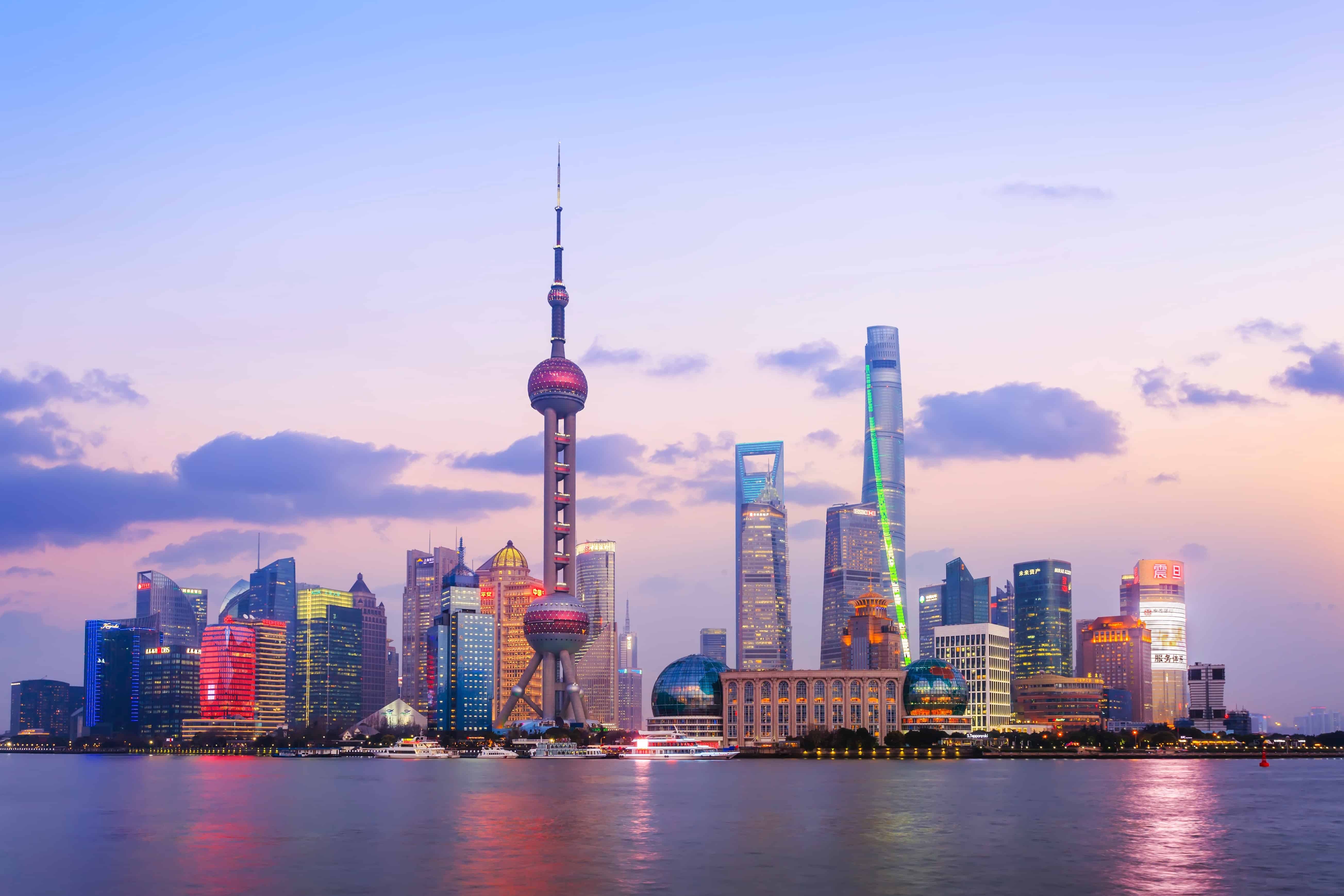
This is also absolutely dead. There is no nature here.
http://media.beam.usnews.com/70/0d/89b92a674c3b894107a03641e...

Idk what it looks like yet but I'm going to figure out a way to fix this.
Even in Shanghai there's plenty of neighborhoods full of life at a human-appropriate scale. Just not at city center.
I question whether we should even have cities with 30 million people. That's probably a problem too. People like to point to what appears to be lower c02 emissions, but that's not the only metric that matters. Metrics that I care about would be something like independent farmers per-capita, bikes per-capita, distance of travel for produce, etc.
> People like to point to what appears to be lower c02 emissions, but that's not the only metric that matters.
On that note, central business districts & skyscrapers aren't actually that great environmentally, although the city model as a whole is much better environmentally than their suburban counterparts.
And it's certainly possible to build a dense, urban city housing even millions of people without a massive central business district. I think, more than anything, the central business district is an artifact of how we organize ourselves economically (IE the economy is dominated by relatively few massive corporations). This is harder to change but certainly not impossible.
When people left the military they went to familiar environments. You "paid your dues" just like a private did. You stayed with the same company. Etc. But that's all changing. Historically that was not the case (well historically we didn't really have companies for that long, but you get the point). So I think we will revert to a more natural flow, which is more decentralization and fragmentation. I think this is inevitable, but I wish/hope/want to avoid the waste of resources in creating these things in the first place.
https://www.fotocommunity.de/photo/plattenbau-dessau-tobias-...
... which clearly is not what encourages building a community like you imagine.
Before someone comes and says that I picked the worst image I could find ... nope. This is the standard for "affordable multi-story apartment housing" in my rather affluent country. In many parts we actively demolish them because no-one wants to live there (location is often semi-suburban) and because they are breed a social-problem-area.
These are just some random examples in Paris. We should build more like this. We can. There are no barriers. None.
https://bonjourparis.com/wp-content/uploads/2016/03/Montmart...
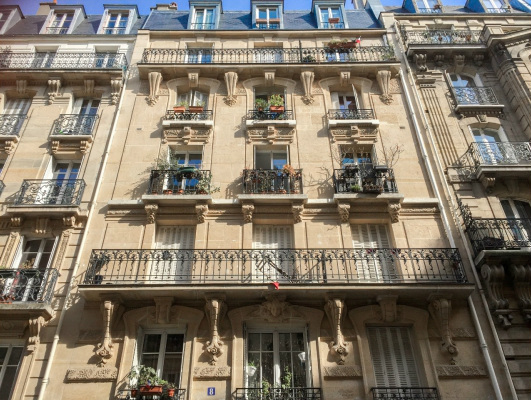
https://www.girlsguidetoparis.com/wp-content/uploads/2014/08...

Frankly, I don't think this happens with any frequency.
The thing that makes Burlington so nice is how quiet, clean, and spacious it is. Nobody moves to Burlington expecting it to be NYC. If you try to make Burlington into NYC, you will ruin it.
People move to VT to be in nature. To be spread out. And it's a nice benefit that they can visit a cool, small city every once in a while.
This describes the vast majority of Vermont, but not Burlington. It's not NYC but it's also not Montpelier and it's definitely not Stowe.
Burlington is the "small city" for people who want everything local - local brewers, local farms, co-ops and farmer's markets, etc.
I'm not suggesting that Burlington should build highrises everywhere. I'm suggesting that the building forms that already exist in downtown Burlington - tightly packed 2-4 story buildings - should perhaps continue a little further out. It's possible to have urbanism that isn't Manhattan.
With unchecked suburban sprawl, Burlington is going to become the opposite of what it represents now - generic big box stores and chains.
People aren't all the same some like having a yard, a garden, and no people living right next to their walls.
For example, take this listing https://www.zillow.com/community/kwiniaska-ridge/29091765_pl...
Look at the descriptions used to sell it:
> Just minutes from the lake and downtown Burlington you have everything you need and already do.
This isn't aimed at people looking to escape the city. This is aimed at people looking to buy into the city at a lower price point.
I know a couple of people like this, they claim they want to get out of the city, but also aren't willing to live more than 5 minutes from a supermarket. The result is a compromise: suburban sprawl.
So (mostly) turn off the faucet and make everywhere pay closer to their own way.
Not getting $1-$1.10 back on the dollar isn't gonna bankrupt rural areas. It just means you the yuppies will have to suffer through the state highway to the u-pick orchard being replaced every 12yr instead of 10.
The whole "pay taxes and then let whoever you paid them to give you them back with strings attached about exactly how you use it" model and designing to qualify for funding that said model incentivizes is exactly how you wind up with boondoggle sprawl. If places were using their own money things would look very different.
You will note that this is already a problem, because we already have a partial pay-your-own-way system.
I don't think that is even close to true, NYC latest budget for example is $92.3B (2022), Police got $5.42B, about accounts for ~6% of the total.
Education, social services and 'other' account for almost 70% of the total.
https://council.nyc.gov/budget/wp-content/uploads/sites/54/2...
Since when is "the community" roughly analogous to "yuppies" and since when is being a yuppie a bad thing?
Edit: I won’t edit my comment to better address your comment since you edited after I responded.
You know what's divisive and not productive? Drive-by low effort comments quoting the guidelines and projecting offense on other's behalf.
In 1900, Vermont was 30% forested after settlers cut down the forests for wood, farmland, and mining. Now, Vermont is over 70% forested. Tax structure is a large factor, but certainly not the only one.
Unfortunately, the trend is reversing. Sprawl is a factor. Dense cities matter.
https://www.uvm.edu/news/story/report-vermont-losing-1500-ac...