Same thing in German though. Usually you only use "drei viertel neun" and "halb neun" (i.e. 8:45 == three quarters nine, and 8:30) but in some regions they say "viertel neun" (quarter nine) for 8:15, but the people not from that region often mishear it as "viertel nach neun" (quarter past nine) because why would you say the former, so the speaker must have spoke the 'nach' too silent...
English is quite logical - half PAST nine = 9:30, but in Czech/Slovak you say literally "at quarter on ten" (9:15), "at half of ten" (9:30), "at three quarters on ten" (9:45) and that "on" ain't really obvious for someone who is not familiar with this terminology, personally I completely stopped using this terminology because I always found it archaic and extremely confusing and just use digits "nine fifteen", "nine thirty" etc.
same goes for fractions vs percentages, I don't understand media love for fractions, instead simply writing 60% they write three fifts, so I have to calculate it in my mind back to 60 to know what they are talking about instead if they used one simple digit
We also commonly use double negative:
English - I did nothing
Slovak/Czech - I didn't do nothing (reverse I did everything)
People don't think about it, just accept this nonsense and go on with it.
Czech language has even way more illogical things than Slovak, since it is older, for instance they have special letter ů which sounds exactly same as ú (as oo in Doom), but ů can't be used as first letter of word, where you must use ú and vice versa, if it's not first letter must use ů and can't use ú, despite both of them having exactly same meaning/sound.
What a mouthful. Can I ask you to write how it is written and spelled out?
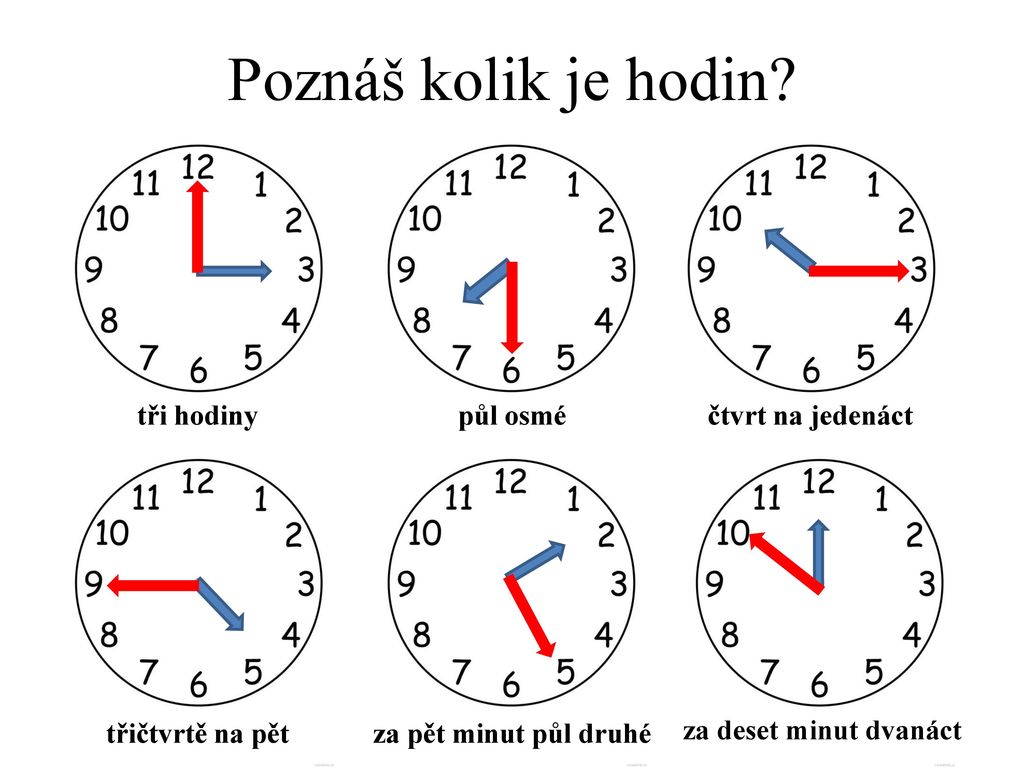
Here in Czech, learning materials for 2nd grade, though my kid is learning it already in 1st grade.
What "half negen" means is easier to remember when you contrast "half" to "vol"/"heel" -> half nine is not full nine yet.
To be clear, nobody uses "vol negen" or "heel negen", it's just "negen (uur)".
And thank you for the "vol" / "heel" distinction in this context. I feel that definitely is going to stick! :-)
You are correct....
Unlike 'merkin English, in British English saying 'half nine' [meaning 9:30] is fine and one would only say 'half-past-nine' if they were feeling verbose, or have a Dutch workmate and were trying to avoid confusion :-)
In Dutch (my 4th language), "half nine" ("half negen") means 8:30. Whereas in English[1] "half nine" means 9:30.
So there were times when I missed appointments by an hour! After 7 years of being immersed in the language, I still have to deliberately engage my brain whenever someone says "half nine" (or whatever the hour) in Dutch to carefully translate it to the correct time.
[1] British and Irish English only? Others can correct me here.