Operating system should already know if a file is executable and desktop should be using this information when presenting files instead of conventional names.
Yes it would mean that when you download a file you have to set the executable attribute before you can run it. It's already almost exactly like that on Linux. That's a good thing.
That already happens. If you set the "Details" view in Windows, it will display one file per row with various columns showing file metadata, including the file type. So for the example in the post, you'd see "[Word icon] annexe.doc - [the date] - Application" as opposed to "[Word icon] annexe.doc - [the date] - Microsoft Word 97 - 2003 Document".
In linux it's pretty obvious: https://www.rootusers.com/wp-content/uploads/2018/01/gnome-t...
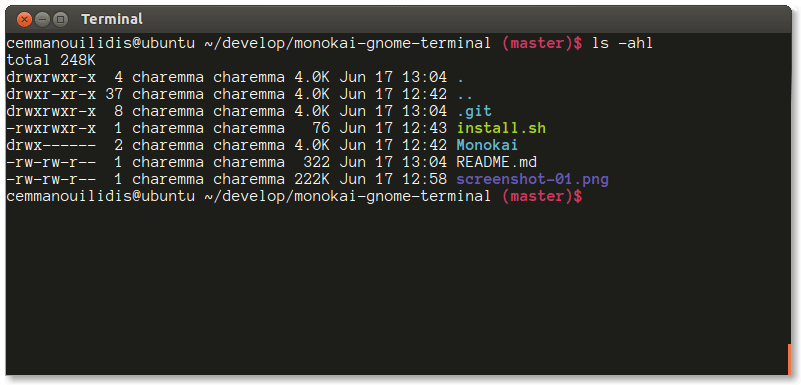
The main advantage is that the UI for opening documents (vim file) is different from the UI for running executables (./file) which is different from the UI for running executables as administrator (sudo ./file).
This makes it impossible to accidentally execute a file that looks like a document.
If I download a pdf, I don't want it to run. I probably want to open it, but if I've gone through the trouble of downloading it onto the filesystem as opposed to just opening it in the web browser, there may be other things I want to do with it. Maybe I want to print it, or maybe I want to break it up into component parts. Or maybe I want to transfer it to a sandboxed environment before I open it because I don't trust it.
If you don't want to take an active role in maintaining security on your computer, then by all means use a commercial operating system. Pay a license and let Microsoft and Apple make those decisions for you. They have competent people who can program reasonable default settings for the average user. If you're running Linux or an open source operating system, you've already decided to take these responsibilities into your own hands.
That is a beyond ridiculous take. The last Windows OS that did not make me mad was Win98, and every time I have to use Mac machines I want to gouge my eyeballs out. I want an OS that lets me shoot myself in the foot as much as I want.
> If you're running Linux or an open source operating system, you've already decided to take these responsibilities into your own hands.
no, I just want to use the fastest possible OS for my use case on my hardware, which is Linux.
inotifywait -m -e create "$(xdg-user-dir DOWNLOAD)"|while read d e f; do chmod +x "$d/$f"; done
You can add "-r" if you want to also do it on subdirectories, and you can specify another directory instead of the default downloads directory.
Though I don't really recommend doing this since you should not be executing downloaded binaries often enough for this to be worth doing.
I literally do this multiple times per day. What in hell do you folk do with your computers?
Thanks for the script ! There's a few tens of thousands of files in my downloads folder, I hope this isn't going to pollute the inotify fds too much...
Hopefully not leaking company information to clever attackers.
I work with a number of clients in high security environments where you have to get permissions to perform operations like execution (or even setting chmod x on a file). It really does limit people running random things and causing destruction.
I have no idea in what situation I'd need to load so many executables via the browser.
Executables tend to come compressed with a lot of other files nowadays, and compression software knows to set the executable bit when extracting them.
cd ~/Téléchargements; chmod +x <try to remember the first letter><hit tab 15 times><miss it><go check inside the firefox download manager><restart><end up typing the whole name>
The Windows UI could just render that character as a tofu box, and not evoke its reversal semantics.
Consider writing a bash script that makes a subdirectory with current date if it doesn't exist, downloads url from the command line argument into that directory, changes the permissions and runs it.
Then your workflow could be:
- keep terminal open
- Alt+tab to firefox, browse, copy link to executable file
- Alt+tab to terminal, ./handle.sh <paste the link> ENTER
- Alt+tab to firefox again
- rinse and repeat
There's many benefits - you don't get thousands of files in one directory (which can lead to performance degradation and even random errors), there's little risk that you run the wrong file, you don't waste as much time.
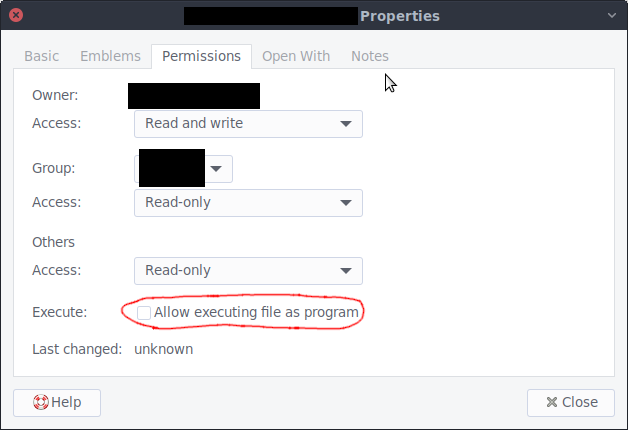
If it's from a GUI, file browsers have the capacity to that that bit too.
> Maybe Unicode needs a “safe mode” where only outright characters are allowed?
Every Unicode character and code point exists because somebody, somewhere, needs it.
Not quite. That and because some twits are willing to cave in and add it, because adding crap to Unicode gives them a sense of purpose which makes them blind to the harm they are causing.
Every Unicode character and code point exists because somebody, somewhere, thought that somebody would find it useful.
Sure, just like they benefit from knowing the difference between 'V' and volts; 'J' and Joules; 'K' and Kelvins; 'A' and Amperes; π the letter, π the circle constant, and π the exotic particle; 'm', meters, and mass; 's', seconds, and position; 'g', grams, and gravity...
假設所有的意義都有自己的符號,那就太好啊
The real issue are the thousands of characters that appeared incidentally in some ancient text, either as typo or as a weird interpretation of a common character, which then ended up in the Kangxi dictionary, and then subsequently imported en-masse into Unicode.
Example, 𠒇 - the only known use (in non-ancient times) of this character was being the official name of 雷莊𠒇, winner of the 2017 Miss Hong Kong Pageant. According to her, she intended to write 雷莊兒 when she applied for her official documents, but somehow the officials interpreted it as 𠒇, which is really an archaic form of 兒 (at best). Reportedly she's changing her name back to 雷莊兒
Thousands of such characters exist, if you look at the page where 𠒇 is supposed to originate, more than half of this is obsolete -- https://www.kangxizidian.com/v1/?page=125#gv
(So yeah, you're correct in essence but picking on 囍 as an example probably doesn't really get your point across...)
囍 is used frequently, but it is not part of any writing system and does not convey any linguistic message. The opposite is true for 𠒇 - it is not used frequently, but it is part of a writing system and is used to convey linguistic messages.
To presume a character is "real" merely because it exists in the Kangxi dictionary is as valid reasoning as presuming a character is "real" because it exists in "some other encoding standard" that you've been dismissive about. It's just that Kangxi is the de-facto Han character encoding scheme before computer encodings were invented. (Unihan even contains all details about the radical, stroke and even page number where it was sourced from)
A lot of those characters appeared once in some ancient text, and took the Kangxi form due to transcriptions from scribes across the centuries, but we actually have no evidence that they are "real" (at any point in time). Some of these characters are known alternative forms of common characters, or are only known to appear in some ancient text before Han characters were standardized. Some are plain typographical errors. It's like a 3 year old child learning to write "ABC", which looks a bit weird, and then the unicode committee assigned 3 code points to them.
Those are entirely valid for Unicode. Han unification in Unicode is already considered a mistake. That's why "unified" code points now also have explicit, higher-numbered 'equivalent' code points that unambiguously refer to a particular graphical form. The graphical form is the whole point of Unicode.
It's used by being hung on the wall, like a painting[1]. Like I said, it has no linguistic use, and thus it is not part of a writing system, which puts it outside the stated scope of Unicode. It is the exact equivalent, for weddings, of the upside-down 福 character that is hung for New Year's, or the wreath that Americans hang for Christmas.
But it does not correspond to anything in any language; there is no Chinese sentence whose spelling would include 囍. Note that the 新华 dictionary entry says "Double 喜. Generally used at happy occasions such as weddings.", and there are zero examples of the character being used. ( https://zidian.aies.cn/NDQ4MA==.htm )
The wording of the 新华 entry is almost identical with the beginning of the 汉语大词典 entry, and it's instructive to quote the rest of the entry:
> Character used at happy occasions. Commonly called "double 喜"[2]. Generally used at occasions such as weddings. Often cut from red paper (or gold leaf), or written on red paper, [then] pasted onto a door, window, or wall, in order to indicate a happy occasion.
[1] Actually, a much closer comparison would be the traditional magical talismans that use elements from the writing system in a freeform way to express various desired goals. https://en.wikipedia.org/wiki/Fulu
[2] This dictionary is nice enough to make the fact completely explicit that 双喜 is the name of the character rather than a definition. 汉语大词典 doesn't even attempt to provide a definition for this character.
Literally all emojis are not part of a writing system nor have proper linguistic use. Who on the earth write emoji by hand or even spoke it? Unicode already broaden the scope for so long, whether it is good or bad, nobody cares now. And beside that, a lot of symbols are also culture dependent. If you are not used to live at there, you just have no idea what it actually means.
Yes, that's true, and they've been a constant source of problems for Unicode ever since the decision was made to let them in. They stand in violation of Unicode's declared principles and purpose.
Note that 囍 is not considered an emoji by the Unicode standards, though that's what it is in fact.
> Who on the earth write emoji by hand or even spoke it?
But there is an example of this - the name of https://en.wikipedia.org/wiki/I_Heart_Huckabees [wikipedia title uses the word "heart", but the actual title uses the symbol] was frequently spoken aloud.
I had to look them up so I might as well save others the time.
It's definitely an extreme view[0], and I'm open to being argued out of it, but I really think we should use a different and much simpler encoding for the vast majority of things even if it doesn't perfectly reproduce the written text of the language. Writing systems encoded the language in a way fit for the medium of paper, and maybe we need to consider computers a different medium and adapt our language to them differently too.
[0] and probably anglo-centric.
Some things are meant to be simple, and Unicode is massively complex. True, these are rare-ish corner cases, but every programmer knows it’s only ever a matter of time until you hit any possible corner case.
I’m not saying, screw people whose languages don’t fit into ASCII (I’m one of them btw), but I really don’t want to know the vagaries of Unicode representation to inspect a file name.
Maybe Unicode needs a “safe mode” where only outright characters are allowed? Or maybe the unavoidable complexity is a design flaw, for some uses anyway.
I feel like we’re close to someone discovering Unicode is Turing-complete...