And you can see this historically, too:
Historical inflation rate chart: http://www.aboutinflation.com/_/rsrc/1369736825466/inflation...

Wealth gap inequality: https://external-content.duckduckgo.com/iu/?u=https%3A%2F%2F...

You can literally see how the wealth gap inequality nose dives in the high-inflation environment of the 70s and then continually increases after low-inflation rates become the norm for decades after around 1982.
Inflation is a tax, should be seen as such but is a tax on the rich in cash (I keep insisting on the term cash because that's what inflation taxes, if you are rich in other assets inflation may or may not result in an effective taxation of your wealth). Monetary and fiscal policy should be designed with this in mind.
a) your charts are a classical example of "try hard enough and you will find 2 charts that correlate"
b) Inflation affects the poor because they don't, and sometimes can't, hold assets that traditionally protects the rich from inflation, such as real hard assets (such as real estate) and a sizeable chunk of stocks (some types) and bonds (TIPS and short duration). The poor lives paycheck to paycheck and see their income staying the same while everything else around them is increasing in price.
http://www.aboutinflation.com/_/rsrc/1369736776695/inflation...

Without looking back at the wealth inequality chart. What would you say was the result of the highly deflationary period of the 1920s? Increase of wealth inequality or decrease of wealth inequality?
Without looking back at the wealth inequality chart. What would you say was the result of the high inflationary period of the 1940s? Increase of wealth inequality or decrease of wealth inequality?
Not at all: people with low incomes struggle the most to get raises.
And those who barely get to the end of the month struggle the most when their purchase power decreases by 5%.
> On the contrary, it's a tax on people that have a lot of cash or cash-equivalent assets.
No, wealthy people tend to invest theirs saving in various things that resist or often even beat inflation.
> No, wealthy people tend to invest theirs saving in various things that resist or often even beat inflation.
This is easier said than done. Given a risk-free rate it's not that hard to find investments that beat it. What usually happens is that the risk-free rate is around inflation. But right now the risk-free rate is significantly lower than inflation. If the Fed raises the risk-free rate to match inflation then high valuations will correct resulting in a strong correction in the stock market.
SP500 historical chart: https://www.macrotrends.net/assets/images/large/sp-500-histo...
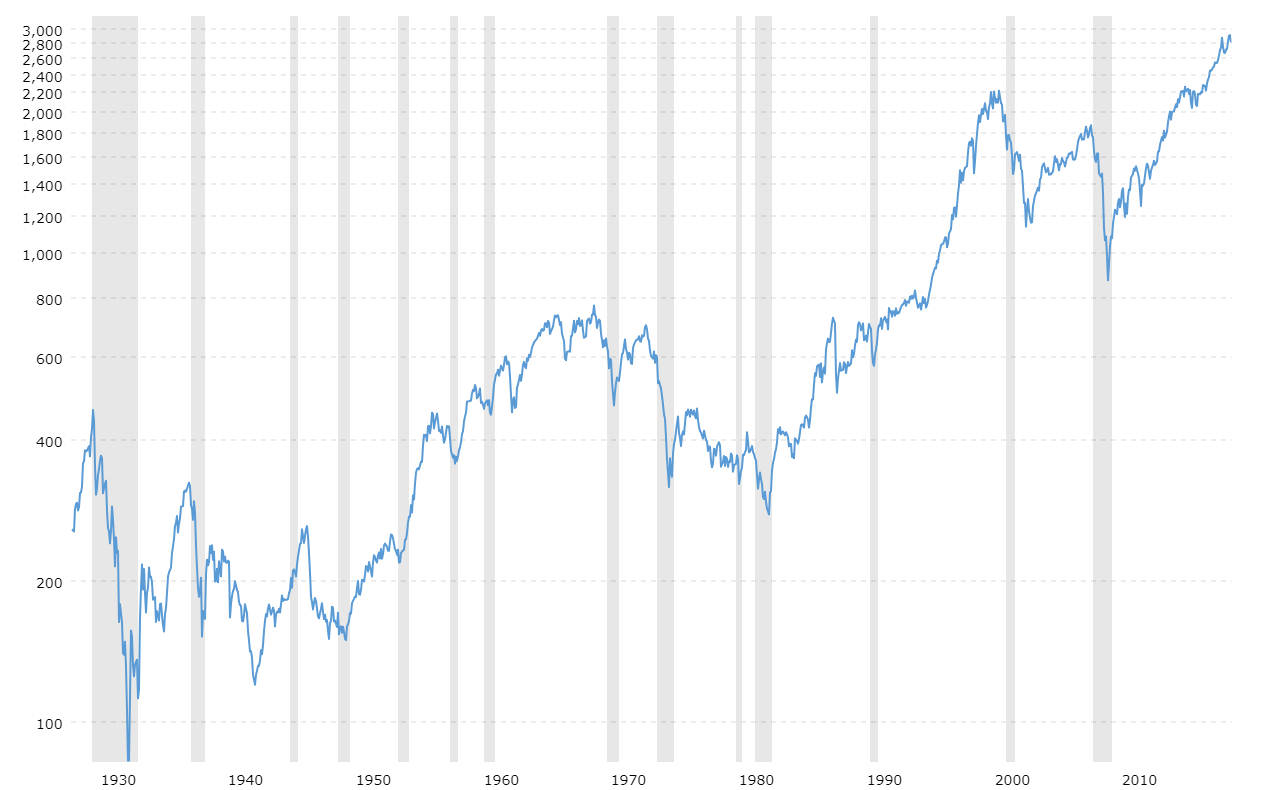
Look at the 70s, same period of high-inflation I was referring to above. The wealthy didn't beat inflation back then, which again is reflected in the previous wealth inequality chart.
I explained how salaries are not automatically tracking inflation, especially low ones.
https://www.pewresearch.org/fact-tank/2018/08/07/for-most-us...
In a numerical sense the rich may suffer more but they won't eat a sandwich less because of it, whereas poor people may end up much poorer and the middle class (aka the comfortably poor) are significantly impacted.
Inflation is the most regressive tax possible on the poor.
For people without income or assets it's a disaster.
See https://www.pewresearch.org/fact-tank/2021/09/07/despite-the...
I do think defining poor as unemployed is way too narrow. There are plenty of people who are employed and also poor.
Definitely. You floated the idea that inflation would be progressive if the creditors have to pay higher wages (if wages rise in sync) while their loan portfolios in "old dollars" become essentially a worthless write down. There's a beautiful, even just economic logic to that. The trouble is that the lag itself becomes wealth under inflation. Normally, TTL between promising a worker a check and sending it gives a nominal value for holding that money as long as possible in an interest bearing or inflation-proof asset. Under inflation that time differential goes wild. Sometimes within a day or two, the value of the payment is gone by the time it gets to the employee. This is before it even enters the system as purchasing power.
Time becomes the most crucial element of profit and control, under inflation.
If there was a scale of value in terms of being between the borrower (people in debt) and people lending (people with cash). It swings heavily in favour of people in debt.
- poor people have less money to repay interest on the debt after buying necessities at an inflated price
- interest rates rise following inflation which will increase debt repayment costs and likely offset any benefits gained from debt being inflated away
- it is very rare for 'people' to actually issue loans, I imagine 99.99% of loans are issued by banks
The rich seem to be asset heavy so are buffeted against inflation.
Interesting! Did not look at it like that. I've had that subconscious instinct as well to purchase important things I need now because tomorrow feels so unstable.
And 6% isn't an easy target to reach for safe conservative investments like a retirement account.
So the gov't borrows money, has the power to make the money they borrowed worth less to pay back, then taxes everyone on earnings on this newly inflated money.
What a racket!
Unfortunately, it's taxation that makes the weakest suffer the most.
Oh, and the govt would like you to believe they have a way to control it.
Yeah sure, I'm going to turn that knob that is one input of a perfectly chaotic system, and I know what is going to happen.
Let's see how that empty promise actually turns out.