> No, wealthy people tend to invest theirs saving in various things that resist or often even beat inflation.
This is easier said than done. Given a risk-free rate it's not that hard to find investments that beat it. What usually happens is that the risk-free rate is around inflation. But right now the risk-free rate is significantly lower than inflation. If the Fed raises the risk-free rate to match inflation then high valuations will correct resulting in a strong correction in the stock market.
SP500 historical chart: https://www.macrotrends.net/assets/images/large/sp-500-histo...
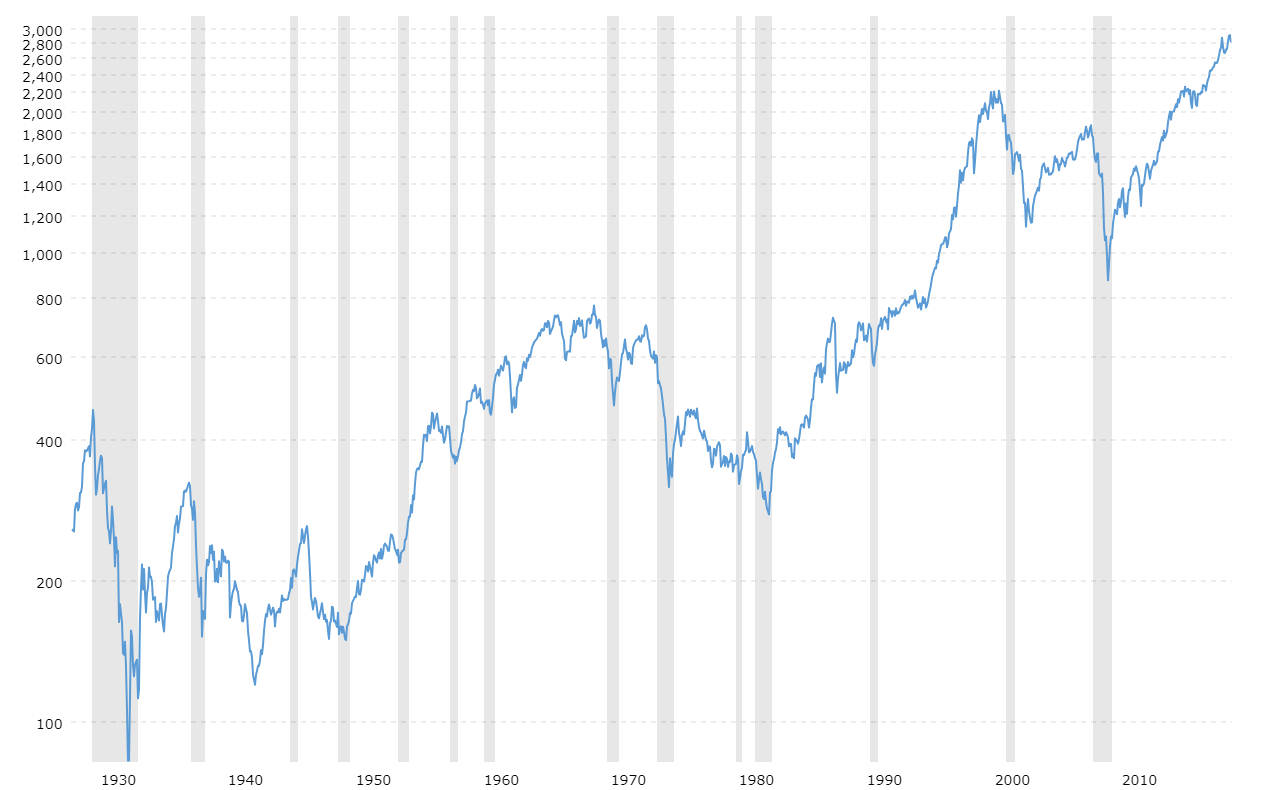
Look at the 70s, same period of high-inflation I was referring to above. The wealthy didn't beat inflation back then, which again is reflected in the previous wealth inequality chart.
I explained how salaries are not automatically tracking inflation, especially low ones.
https://www.pewresearch.org/fact-tank/2018/08/07/for-most-us...
Not at all: people with low incomes struggle the most to get raises.
And those who barely get to the end of the month struggle the most when their purchase power decreases by 5%.
> On the contrary, it's a tax on people that have a lot of cash or cash-equivalent assets.
No, wealthy people tend to invest theirs saving in various things that resist or often even beat inflation.