Exactly. You need look nowhere further than the french nuclear timeline for that to be clear: the country grew from 4.5GWe capacity to 49.5GWe between 1977 and 1987. 900MWe class reactors took 5~6 years to build, and the 1300MWe 7 to 8. And when you've worked out the kink, this can be parallelised massively (as long as you have sites to put them on), for about 20 years the country had a dozen reactors being built concurrently, the slowdown in construction times really started as the number of plants being built decreased: https://upload.wikimedia.org/wikipedia/commons/2/24/Chrono-p....
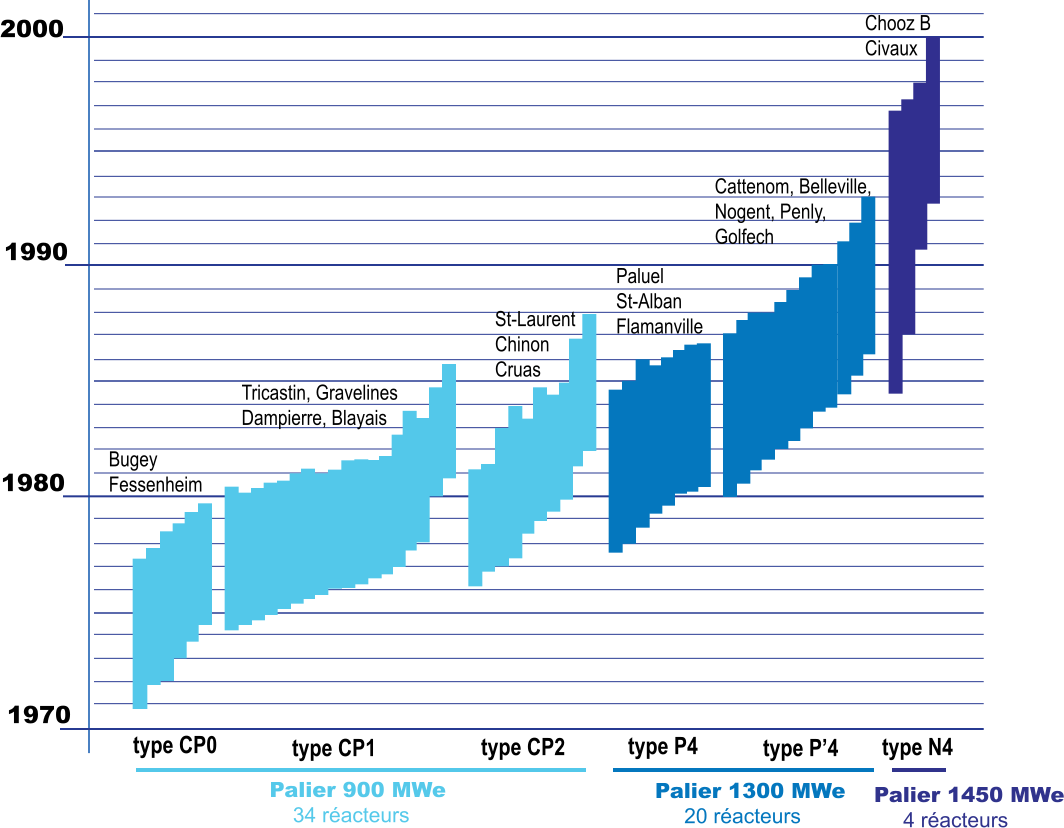
The design got more complex and there were teething issues with the N4, but Chooz took 16 years to enter service where the P3s took 8 years at most.
https://www.statista.com/statistics/270367/share-of-nuclear-...
https://ourworldindata.org/grapher/fossil-fuels-share-energy...
Meanwhile back at Heathrow that would have taken months of permits and planning and dealing with useless subcontractors.
State monopolies FTW.
Too bad really: nuclear power was a way to gain independence (from the US and the oil) but then it kinda fell by the wayside as the country largely went with oil anyway (though the grid is both powerful and rather clean owing to the high ratio of nukes).
Would have been interesting for the country to ride the contrarian gallic spirit and decide to go all in on electricity and renewable way back then.
Maybe we’d have working large-scale SMR too.
The best time to plant a tree was 20 years ago. The second best time is now.
This is because the federal reserve's printed money goes basically into treasuries and stocks.
The rich save basically all of their money. If they decided to spend it on real-world goods, there would be huge inflation.
But it's probably all nil. The cost of building enough nuclear power plants with economy of scale is probably near the same as building enough solar and wind farms.
1. https://en.wikipedia.org/wiki/Smith_Mountain_Dam#Hydroelectr...
The power needs of the occasional cold wind still winter week are fairly large.
Exploration programs are expensive.
SMR's made in a factory seem like the only way to address that, but I have no idea if we can ramp SMR's to national viability in the next ten years.
The only reason it would have worked in France 40 years ago but not today is institutional malaise and bureaucratic capture.
Roots of Progress has an interesting review here [0], which is what I base that on. (It's on my list to read, just haven't gotten to it yet)
Vis-à-vis costs, the government can poof into existence trillions of dollars with no ill effects. Cost is an easily overcome obstacle.
If a mandate came down to produce 1000 new nuclear reactors by 2030, I think it could be achieved. The country just needs the political will to make it happen.