Just trying to send ordinary sums (say $1000) to someone in Venezuela, or Nigeria, or even India or China can be very tricky. Not everyone has PayPal. Even if they do, it may be subject to all sorts of capital controls or taxes that we do not see in most Western countries. It can often be either impractical or extortionate through the traditional financial system.
I have many reservations about Bitcoin, but if I just needed to send some money to someone in a developing country, it's pretty high up there on practical and simple ways to do so, if they can deal with the BTC on their end. Canada is quite free financially. I can send cash pretty much wherever, with no legal concerns if it's not funding crime and any investment returns are taxed. The legality on their end is another question, as this article shows.
I would‘ve thought it’s prudent to keep interest low in such a scenario, because it stimulates investments.
Raising interest rates when inflation is high is Central Banking 101
People still bought and sold and traded bitcoin on IRC. Even robots were still able to do it. The whole thing still works it's just that some use cases are more annoying.
Companies can't easily switch to crypto because they need to pay all kinds of taxes. (E.g. somebody buys a $100 jacket using Bitcoin. How is sales tax collected and paid if there are no crypto off-ramps?)
Employees will of course get paid in the accounting currency of the companies that employ them. How do those salaries get converted to crypto in this vision of a separate crypto economy?
Prices are pegged to fiat but the merchants accept BTC directly.
Further, what percentage of those companies will continue to "accept" bitcoin if they are no more allowed to convert them to dollars?
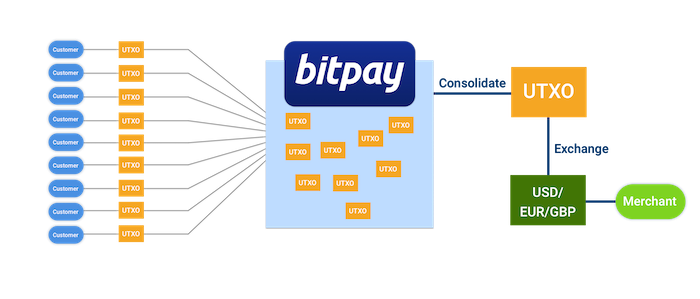
Remember that every actual Bitcoin transaction requires, on average, paying a $17 transaction fee to pay all the miners and the electricity they used in processing the transaction, so you don't want to actually be sending it between people often.
I don't think Tesla would keep the revenue as Bitcoins because the accounting implications are pretty weird. This is from Tesla's 10-K, via FT [1]:
"We will account for digital assets as indefinite-lived intangible assets in accordance with ASC 350, Intangibles — Goodwill and Other. The digital assets are initially recorded at cost and are subsequently remeasured on the consolidated balance sheet at cost, net of any impairment losses incurred since acquisition."
You sell a car for Bitcoin but then you'd have to record the revenue as intangible goodwill on the balance sheet? That would mess up their results.
It's worth noting that Tesla includes US government bonds as cash equivalents, but isn't able to do the same with Bitcoin.
[1] https://www.ft.com/content/364734d1-80df-49d3-bc2f-c813c9306...
It cannot be the other way around. KYC and AML regulations will choke crypto overnight if it cannot at least theoretically access a pool of USD.
I think you overestimate how much people visualize their future based on the degree to which somebody in Washington, DC approves of their choices.
People holding crypto aren't suddenly going to say, "Oh, the government that's already swirling the drain doesn't approve? I guess I'll move my assets back into a currency they control."
Given the concentration of miners, I'd rate the Chinese government as potentially the bigger regulatory risk though...
On the contrary, something like a single high-profile scam with billion-dollar losses for retail investors could lead to Western governments also getting squeamish and shutting down the money flow between exchanges and banks. Nobody will care if that destroys some startup's IPO or a 0.05% holding at a JPMorgan fund.