Also the environmental impact of everyone having an AC, that's not good.
In France and the UK hardly any has an AC because it's not really needed. Your suggestion is that they spend billions of dollars for this? Who buys everyone the AC?
I lived in PNG which is near the equator and hot. It's not the temperature that's the true problem, but humidity. We stayed cool by using the fan, resting, removing clothing, swimming.
The question should be whether AC would be used much, but whether it has a net benefit. And yes, the environmental impact should be taken into account.
To me, that depends (a.o.) on whether those 1,500 excess deaths get ‘compensated’ by lower death rates just after the heat wave (which would mean many of those who died lost ‘only’ a few weeks)
Perhaps laws requiring community centers also function as temperature extreme shelters could be instated.
The laws would have to also provide funding to install and maintain AC and Heating systems suitable for the population around that area.
Additionally, if a business doesn't have AC or heating during extreme temperature alerts, it should close for the safety of the workers.
A more reasonable shortish term solution is to air condition large communal buildings and allow people to camp out overnight when the temperatures become inhospitable.
I think the most dystopian idea would be Exxon not paying for their crimes against humanity, but rather allowed to continue lying to the public about climate change, lobbying governments to reduce their penalties.
If that one week a year can kill people, still think it doesn't make sense?
Thousands of people just died. It is clearly needed.
It would be patronizing if French people offered basic advice on not building on floodplains and storm preparation after Harvey. People just plan based on their prior experiences.
The Texas model offers some good ideas to think about. Why must you get so offended, I didn’t.
https://ourworldindata.org/co2-and-other-greenhouse-gas-emis...
US responsible for about a quarter of cumulative CO2 emissions, and has been #1 since about 1911.
China is emitting more now, but cumulative emissions are only half as much.
Today, there's fewer trees and a lot more AC. It's ironic because AC (especially inefficient window units) contributes to global warming in a big way.
More EU major cities are in-land than US (something about war after war), so there’s less ability to cool off.
And less moderating circulating waters.
That’s... pretty much the definition of ignorant. Being ignorant isn’t bad and being able to recognize what you’re ignorant of it much more important than “not being ignorant”.
Texas for the most part is not prepared for blizzards or icy conditions. We do not have winter tires, we do not carry snow shovels. There are no snowplows that I have ever seen or heard of. We close schools after 1 to 2 inches of snow, and we put sand on roads.
Most people have heavy coats/jackets, but rarely ever wear them. But despite our under-preparedness, not many people die from cold weather in Texas.
This data is a bit old(2003-2008), but is illustrative.
https://www.dshs.texas.gov/chs/vstat/Hotcolddths/hotcolddths...
I live in Houston. When it snows here we will sometimes see sand trucks driving around. They come down from North.
You can't just truck in AC though so I think your example is like comparing apples to oranges.
An often overlooked point is also the situation in workplaces, some parts of Europe simply lack the worker protection needed during heatwaves.
I honestly dont see how most countries in Europe could retrofit buildings to a detectable degree, let alone finance it. There are just to many older buildings build for another kind of climate. Providing air conditioned shelters during the weeks of deadly heat sounds like the most realistic option. That would be similar to what is being done in winter to prevent people from freezing to death.
Mandatory AC is not the solution but many other solutions are being deployed. The first massive heatwave happened in 2003, it wasn't as hot as this summer but took us by surprise and caused over 15,000 death in France, around 70,000 in Europe. Compare this to 1,500 death in the record breaking heatwave of this summer.
Given the super low price of smaller window A/C units, you'd think they'd install a few more of those, maybe it's impractical for some reason. Looking at a chart showing summer highs in Paris since 1900, it would be interesting to look at a newspaper from 1948 and see what happened (the chart shows a roughly 1 C upwards change since 1900 on average, but the last couple of years are outliers similar to a few earlier heatwaves).
I've always wondered what would happen if the power went off for a day or two in Phoenix in August.
The same as the power going off in Minneapolis in the middle of January. It’s treated as a crisis by the utility.
In Europe you generally have another kind of window, which you tilt.
https://www.bew24-fenster.de/media/catalog/category/Kat_Kuns...

https://www.plejadium.de/wp-content/uploads/2019/06/kippfens...
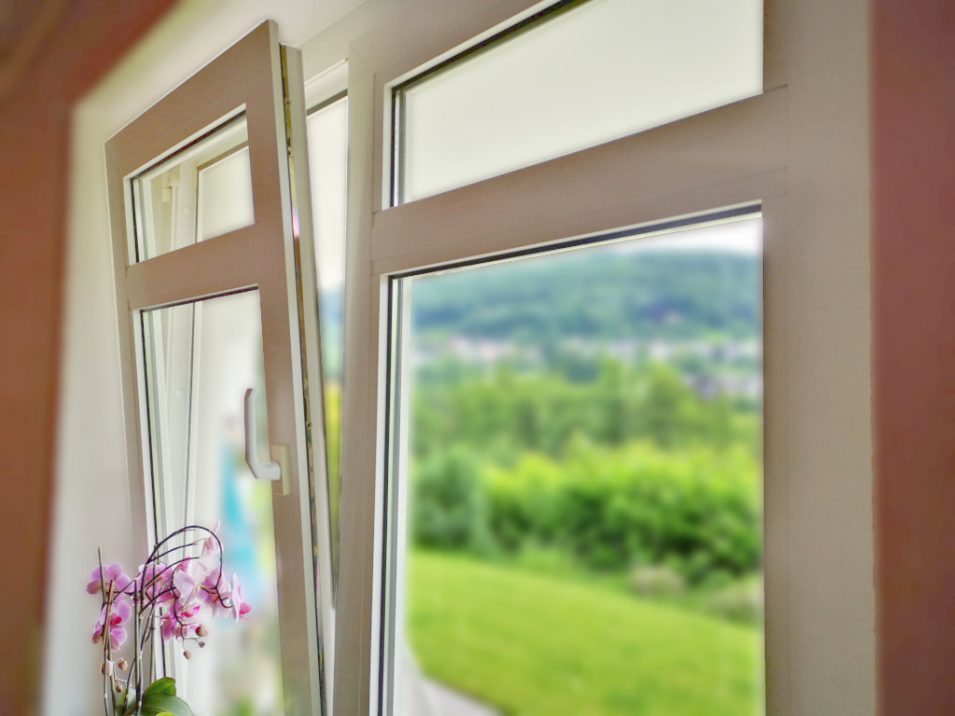
Given the construction, you cant conveniently seal an AC in there. Due to the houses being made from stone, you cant easily replace the type of windows. People also generally rent in the cities, so you would have to convince your landlord to let you screw with his outer wall, which is a big no no. Some countries like Germany also dont allow renters to change the outer appearance of a house. This mostly means no satellite dishes hung out of the window, but also no bulky ACs.
That's what Zadkey was doing, though.
Preparedness for summer is deeply ingrained in everyone's minds here. Many Apartment complexes treat issues with AC units as emergency situations, reach out to on-call handymen and give high priority to their fix.
In the city of Dallas, city code requires that property owners provide refrigerated air to tenants from April 1 to Nov. 1.
"According to state law, landlords must fix any condition that threatens a tenant's health or safety. In Texas, that condition can include a sweltering day in a stuffy apartment with no air conditioning."
It is my hope that people in France look for ways to prepare and better safeguard the health and well-being of their citizens against the heat.
Some information taken from https://www.dallasnews.com/news/investigations/2009/10/07/dm...