"A Phantom camera he uses goes up to a maximum of 1000 fps in 4K — an exposure time of 1/2000 sec with a 180° shutter speed — and the image starts looking pretty dark on the screen."
I'm just trying to find what shutter speed you can get with the Pi camera.
Edit: Just having a little play:
./raspiraw -eus 500 -md 7 -t 1000 -ts tstamps.csv -hd0 hd0.32k -h 64 --vinc 1F --fps 660 -r "380A,0040;3802,78;3806,0603" -sr 1 -o /dev/shm/out.%04d.raw 2>/dev/null
500 microsecond exposure (1/2000 seconds) seems to run.
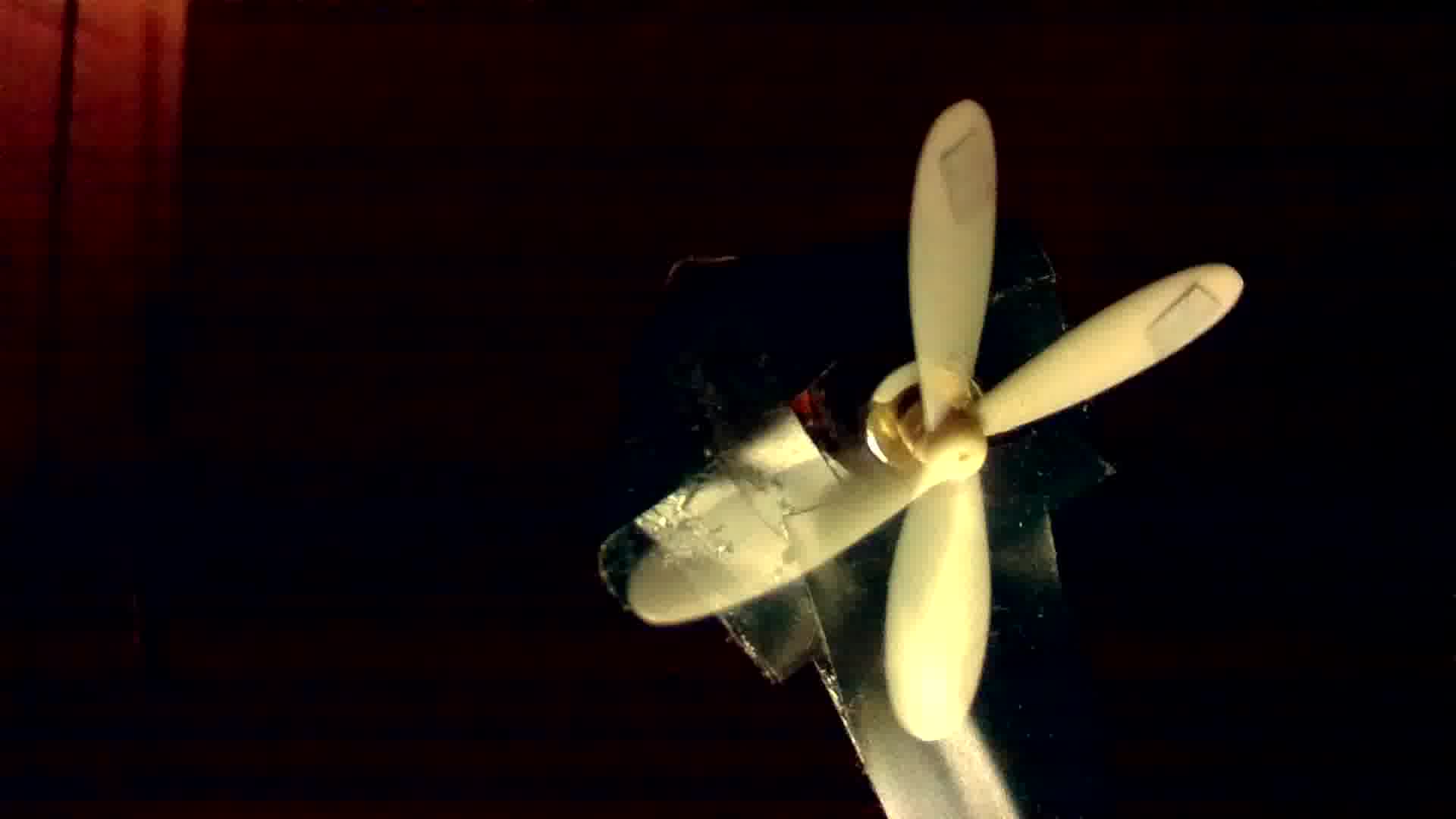
You can reduce the shutter time nearly arbitrarily, as long as you increase light intensity. I did place fast rotating propeller just above a 5000lm led, and did two 9us long flashes. See this image on how bright the two blades of propeller look, at both captured locations (the rest is dark, image was taken inside a closed cardbox, without flash everything was just black): https://raw.githubusercontent.com/Hermann-SW/Raspberry_v1_ca...
As long as your leads didn't have too much capacitance, it ought to just work.
The phase shifting you can do in software by (for example) restarting the camera hundreds of times till by chance it starts a frame with the phase offset you want, and then just run on from there.
I'm talking the actual quartz crystal here, not the output of some digital clocking chip (which you're right, wouldn't work).
There was a MIT student project group that took 16 v1 cameras(!) global external shutter frames and created an animated .gif from that! "Ultra high-speed imaging, capturing matrix style bullet time" https://www.raspberrypi.org/forums/viewtopic.php?f=43&t=2404...
Reproducing something like this using cheap sensors would require some hardware acumen, but isn't unfeasible. Most industrial cameras, even cheap ones, have external triggers/clocks with nanosecond latency.
The MIT group used a flash with 0.5us exposure time. I asked for details without answer yet, but assume that it is costly (Vela One does cost 940£) and one-shot, no fast repeating flashes (Vela One has only 50Hz maximal continuous strobe frequency).
I used cheap 2$ 5000lm LEDs with 7$ led driver to convert mains to 38V/1.5A DC. I was able to do global external shutter captures with that led with 4us shutter time, did not try below yet. Most interestingly these LEDs allowed for 8.33us flashes at 9KHz frequency and used that to capture 109m/s flying airgun pellet 10 times in a single multiple exposure frame (9000eps, exposures per second). PI pwm should easily allow for 90,000eps frames for capturing 900m/s 0.50bmg bullets multiple times per frame in flight ...
You can do the same with 6$ Raspberry v1 camera clone (not with v2), bill of materials as well as global external shutter setup, software and example captured frames can be found here:
https://github.com/Hermann-SW/Raspberry_v1_camera_global_ext...