There have been countless advancements in the sciences when people have been forced to work around existing IP and have uncovered hidden benefits when working through the actual implementation.
It is a hidden benefit of the western system of IP that China et al. have not yet caught on to.
Having said all that "with a laser diode" is categorically different than "with a computer". In the latter case, you can do any general purpose computation you like. So if you have a machine driven by a computer, you should not be able to patent it if you would not ordinarily be able to patent the machine. In other words, the driving of the machine by a computer should not be patentable, IMHO. Of course it gets complicated as you add more and more machinery to the machine -- should "computer driving a car be patentable"? Probably it should as it is not just software, even though it requires software. I think it's tricky.
If a laser diode allows you to do things you wouldn't otherwise be able to do and that use of the diode is not obvious, then it probably should be patentable. However, generally if "machine with a laser" is not patentable, then "machine with a laser diode" should also not be patentable. There's got to be something special and non-obvious about the use of the laser diode.
Personally, I'd take the "have dirt-cheap home SLA printers ten years earlier" option, thank you.
Oh China has caught on. When they see some new IP they want, they acquire it or steal it. Why bother with all those silly rules the West thinks are so important.
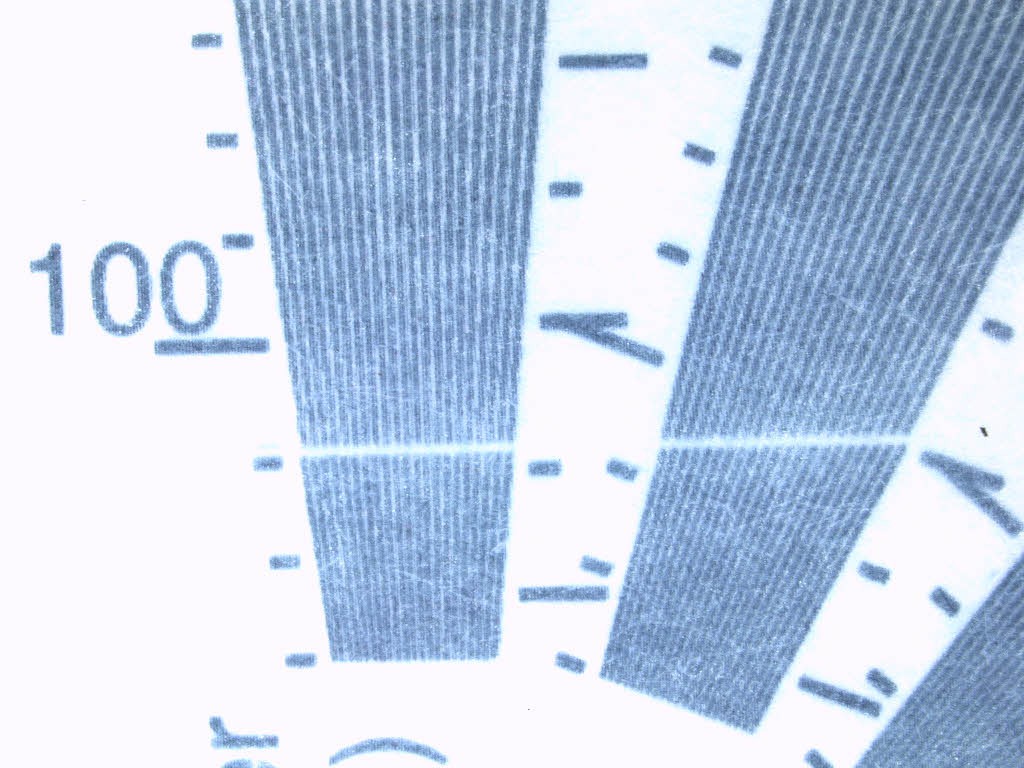
More data is here https://cdn.hackaday.io/files/21933938381472/21measurements.... pixel 4.65 microns. You can use opencv to do the trick. I added a little script in this one.
It uses the phrase ”digital light processing/digital micromirror device”.
I don’t know how that slash should be interpreted. If it’s “aka”, the patent doesn’t cover using prisms.
I wouldn’t bet on that, though, noting that the patent is careful to avoid the term “light”, using the broader “electromagnetic radiation” instead.
Three things: 1) X has not to pay anything to conceptualize his innovation. 2) X can make a nested patent. 3) a user of the innovation of x must pay a royaltie (why is that an issue?) to Y. If X made a nested patent, the user must pay X and Y. Is this right?
BTW who fixe the amount of royalties?
Nobody's going to buy the $100 item if it provides $15 amount of value, and nobody's going to make it for $15 if $9 of it is going to licensing.
That'd stop patent trolls and silly patent holdings dead. You don't use it, you can't charge others.
If someone starts using it, you would charge a percentage royalty.