I am currently trying to buy my first house and every single place I look at has "Ideal for a first time buyer or as an investment opportunity" in the description so I am in direct competition with these parasites. Frustrating to say the least.
I can think of the following options:
1. Prohibit sale of real estate -Obviously if you prohibit it forever, anyone who buys it will be stuck with it forever. Nobody wants to be stuck with a piece of property forever. So I'm assuming the next best thing would be to prohibit sale within an arbitrary time period (1 year? 5 years? 10 years?). Whatever that period is, if it's meant to have any effect, it will be long enough to disincentivize people from buying property who do not intend to own it for shorter periods of time. - That means no more fixer-uppers: People won't buy shitty places to make them nice and resell at profit. That will leave us with more shitty places. That will leave us with less non-shitty places on the market, thus driving up prices even more in that area. Seems like the opposite of what people generally want. - It will probably make certain areas of the city way more attractive than they already are. If you're going to be locked in somewhere, it better be good. So rich people have an incentive to spend more money than they usually would. Also, less than rich people will have the same incentive. Some people will make riskier decisions on how much money they should spend on housing and may very well bankrupt themselves in the process. It's difficult to predict what kinds of problems this could create, but it will create problems.
This approach seems to me to just magnify the problems we already have.
2. Tax profits from sale of real estate close to 100%. This will introduce the same issues above with fixer-uppers. The incentive to make unlivable places livable will be gone. Houses that are ruined and that the owners can't afford to fix will not be taken care of, thus reducing the already limited supply. Additionally, anyone buying a house and living in it for an extended period of time will lose his equity to inflation. It becomes an automatic liability to buy a house. People who rent out houses do so, because the renters pay their mortgage while the house appreciates in value. If the appreciation component goes away, less people will be incentivized to buy to rent. Thus, lower income people will have less options to live. Again, lower-income people take the hit in this scenario.
3. Go full-commie.
- Make all real-estate public property, managed by the city. - The city can either do that by just taking property away or if there's any semblance of the rule of law left, they will have to pay the current owners. - This will be a gigantic expense, increasing the tax burden on everyone in the future. - Next, the city will decide who gets what house at what price. There will be waiting lists, income disclosures to decide on who will get what place to live in. Now you'll have bureaucrats processing living arrangements, so everything will take longer. - Waiting lists for some areas will naturally be much longer than for others. - New housing will only be built by an already bankrupt city, which means it will likely not be built at all. - The destruction of the market, the confiscation of property, the waiting lists, processing times and rising taxes will scare away the people that this city has been attracting for so long. - There will be an exodus of tech into more market-oriented areas and San Francisco loses its appeal. - This will lead to shorter waiting lists and more people finding affordable housing, but it will also reduce the tax-base of the city. - So then the city needs to erect a wall around itself to make sure that nobody can leave and stays inside to be skinned to pay for escalating expenses. If people try to escape, there need to be heavy punishments to make sure they really don't leave....Hm...sounds vaguely familiar...
I don't see how this fixes anything. Would you care to elaborate how you would make this work?
The most direct solution is to prohibit landlordism and private renting. This prevents housing from being treated as an investment and keeps it within the housing pool.
The price of stocks, bonds, commodities and other income generating assets can fluctuate for many reasons, one of which is an increase in supply.
Housing is a financial instrument. And like any financial instrument, there is a risk of over supply. If the risk goes up, the new price would reflect the risk.
When legislation tries to fix pricing, black markets pop up.
No legislation that does not increase supply will reduce the cost of housing in real terms.
I argued against your point.
Instead of making a counterargument, you decided to vilify mine by associating it with "vested interests".
Jonathan Haidt is illuminating:
___
[...]liberals answered the Care and Fairness questions while pretending to be conservatives. When faced with questions such as “One of the worst things a person could do is hurt a defenseless animal” or ”Justice is the most important requirement for a society,” liberals assumed that conservatives would disagree.
___
From: https://theindependentwhig.com/haidt-passages/haidt/conserva...
In order to curb housing as an investment in Berlin, there is a two-tier tax system for money gained from selling an apartment for example.
- The profits from the sale of apartment that you've lived in less than 2(?) years will be taxed at 50%
- The profits from the sale of apartment that you've owned for less than 10 years (but haven't lived in) will be taxed at 50%.
That being said, housing is still a problem, especially since it is relatively cheap in comparison to other EU capitals. Which means lots of people move here, and sometimes displace locals.
Can you elaborate on this? I don't know much about financial instruments and would like to know why these two are mutually exclusive.
People buy bonds, so I don't think that maximizing ROI is always necessarily the criteria for a desirable investment.
Meta-observation: to me, nothing in economics or finance is "blindingly obvious". Many economic phenomena seem obvious but in reality are way more complex than could be represented by any model that I could understand. Your explanation makes sense at some level, but I don't have much confidence in it, because all I can do is wonder what other mechanisms interact with the mechanism you've described, and what the net impact is.
the financial world is more complicated than you realize.
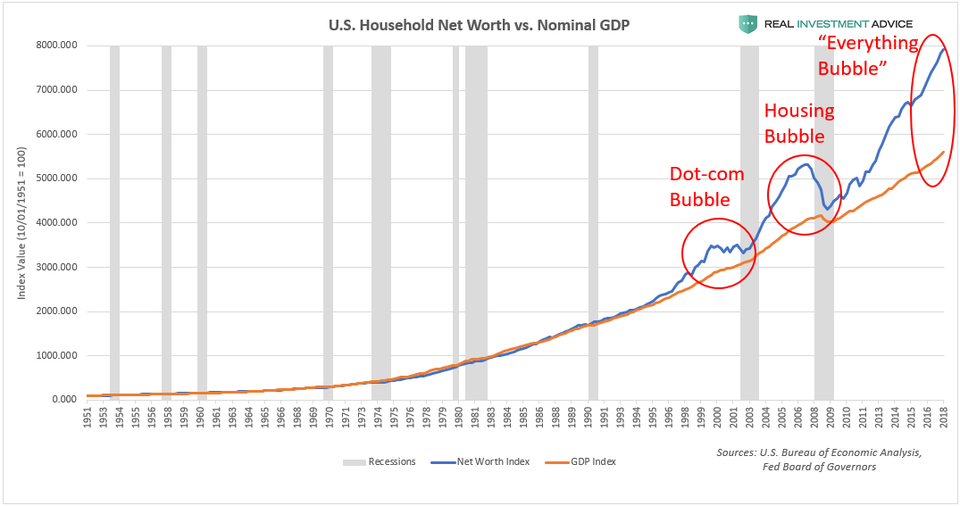
We libertarians have been beating the inflation drum for decades now and been largely ignored and / or laughed at. Maybe it's time to revisit how adding trillions and trillions to the economy every year could maybe possibly lead to higher prices in "inflation hedge" type goods.[2]
[1] https://thumbor.forbes.com/thumbor/960x0/https%3A%2F%2Fblogs...
https://news.ycombinator.com/item?id=19802482
Taken literally, there's no contradiction between housing being affordable and being a financial instrument.
But I think s/he meant the theme of that article, that housing can't be both a reliable investment we think of it as, and affordable. If you make it reliably affordable, like food, then you can still invest in its related instruments, but it's not a good idea, since e.g. corn futures are not expected to reliably appreciate in value.
Affordable housing would be likely to have the price rise no faster than inflation, or it will eventually be out of the price range of people whose incomes are only rising with inflation.
In such a world, how would anyone find a rental to live in? There are benefits to being able to rent in many different life situations.
possibly? besides, as the sibling comment notes, making it impossible for anyone to rent?
a few more seconds of thought notes that it would also cause troubles for anyone inheriting a home. want to keep grandma's house until you can retire and move into it? nope, can only own one house, got to sell it off.
want to move from one city to another, but you're having troubles selling your current house? nope, just got to auction it off and take whatever you get before you're allowed to leave.
Could you expand on this?
This is what people/companies say who are deeply invested in making scads of money from sky high housing prices.
It's a ruse, a distraction, a canned answer designed to ensure the finger is not put on the real problem.
The real problem is that housing cannot be both affordable and a financial instrument.