Yet I was confused, because as a user all I cared about was my stuff that was ... right there in a non root account.
As you say all the stuff I was concerned about was right there, but nobody talked about how important that was.
On my Linux systems, particularly under Debian, there's some assurance provided through the Debian Project, its guiding documents (social contract, constitution, policy), and debian developers. The project explicitly serves the users. This doesn't prevent bugs and occasional malice, but tends to tremendously reduce incentives for it.
Smartphones ... are a mess, and Android rather particularly so. I've suggested entirely rethinking how app development is performed, particularly for basic utilities, closer to the Debian model. I have little hope of this occurring.
That was true up to Marshmallow (Android 6), when finer grained permissions were added.
> On Android apps just request everything
Well, this is as true as with any other operating system, isn't it?
Nowadays, I try to use F-droid as much as I can, applications there ask for reasonable permissions, and are open source, which makes it easier to trust them.
And it looks like it's been ported to Android and iOS. But it's not default, I guess.
But neither is AppArmor in Linux. So why haven't we heard about apps stealing stuff from /home/user/? Is it just that distros do a better job of policing their repos? Or that the userbase is too small to attract malicious app developers?
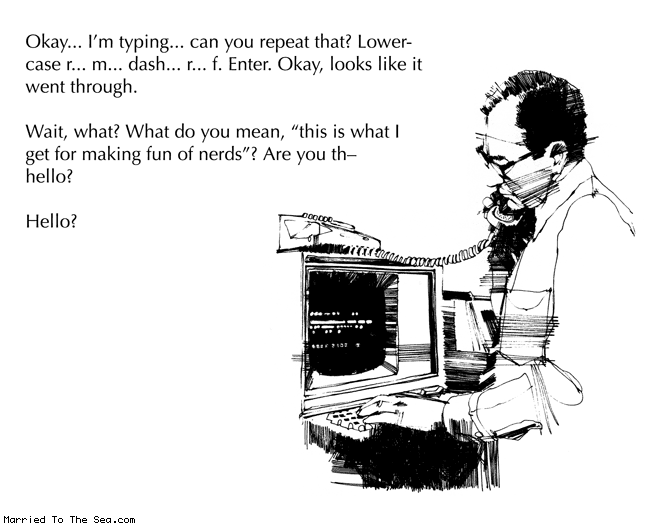
I don’t think this will do much besides blow away the root user's home directory, which probably doesn't have much in it anyway. But I get what you mean.
http://www.marriedtothesea.com/041808/this-is-what-i-get.gif
On German consumer shops, most "deal of the day" are still a mix of 4.4 and 5.1.
A non-root user (hopefully) can't root the system or rm -rf /root.
But everything interesting is stored in that user's home folder with implicit RW permissions anyway.
On Android apps just request everything. I imagine (without explicit knowledge) that an app given permissions could rewrite, erase, or pull down over the network contacts / photos / etc in the background.