News for hackers. Stuff that matters.
Re:How a Single Mechanical Failure Sparked 625 MTA Delays (2... by quietbritishjim on Tuesday February 06, 2018 @12:48PM (#16317918)
> “Their nightmare scenario,” says Gene Russianoff of the Straphangers Campaign, the venerable subway gadfly group, “is there are these people who are like bouncers who are standing in front of the staircase at Grand Central and put up a felt line and say, ‘You can’t go down for 15 minutes, because it’s too crowded down there.’ And it’s not an insane, paranormal phenomenon. It happens in London. And it would be terrible.”

I've had this happen while commuting in London, and it is definitely annoying. But it is not "terrible" and certainly not "insane" or a "nightmare scenario". Surely it is better than the vicious cycle of overcrowding forcing longer dwell times forcing more overcrowding? And that's not even taking into account the obvious danger of overcrowded platforms, with people at the back wanting to get to the front, and people at the front teetering over electrified rails as a train approaches.

Re:How a Single Mechanical Failure Sparked 625 MTA Delays (2... by Jesus_Jones on Tuesday February 06, 2018 @01:28PM (#16318229)
I've always wondered, why don't they have fences a few feet from the edge of the platform, with many open gates? Then you could stand at the fence without being able to be pushed into the train's path. Since they aren't on the edge, you could get off the train okay. It would reduce free movement but would not matter unless there was heavy traffic - and in that case, it would be welcomed, by me at least.

Let's see if I can do this with ascii art, just for fun:

   [trains, edge of tracks below]
==========================================================

--- -------- -------- -------- ------- fence line

   (people, crowds .................................)
Re:How a Single Mechanical Failure Sparked 625 MTA Delays (2... by avianlyric on Tuesday February 06, 2018 @01:47PM (#16318402)
In London TFL is looking to deploy more track side doors, which are similar.

I can’t speak for other cities, but in London many platforms are simply too narrow for a few feet of the platform to be cordoned off.

Additionally the other issue with overcrowding is emergency and disaster response. If the fire alarm goes off, you need to get all those people too the surface, without anyone being crushed or trampled (look at the Hillsborough disaster to see what happens when you get to wrong). I suspect that people being pushed onto the track is minor concern compared to what happens if people start to panic.

Re:How a Single Mechanical Failure Sparked 625 MTA Delays (2... by CaptainZapp on Tuesday February 06, 2018 @02:56PM (#16319013)
This article would justify a submission of its own but is so spot-on in reply to your comment; here we go:

https://www.newyorker.com/magazine/2011/02/07/crush-point

Re:How a Single Mechanical Failure Sparked 625 MTA Delays (2... by istorical on Tuesday February 06, 2018 @03:06PM (#16319103)
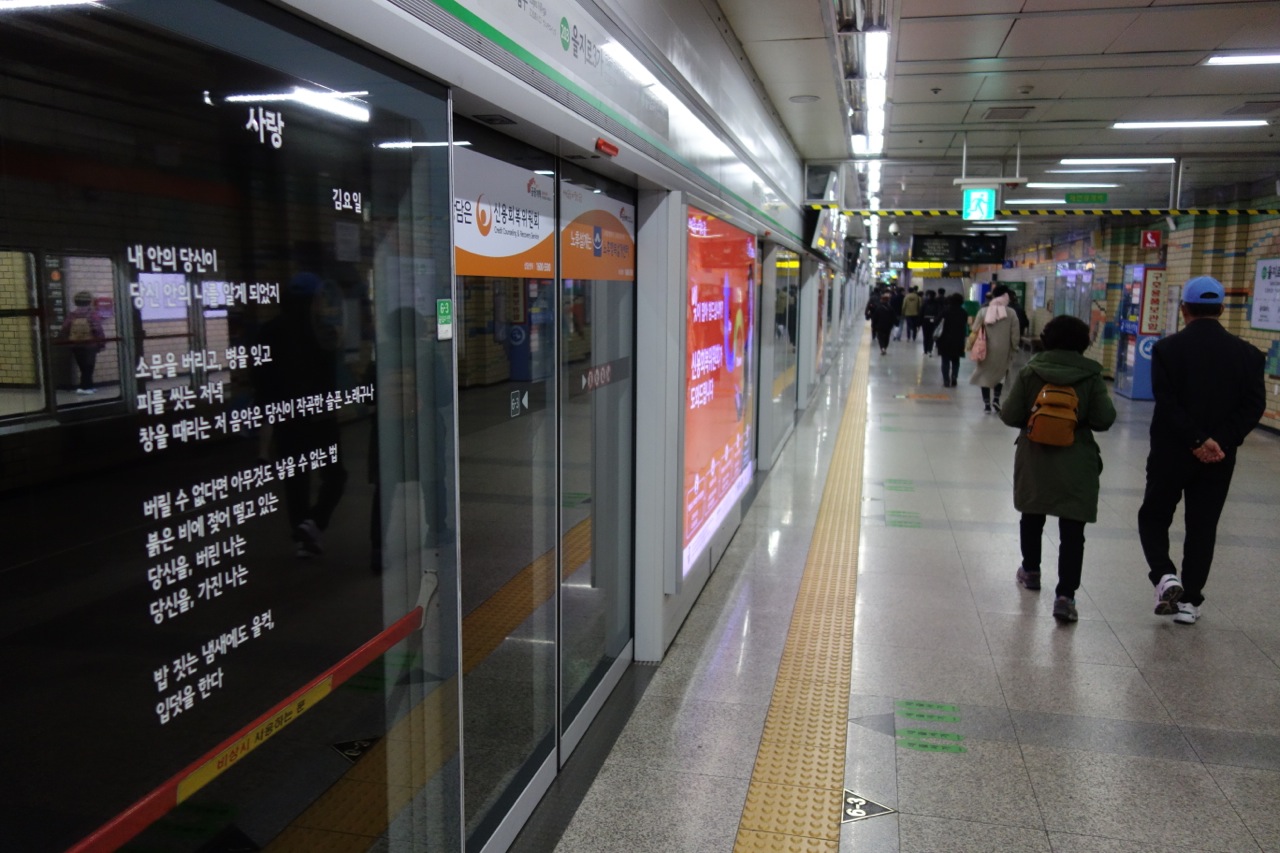
This is common in modern systems with consistent lengths of trains and cars, consistent door placement, and a consistent stopping place.

But outdated systems like NYC's doesn't have consistent alignment when stopping, so it would be difficult for the train car doors to line up with the gaps in the fence (or wall/screen).

Here's how it should work in any modern system or system to be upgraded: http://blog.lareviewofbooks.org/wp-content/uploads/2015/12/K...
Re:How a Single Mechanical Failure Sparked 625 MTA Delays (2... by razorunreal on Tuesday February 06, 2018 @04:54PM (#16320239)
That's what they do in Hong Kong, a nice glass barrier. Solves the trash on the tracks problem, plus people can't fall down there.

My guess is that requires a precise stopping position, which requires a proper control system, which they probably don't have.

Re:How a Single Mechanical Failure Sparked 625 MTA Delays (2... by kuschku on Tuesday February 06, 2018 @01:36PM (#16318302)
What you’re suggesting would be a system similar to what is used today on rollercoasters.
Re:How a Single Mechanical Failure Sparked 625 MTA Delays (2... by Someone on Tuesday February 06, 2018 @04:49PM (#16320182)
Is it? I haven’t been in one recently, but I would get people out on one side, and in on the other (which typically isn’t possible in existing subway tunnels)

Rollercoasters have a few other advantages:

- exits at every row of seats.

- less crowded (no standing passengers, never three people on a two seat bench)

- at every stop, everybody gets out, and everybody gets in.

- passengers typically are relatively fit (no small kids, no elderly)

- no luggage.

That simplifies the process quite a bit.

Re:How a Single Mechanical Failure Sparked 625 MTA Delays (2... by kuschku on Tuesday February 06, 2018 @05:16PM (#16320448)
Of course, but rollercoasters also frequently have much more money to spend on security features, so technology first seen there shows up a while later in public transit.

E.g., modern signalling that replaces the old block signalling, or the station door systems to let people in/out which now are also in major subways around the world.

Re:How a Single Mechanical Failure Sparked 625 MTA Delays (2... by s0rce on Tuesday February 06, 2018 @01:20PM (#16318177)
This seems basically the same concept as metering lights at freeway on ramps. In the end waiting a few moments can prevent overcrowding make it faster for everyone.
Re:How a Single Mechanical Failure Sparked 625 MTA Delays (2... by nikanj on Tuesday February 06, 2018 @01:28PM (#16318232)
Many people's definition of "insane nightmare scenario" is being slightly inconvenienced personally, for the sake of great common good.
Re:How a Single Mechanical Failure Sparked 625 MTA Delays (2... by closeparen on Wednesday February 07, 2018 @10:41PM (#16330003)
Many people (especially those who can afford central real estate) mistakenly believe that it serves the common good to deny others time-efficient transportation.