I can’t speak for other cities, but in London many platforms are simply too narrow for a few feet of the platform to be cordoned off.
Additionally the other issue with overcrowding is emergency and disaster response. If the fire alarm goes off, you need to get all those people too the surface, without anyone being crushed or trampled (look at the Hillsborough disaster to see what happens when you get to wrong). I suspect that people being pushed onto the track is minor concern compared to what happens if people start to panic.
But outdated systems like NYC's doesn't have consistent alignment when stopping, so it would be difficult for the train car doors to line up with the gaps in the fence (or wall/screen).
Here's how it should work in any modern system or system to be upgraded: http://blog.lareviewofbooks.org/wp-content/uploads/2015/12/K...
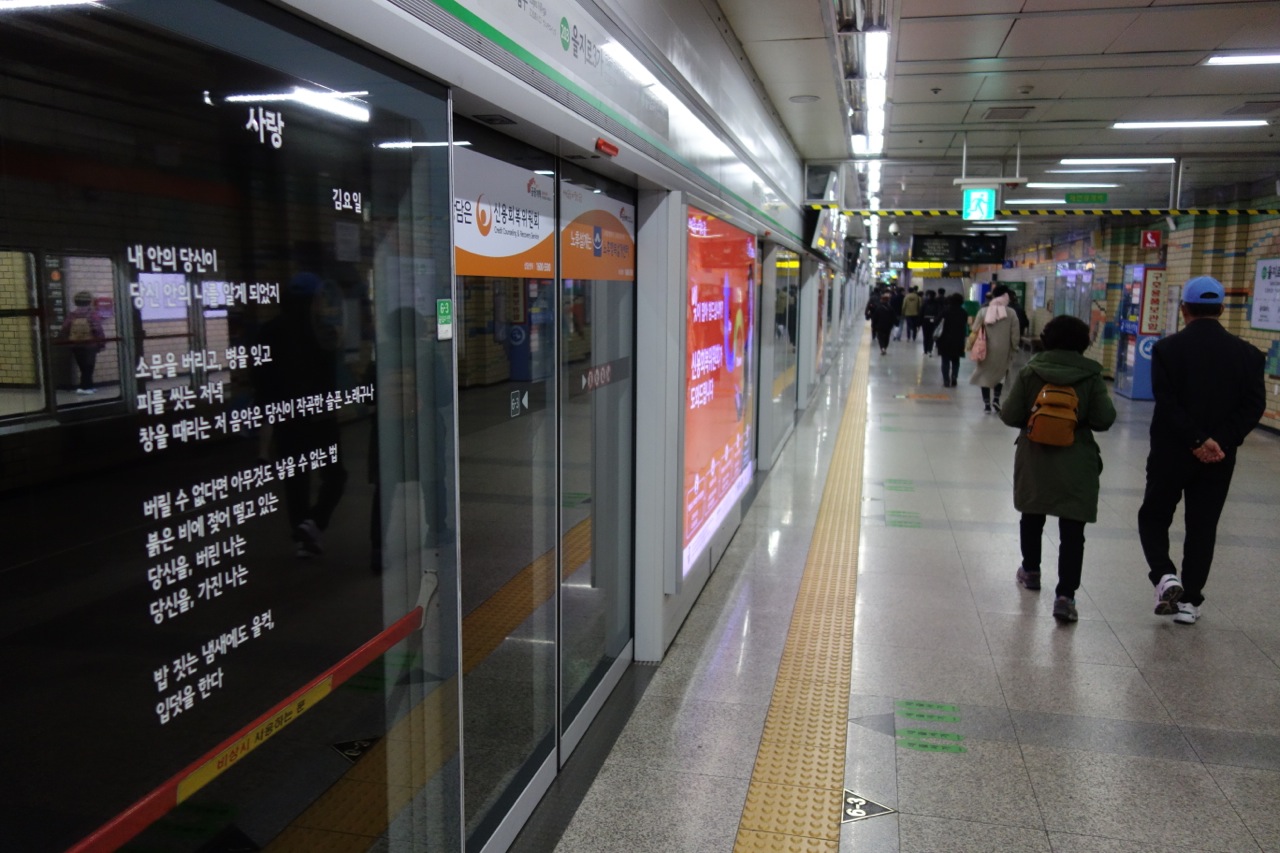
My guess is that requires a precise stopping position, which requires a proper control system, which they probably don't have.
Rollercoasters have a few other advantages:
- exits at every row of seats.
- less crowded (no standing passengers, never three people on a two seat bench)
- at every stop, everybody gets out, and everybody gets in.
- passengers typically are relatively fit (no small kids, no elderly)
- no luggage.
That simplifies the process quite a bit.
E.g., modern signalling that replaces the old block signalling, or the station door systems to let people in/out which now are also in major subways around the world.
Let's see if I can do this with ascii art, just for fun:
==========================================================--- -------- -------- -------- ------- fence line