News for hackers. Stuff that matters.
Re:Walkable Streets Are More Economically Productive by reaperducer on Thursday January 18, 2018 @11:21AM (#16178273)
This is something that certain cities have understood for many years. Chicago, for example, mandates that all new development from a simple three-story building to a 100-story skyscraper has retail at its base to improve the walkability of its streets and make its business corridors vibrant. This also helps push down retail rents even in the CBD, allowing local upstart businesses a shot at reaching the masses.

Chicago has also come around to the notion that streets aren't "for cars." Streets are public property and belong to all of the city's citizens, including the hundreds of thousands who don't own a car. CDOT evaluates streets and sometimes decides that private property storage (parking cars) isn't the best use for some of that land. So it turns parking spaces into miniature parks or seating areas, or public art.

Re:Walkable Streets Are More Economically Productive by rm999 on Thursday January 18, 2018 @02:57PM (#16180734)
Weird - I visited Chicago a couple years ago from NYC and was shocked at how pedestrian-unfriendly central parts of Chicago seemed (e.g. River North). There were parking lots everywhere, with aggressive drivers pulling in and out. I walked through a parking lot to go to a liquor store and was almost run over. Sometimes crossing a large street felt like a race against the green light. Jaywalking signaled to drivers that they should speed up, which is the mark of a driver-run city IMO.

The whole experience contrasted heavily with the east coast cities like DC, Baltimore, Philly, NYC, Boston. Maybe it's changed in the last few years, though.

Re:Walkable Streets Are More Economically Productive by lstyls on Thursday January 18, 2018 @03:18PM (#16180954)
This makes sense to me. Street-level retail != walkability. Anyone who has tried to walk from a suburban stripmall to another right next door can attest to this.
Re:Walkable Streets Are More Economically Productive by mcv on Friday January 19, 2018 @04:42AM (#16185105)
I was thinking more of people sitting outside bars and restaurants blocking the sidewalk, as often happens in the center of Amsterdam.
Re:Walkable Streets Are More Economically Productive by brailsafe on Thursday January 18, 2018 @11:18PM (#16184120)
That's where it's important to consider the often sprawling nature of suburbs and how they're inherently unwalkable. While that is definitely a problem, it seems to be a sprawling problem.
Re:Walkable Streets Are More Economically Productive by lstyls on Friday January 19, 2018 @01:53AM (#16184570)
Its not a suburb or sprawl problem. It's a car problem.

I now live in Manhattan, the most densely populated chunk of the US. Any time I walk somewhere I spend about half the time waiting for lights so that I can safely cross a street.

Cars are massively subsidized by government.

Re:Walkable Streets Are More Economically Productive by brailsafe on Friday January 19, 2018 @02:01AM (#16184604)
Well, I don't disagree at all, but would argue that it's kind of a circular dependency problem. Sprawl would exist without cars to be sure, but cars make it much easier to expand, which increases dependency on cars, which supports sprawl. Then the people who have moved outward use their cars to work in the city because there's nothing in the suburbs and a poorly designed city (or one that is dependant on the people with cars) prioritizes that.
Re:Walkable Streets Are More Economically Productive by lstyls on Friday January 19, 2018 @05:02AM (#16185174)
Definitely. Suburbia could not exist without cars.
Re:Walkable Streets Are More Economically Productive by brailsafe on Friday January 19, 2018 @11:12AM (#16187263)
Well, suburbia started becoming a thing long before cars and comes from the Greeks. However, I don't think the kind of cities you see today would necessarily have expanded so far without cars. They are not a book to cities or density from what I can tell.
Re:Walkable Streets Are More Economically Productive by Endy on Friday January 19, 2018 @02:33AM (#16184706)
As someone who walks in Manhattan, I see where you're coming from, but my experience differs. Specifically, 99% of the time I'm walking in Manhattan, I'm not trying to get somewhere on the same street or avenue I started on, so I can turn and walk along whatever block to avoid the lights. Plus (at least in the 40s), there are plenty of subway entries/passages where you don't need to pay but can pass through to get underneath the street - and buildings you can pass through as well. Of course, figuring out this maze is half the "fun" of walking in Manhattan.
Re:Walkable Streets Are More Economically Productive by rorykoehler on Saturday January 20, 2018 @03:57AM (#16192672)
In Singapore they are experimenting with putting all traffic beneath the ground in new residential neighbourhoods.
Re:Walkable Streets Are More Economically Productive by abrahamepton on Thursday January 18, 2018 @03:22PM (#16180998)
River North is also an unusual neighborhood in Chicago - there are dozens of walkable little downtowns in other neighborhoods across the city, but RN is an abomination and I usually try to get out of it quickly whenever I find myself there.
Re:Walkable Streets Are More Economically Productive by reaperducer on Thursday January 18, 2018 @03:10PM (#16180867)
A lot has changed. In the last five years dozens of new skyscrapers have been built in the CBD (The Loop, River North, Near North, West Loop, etc...). Scrolling through Chicago Architecture web site [0] will give you an idea of the level of rapid development.

[0] http://chicagoarchitecture.org

Re:Walkable Streets Are More Economically Productive by debt on Thursday January 18, 2018 @06:15PM (#16182525)
Chicago is huge. River North is a good example of what you're talking about, but most of the city is not as you described.

For example, Rogers Park is extremely walkable, safe part of the city.

Re:Walkable Streets Are More Economically Productive by del82 on Thursday January 18, 2018 @11:44AM (#16178512)
Interestingly, Strong Towns published an article a bit more than a week ago about why mandating ground-floor retail is also not the best way to go:

https://www.strongtowns.org/journal/2018/1/8/mixed-up-priori...

Re:Walkable Streets Are More Economically Productive by davidw on Thursday January 18, 2018 @11:49AM (#16178555)
He's one of the Market Urbanism ( http://marketurbanism.com/ ) guys, so a bit more on the libertarian edge of things, but it's a good point in any event: cargo cult urbanism is probably better than "suburban experiment" urbanism, but flexibility and adaptability are even better.

Edit - one of the really cool things about the growing movement that - broadly - includes YIMBY's, Market Urbanists, Strong Towns and so on is that it really crosses the ideological spectrum. For instance, this quote:

"Reforming local land use controls is one of those rare areas in which the libertarian and the progressive agree. The current system restricts the freedom of the property owner, and also makes life harder for poorer Americans. The politics of zoning reform may be hard, but our land use regulations are badly in need of rethinking."

From https://www.brookings.edu/research/reforming-land-use-regula...

Edit 2 if you're interested in Strong Towns, it's a pretty cool group, with Slack ( https://www.strongtowns.org/discussion-board/ ) and local groups that are starting to form: https://www.strongtowns.org/local/

Re:Walkable Streets Are More Economically Productive by closeparen on Thursday January 18, 2018 @03:12PM (#16180877)
Pretty sure progressives are strongly aligned on opposition to any housing construction unless it’s specifically set aside for low-income residents, and are okay with low density zoning as an anti-gentrification measure.

YIMBYism is more center-left than progressive.

Re:Walkable Streets Are More Economically Productive by nkoren on Thursday January 18, 2018 @04:08PM (#16181463)
Are you from San Francisco? I've noticed that "Progressive" has taken on an extremely weird meaning there, which is contrary or at least orthogonal to how it's used everywhere else in the world. Nowhere else that I know of is opposition to urban infill development billed as "progressive".
Re:Walkable Streets Are More Economically Productive by nostrademons on Thursday January 18, 2018 @05:04PM (#16181956)
It's non-uniform there, which is a little weird because "progressives" in the Bay Area are arguing strongly for more infill development while other "progressives" are arguing strongly against new development.

I think it's because San Francisco was "progressive" back in the 60s, which means that there's been time for the past couple generations of progressives to become entrenched NIMBY's with a vested interest in the status quo while still maintaining their "progressive" identity. It's a very weird yet oddly lovable city.

Re:Walkable Streets Are More Economically Productive by wahern on Thursday January 18, 2018 @10:51PM (#16184016)
IME it's because SF homeowners have created a narrative that says any new development threatens (and can only ever threaten) rent control. There are many theories--induced demand, Ellis Act evictions, destruction of rent-controller properties--but the narrative is the same.

Therefore, if you're worried about protecting the security of renters (who constitute about 2/3 of residents) and especially low-income renters then unless you know any better the predominate political narrative is to oppose new development.

The narrative is deeply entrenched. For example, the narrative says (among other things) that new development destroys rent controlled properties as any building newer than 1995 is exempt from rent control under state law. But rather than lobby to change the state law to make it easier to expand rent control (i.e. some sort of quid pro quo--expand rent control at the same pace as new development so total rent-controlled units stay the same) people just reflexively oppose new development.

Because homeowners have co-opted the disparate opposition groups, the potential for compromise and novel solutions is stonewalled and never communicated through normal channels (community groups, neighborhood papers, ballot initiatives, City Hall backrooms, etc). All the voters know is to oppose development. Full stop.

Re:Walkable Streets Are More Economically Productive by rebuilder on Friday January 19, 2018 @01:28AM (#16184518)
Surely it's not that surprising that a single label can't describe all opinions people may have?
Re:Walkable Streets Are More Economically Productive by beat on Thursday January 18, 2018 @03:43PM (#16181202)
It's more complicated than that. The recent Minneapolis mayoral race had housing policy as a major issue, and Minneapolis is nothing if not progressive.

Affordability and gentrification are interrelated, but so is quality. I live in a relatively low-density neighborhood of mostly 80-110 year old houses. Lately, we're getting new development in the form of cheap older rentals being torn down, and large-for-the-lots (typical lots are 1/10 acre) new houses being built. These new houses are considerably more expensive than neighborhood average. My above-average house is worth about $300, but a new house two blocks away just sold for $475k before construction was completed. So I have concerns. On the other hand, that new house replaced a run-down rental. A lot of these old houses simply have worn-out bones and will never be good again. Left on their own, they'll contribute to the neighborhood drifting "bad", with cheap rentals.

And developers? There's no money in building "affordable" housing. They'll build upscale if they can, because it's much more profitable.

What do I want? A better neighborhood, yes, but one where the people who already live here can continue to afford to live here.

Re:Walkable Streets Are More Economically Productive by zjaffee on Thursday January 18, 2018 @07:17PM (#16182925)
Jane Jacobs, one of the historical thought leaders behind modern urban planning, discusses in her book (The Life and Death of American Cities) how thriving neighborhoods have a mix of cheap old real estate and expensive new real estate. The old real-estate allows for places like dive bars, and general affordable housing to exist, where new buildings house chain stores, high end boutiques, and allow the neighborhood to grow to match current demand from new residents.

The key issue here is that this cycle works best in the long term, but can cause pain in the short term. Additionally, if the new housing doesn't match the complete incoming demand for the neighborhood, the prices of the old units rise as well furthering displacement. In turn, she advocated for the removal of zoning, for as it stands right now, there is an extreme demand for housing in neighborhoods that are zoned in such a way that restricts their density from matching the demand in addition to pushing commercial activity to fixed locations where prices will always be high due to demand to living within walking distances to stores.

Re:Walkable Streets Are More Economically Productive by bobthepanda on Thursday January 18, 2018 @10:11PM (#16183868)
So there are multiple policy options that you could do.

There's deregulation; deregulate anything that isn't explicitly for safety purposes. Schools and sewers and congestion and all of that should ideally be paid for with impact fees, not reflexively blocked out of hand. Every additional regulation is a cost on the developer passed down to the owner and the renter, and with enough small costs eventually you start pricing people out.

There's also more regulation; a lot of the current appreciation is because America places a lot of strange emphasis on housing as an investment product, rather than a commodity. It wasn't always this way; go back a few decades and property performs more like a bond than a stock, none of this speculation and house-flipping BS. And in most housing markets, housing works this way. Tax or restrict purchases of non-primary homes and such.

And then there's the final thing; lot size regulation. You can cap how big a lot can be for a project of a given size. You could build a very comfortable house at 1/10 an acre, or even 1/20th of an acre; it's hard to justify a single-family house much bigger than that. And in general, buildings should take up at most a quarter of a normal city block.

Re:Walkable Streets Are More Economically Productive by beat on Friday January 19, 2018 @10:33AM (#16186946)
My neighborhood is old. Lots are generally 1/10 acre, and many houses are under 1000sqf. So questions for us aren't about building new, but rather about how to maintain the neighborhood for the future. How do we replace old houses that are falling apart without changing the essential character of the neighborhood? How can we get some more small businesses and restaurants without giving way to strip malls and big boxes? And the current controversy... there's a possibility that a light rail route will pass within a block of my house, down the major in-out drag for the immediate neighborhood. The light rail does us no good, but because it's a relatively short residential pass, we will have a hard time resisting.
Re:Walkable Streets Are More Economically Productive by tbihl on Thursday January 18, 2018 @05:57PM (#16182415)
Well, building today's affordable housing has never been a goal anyone aspires to. We're building 2040/2050's affordable housing:

https://www.strongtowns.org/journal/2017/8/1/how-luxury-hous...

Re:Walkable Streets Are More Economically Productive by davidw on Thursday January 18, 2018 @04:05PM (#16181450)
There was an article on this very subject the other day:

http://www.sightline.org/2018/01/18/every-month-portlands-in...

Re:Walkable Streets Are More Economically Productive by beat on Thursday January 18, 2018 @04:19PM (#16181566)
Thanks, that was a really interesting read!
Re:Walkable Streets Are More Economically Productive by davidw on Thursday January 18, 2018 @03:19PM (#16180972)
It's kind of a grab bag. Some people get it, some don't. Same on the right - some are aghast at the idea of poor people moving into their neighborhood, others are more "ok, freer markets, that's cool!".
Re:Walkable Streets Are More Economically Productive by jstarfish on Thursday January 18, 2018 @01:12PM (#16179647)
I think some cities (suburban Atlanta, for one, probably the city in Kentucky from TFA as well) have the "if you build it, they will come" approach to mixed-use development, which is just backwards.

It doesn't work if you throw up isolated pockets of mixed-use buildings in the suburbs that one still has to use a car to traverse.

I feel especially bad for entrepreneurs that open places like bakeries or restaurants in these islands. Those are the sorts of places you draw passerbys in with colorful window displays and hunger-inducing smells. People whizzing by in their cars aren't enticed by either as they speed by. These places all close shop within a year or two, and we end up with empty retail shops on the ground floor for years.

Re:Walkable Streets Are More Economically Productive by Eridrus on Thursday January 18, 2018 @01:46PM (#16180029)
I also found this article really interesting: https://www.strongtowns.org/journal/2017/11/27/the-paradox-o...

I'd heard this argument before that places are kept vacant to justify loans, but no-one had mentioned the key point that these buildings are financed with 3-5 year loans that need to be constantly refreshed, which makes the charade make more sense.

Re:Walkable Streets Are More Economically Productive by zjaffee on Thursday January 18, 2018 @07:09PM (#16182874)
Much of this is the result of high retail rental prices where there are no vacancy taxes to push property companies to rent out their units. The key issue here is that in rapidly gentrifying neighborhoods, the term on most retail leases is too long, where property owners know that if they wait it out, they will eventually find a tenant willing to pay a high premium on the space.

If they were willing to offer the space to a dive bar for 1000 a month, they would have no problem finding a tenant. The issue is they are asking for far more than that, where they only want tenants such as boutique stores or restaurants that are relatively clean.

Re:Walkable Streets Are More Economically Productive by philipodonnell on Thursday January 18, 2018 @05:36PM (#16182255)
#2 and #3 seem reasonable, but are largely out of the local government's control and both are chicken-egg situations. If it was the most profitable use of the space to do mixed retail then developers would, but its not, so they don't. But the city wants mixed use retail because its better for the citizens, and they have the legal authority to force developers to make slightly less money in exchange to improve the city for its citizens, just as they do with any other taxes, so I don't see why they shouldn't. #2 and #3 (and probably #1) should then follow?

#1 is a cop-out. We can't require mixed use retail because none of our developers (who are experts at residential leasing) will admit to having the expertise to do mixed use retail leasing. Its not that different nor is it rocket science.

Re:Walkable Streets Are More Economically Productive by dx034 on Friday January 19, 2018 @03:06AM (#16184789)
You can see that in parts of London. If you have more retail-only space than demand, the area quickly deteriorates. It's much better to have some retail space mixed with offices. That allows to react more flexibly to changes in demand.
Re:Walkable Streets Are More Economically Productive by IWeldMelons on Thursday January 18, 2018 @03:33PM (#16181103)
The best urban environments I've lived in so far are the ones in the ex-USSR. They had moderate amount of street retail, not too much, but were very walkable. Today, in the area around me they began retrofitting the lowest levels of the condo buildings with cafeterias and such and it is becoming too busy, too messy and uncomfortable the people who lives in these buildings. Generally, what you need is not a retail in every building, but smaller size stand-alone stores and strip malls, in bigger numbers. Also, American condo buildings rarely have separation lawns between the street and buildings themselves, sidewalks are extremely narrow and not asphalted (asphalt is much nicer to walk on and prevents the grass shoots from poking through the pavement), the whole city blocks layouts are bad (no courtyards, playgrounds inside, all have traffic going through them - unsafe for children).

TL,DR: If you want to get a nice, family friendly, comfortable urban environments -check the former USSR and the other Eastern Block countries.

Re:Walkable Streets Are More Economically Productive by paganel on Thursday January 18, 2018 @07:21PM (#16182956)
> The best urban environments I've lived in so far are the ones in the ex-USSR

You might want to read more about Microdistricts (https://en.wikipedia.org/wiki/Microdistrict), if you haven't already, as a resident of one of those former communist Eastern-European cities I can attest to their usefulness. For example, until a couple of years ago I used to live in one of those apartment buildings that used to be part of a microdistrict (building was built in the 1960s), and I can tell you that I had an elementary school right bellow my window (I was living on the 7th floor) and a kindergarten 50 meters from the building's entrance. Don't have kids, but if I had one at the time he/she could have gone to kindergarten or school in record time (the elevator-ride would have probably taken longer than the actual walking, it was an old elevator), so no need for me, the parent, to need to leave work earlier in order to pick my kid up from school or kindergarden (or to hire someone else to do it). The tram station was also pretty close, like 50 meters or so.

But, yeah, a microdistrict requires that you live in a not-so-big apartment (not-so-big compared to owning an actual house) so if you're the sort of person that usually buys and accumulates lots of stuff then it's not for you, because you'd have no place to deposit said stuff. I guess that's why it kind of worked in the former Communist countries and why it's so difficult to impose in places like America.

Re:Walkable Streets Are More Economically Productive by IWeldMelons on Thursday January 18, 2018 @07:41PM (#16183083)
I am living right now in one. Very convenient, compared to a Brooklyn city block.
Re:Walkable Streets Are More Economically Productive by kiliantics on Thursday January 18, 2018 @10:47PM (#16183998)
This sounds similar to what Barcelona is trying to with something called "Superblocks"
Re:Walkable Streets Are More Economically Productive by tpm on Thursday January 18, 2018 @05:14PM (#16182051)
I'd rather say if you want that, visit new (post car-fetish era) developments in central and western Europe, like in many German towns. Essentially any German town I've been to is better than most of the Eastern Europe I know. While Eastern block estates were built mostly without cars in mind, they were also rushed, low quality buildings, without enough retail or comunal spaces, built in space won by razing old buildings or whole neighborhoods, without regard for the history. Especially in the 70's and later the quality of planning and execution went rapidly downhill, leading to problematic estates like Jizni Mesto or Petrzalka.
Re:Walkable Streets Are More Economically Productive by IWeldMelons on Thursday January 18, 2018 @05:23PM (#16182134)
Never been to Western Europe, but although Eastern European building probably look dull, but they are not low quality, at least not compared to what they built in the US; you need also to keep in mind that the Eastern Block was poorer. I do not think there is not enough communal spaces in general, but there are problematic areas, true, but in observation, all the problems in urban development started appearing mostly after the fall of the USSR. Today they are building up with little regard for proper urban planning.
Re:Walkable Streets Are More Economically Productive by tpm on Thursday January 18, 2018 @05:43PM (#16182323)
I have lived in a few 'plattenbau' and other Eastern European buildings through the years. Some of them, mostly from the 50's, are high quality by any standards. Anything newer is lacking at least in some respect (sound isolation being a very acute problem mostly, but also other issues). In the more affluent EE countries, owners invest into upgrades, but some things cannot be improved easily or at all. I have also lived in London and building quality of older/cheaper housing stock there was shockingly low compared to EE estates. Germany is much better.
Re:Walkable Streets Are More Economically Productive by rhapsodic on Thursday January 18, 2018 @04:41PM (#16181759)
>TL,DR: If you want to get a nice, family friendly, comfortable urban environments -check the former USSR and the other Eastern Block countries.

I was in St. Petersburg, Russia a decade ago, and the parts of the city I saw that were built in the Soviet era looked anything but friendly and comfortable.

Re:Walkable Streets Are More Economically Productive by IWeldMelons on Thursday January 18, 2018 @05:02PM (#16181942)
They might have looked dull, but not duller than any American city, esp. built in 20th century. Besides, the whole point is not the looks, but the layouts are nice. Still, currently living in a large Soviet city, and to me it is much nicer than Philly or NYC.
Re:Walkable Streets Are More Economically Productive by rhapsodic on Thursday January 18, 2018 @05:18PM (#16182084)
>They might have looked dull, but not duller than any American city, esp. built in 20th century. Besides, the whole point is not the looks, but the layouts are nice. Still, currently living in a large Soviet city, and to me it is much nicer than Philly or NYC.

The only comparable places I've seen in the US, in terms of sheer ugliness, are large high-rise government housing projects.

I will say this about St. Petersburg, in all sincerity: The woman (35 yrs and under) there seemed to be, on average, notably more attractive than in any other place I've been, before or since.

Re:Walkable Streets Are More Economically Productive by IWeldMelons on Thursday January 18, 2018 @05:50PM (#16182369)
OTOH, I have not seen anything uglier that cookie cutter American suburbia.

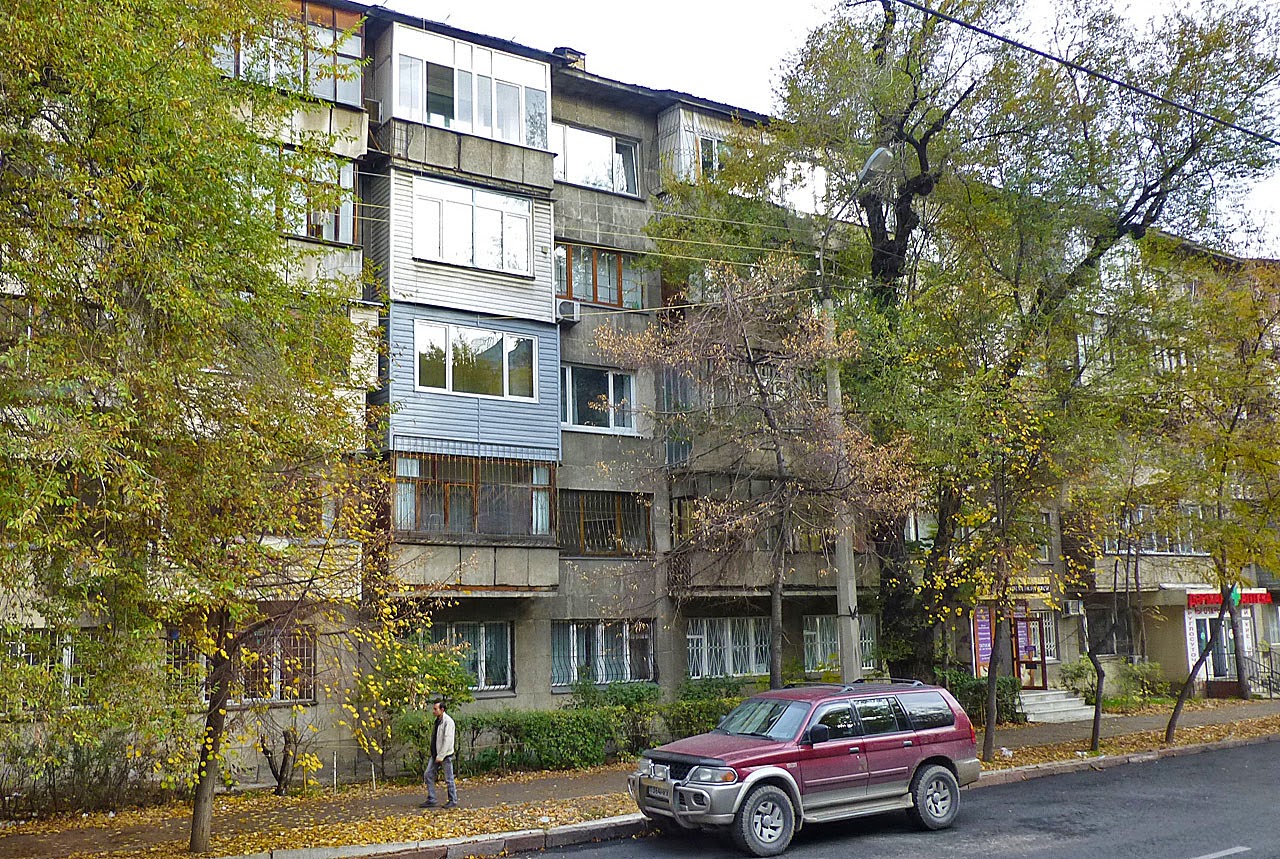
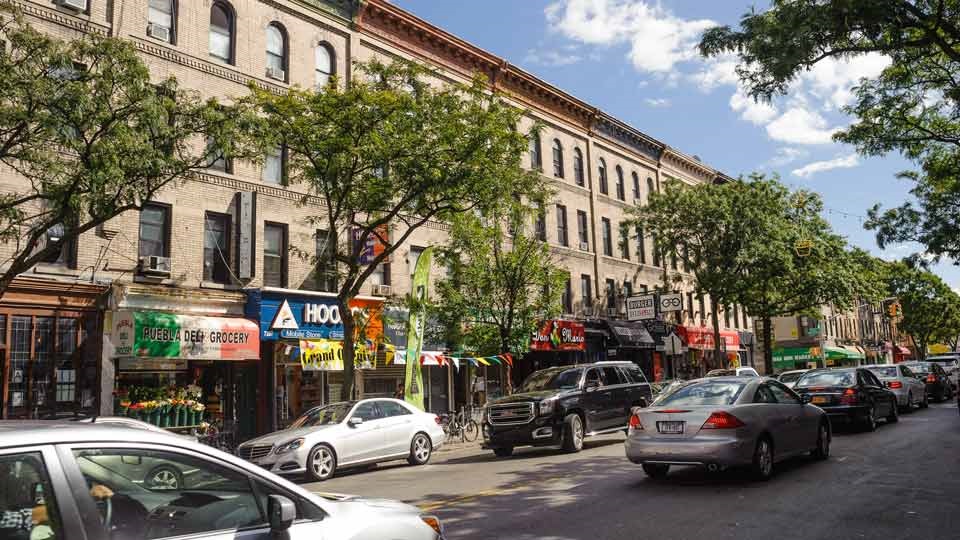
I still cannot figure how NYC (https://nyulangone.org/files/city-street-in-bay-ridge-brookl...) in nicer than Almaty (http://www.walkingalmaty.com/uploads/2/3/7/9/23797930/886799... or https://3.bp.blogspot.com/-uoAK6mvo248/VHUZgL6rFuI/AAAAAAAAW...) keeping in mind that the houses in Almaty have common areas, playgrounds without traffic going thru, benches etc; in case of Brooklyn it is just a building facing the street and there is nothing behind it. Oh, and that building has moldy walls made out of paper.
Re:Walkable Streets Are More Economically Productive by thriftwy on Thursday January 18, 2018 @06:04PM (#16182448)
> The woman (35 yrs and under) there seemed to be, on average, notably more attractive than in any other place I've been, before or since.

This just means you've never been to ex-Yugoslavia!

(Been there with my wife; she agrees wholeheartedly)

Re:Walkable Streets Are More Economically Productive by vkreso on Friday January 19, 2018 @08:12AM (#16185933)
I'm from ex-Yugo (Croatia) and even though I'm heavily biased, completely agree.
Re:Walkable Streets Are More Economically Productive by thriftwy on Thursday January 18, 2018 @04:21PM (#16181580)
You should just confine yourself to whatever built before 70-s.

After that you have huge cities' outskirts packed with 9 to 17 storey apartment buildings with some greens between them, but no other amenities. Everything is far apart and (these days) packed with cars. There's public transport but roads are wide and far between, so going to bus stop is painful. A lot of cold winds too.

More central districts with ~5 story buildings are ok. Guess what, they're going to bulldoze those in Moscow, replace with aforementioned.

Re:Walkable Streets Are More Economically Productive by IWeldMelons on Thursday January 18, 2018 @04:27PM (#16181627)
Not sure about the outskirts, but the urban cores are definitely not desolate and with no amenities. But I agree, ex-USSR urban planning is getting worse. Still not bad, compared to NYC.
Re:Walkable Streets Are More Economically Productive by thriftwy on Thursday January 18, 2018 @04:49PM (#16181829)
Most of apartments that late USSR built would rank as "projects" in the USA. Yes there's less crime because their mixed occupants usually have work and life, but they're far from comfortable.

Most of NYC's homes are suburbia or town houses I guess (over tunnel and bridge) which for all of their shortcomings provide much better quality of life.

Re:Walkable Streets Are More Economically Productive by IWeldMelons on Thursday January 18, 2018 @05:14PM (#16182044)
First of all, the projects often do not look bad, and if you fill them with more or less decent public are nice buildings. Now, speaking of "better quality of life" -- no they do not. I lived in condos in NYC (brooklyn), and they all universally were bad - built in 1920s, made literally from paper, stinky, could hear my neighbors, required constant maintenance, had no public areas to speak of. Soviet condo buildings may be dull on outside, but they require almost zero maintenance. My building is built in 1965 and it is still like new - no mold, no stink, no cracks. American plywood condos do not last even 25 years without starting looking rundown. Besides, I have nice playground nearby, beautiful greenery, a small park across the street.
Re:Walkable Streets Are More Economically Productive by thriftwy on Thursday January 18, 2018 @05:25PM (#16182156)
I guess you were lucky. 1965 was a top year for USSR after all. I used to live in the flat like that in Moscow, everything you listed was there, but it was kinda frustrating there was nowhere to buy fresh bread or eat out in the walking distance. I may sound grumpy at that, I guess. You could walk 25 minutes for a mall with multiplex.

Now I'm living in apartment in historic Saint Petersburg borough, and that makes for a huge difference. I have maybe 20 bars & restaurants in the walking distance! A few farmers' shops too. I can walk to three different cinemas and a theatre! I live next door to an university!

So I think that european-style urban cores should continue to be The Thing.

Re:Walkable Streets Are More Economically Productive by gorkemyurt on Thursday January 18, 2018 @02:45PM (#16180636)
The better formula is 'no empty walls'. Vancouver does this. Retail doesn't fit in every single location when that's the case ground floor is replaced by street level townhouse style entrances to individual units..
Re:Walkable Streets Are More Economically Productive by lazerpants on Thursday January 18, 2018 @02:53PM (#16180704)
Exactly, NYC has a glut of unused ground floor retail space and a housing shortage, simultaneously.
Re:Walkable Streets Are More Economically Productive by jermaustin1 on Thursday January 18, 2018 @03:01PM (#16180792)
It's so bad most commercial listings usually have something along the lines of "Not suitable as living space" in them. That's because you can rent a small ground floor office in some of the further north neighborhoods of Manhattan for almost half the price of the same square foot apartment, with similar amenities.

The kitchen will be tiny (so is the one in your apartment), the bathroom will be tiny (so is the one in your apartment), and the offices might be tiny (so is your bedroom in your apartment).

I understand you need egresses in case of fire and things like that which many offices don't have such things, but I feel they would be better served as apartments since they stay vacant for years at a time.

Re:Walkable Streets Are More Economically Productive by lazerpants on Thursday January 18, 2018 @03:57PM (#16181372)
Indeed. My wife and I explored opening an "art gallery" in Mott Haven/South Bronx in a cool old warehouse that cost less than our small apartment. It didn't work out for a number of reasons but the size of the space was a tremendous value.
Re:Walkable Streets Are More Economically Productive by dfee on Thursday January 18, 2018 @04:13PM (#16181510)
I wonder, what is the realistic chance of being caught and penalized for doing this anyway? Maybe it’d be worth it; maybe some folks are already doing this.
Re:Walkable Streets Are More Economically Productive by lazerpants on Thursday January 18, 2018 @04:25PM (#16181614)
There is a "professional office" in a storefront two blocks from my office that I believe is just a guy's house. In my exploration of doing the same I found the following problems:

- no lease protections due to the lies you need to tell in order to get the commercial lease

- vermin issues in ground floor units (not bad until you need to store food and have bedding or clothes around)

- lease terms that are usually much longer than a residential lease

- lack of a shower in many commercial units (fixable but adds to the cost and may tip off a landlord)

- generally undesirable living situation (poor ventilation, light, loud businesses next door, layout)

- expense - these units are cheaper than similarly sized apartments, but they aren't usually cheap enough for one person alone, and the floorplans usually don't make for great roommate situations

I think it would work really well as a pied a terre though, if you have another place close to the city and can afford the commercial unit. Sleeping in your office is totally legal and does not run afoul of most commercial leases. Using it as a residence violates the lease.

Re:Walkable Streets Are More Economically Productive by oftenwrong on Friday January 19, 2018 @10:34AM (#16186953)
This article discusses the damage that empty walls (or blocks) do to the pedestrian realm. You might find it interesting.

http://www.andrewalexanderprice.com/blog20151021.php

Re:Walkable Streets Are More Economically Productive by tomkat0789 on Thursday January 18, 2018 @06:58PM (#16182809)
I moved to Chicago last year from a small non-walkable Southern city and I was thrilled by the public transit. I'm thankful I don't have to drive when ice gets everywhere.

My gripe is that public transit is largely optimized for getting to and from downtown. I think the city could benefit from a half ring train line from, say, Rogers Park through Garfield Park (it'd have to be bulletproof), past Midway with a terminus in Hyde Park. It'd be nicer and faster than negotiating all the complicated bus lines. Just an idea if the city ever has $20 billion dollars just lying around.

Re:Walkable Streets Are More Economically Productive by criddell on Thursday January 18, 2018 @01:51PM (#16180075)
A developer friend told me that one of his biggest problems are accounting related. I probably have this wrong, but I think he was saying that if he has commercial tenants, everything can be depreciated over 20 years. If the building is residential, then the depreciation schedule is 30 years. When you have a building that contains a mix of the two, it gets complicated.
Re:Walkable Streets Are More Economically Productive by sgc on Thursday January 18, 2018 @03:34PM (#16181117)
27.5 residential and 39 commercial, but the problem remains. It isn't that big of a deal. Creating different depreciation schedules for different items on a property should be done no matter what (fences are 5 years, for example).
Re:Walkable Streets Are More Economically Productive by dfee on Thursday January 18, 2018 @04:15PM (#16181525)
I’m going to ask for your source. Not because I doubt you, but because I wonder what other interesting depreciations exist. I never knew a fence had a 5 year tax lifetime.
Re:Walkable Streets Are More Economically Productive by sgc on Wednesday January 24, 2018 @09:15PM (#16228255)
Have you ever seen a fence with a post about an inch from a building wall? That is great to reduce decay, but it also makes it a separate structure and depreciable as a fence instead of an extension of the building. Or so they say. I find it hard to imagine it would actually matter to an auditor. And yes, best source is the IRS. Appliances for example have their own depreciation schedule, etc. What I do is on any larger purchase just quick search in the depreciation tables to help make the decision on how/whether to do it. But many items are now 100% depreciable first year with the new tax codes, and I am not up to snuff on that at all.
Re:Walkable Streets Are More Economically Productive by patmorgan23 on Thursday January 18, 2018 @11:17PM (#16184118)
It should be on the IRS website. They determine the "useful life" of various capital goods and the set the depreciation schedule. Another example I believe is that cars have a 7 year life for tax purposes.
Re:Walkable Streets Are More Economically Productive by 33W on Thursday January 18, 2018 @02:53PM (#16180706)
That's an interesting point. I wonder if tax-incentivizing mixed use development by allowing a short depreciation period could create the same desired result as mandating it.
Re:Walkable Streets Are More Economically Productive by 0x4f3759df on Thursday January 18, 2018 @11:48AM (#16178550)
I did not know that about Chicago amazing.

I think its interesting how people complain loudly if they lose a stretch of beach, but don't seem to complain if a stretch of the street becomes a blight for the next 100 years (or the life of the building)

Re:Walkable Streets Are More Economically Productive by praneshp on Thursday January 18, 2018 @02:02PM (#16180183)
If you have a chance to go to Chicago, try taking a couple of architecture tours, preferably one on the river and one on the roads. They're easily worth the money, and explain how Chicago's planning is done.
Re:Walkable Streets Are More Economically Productive by brandnewlow on Thursday January 18, 2018 @03:42PM (#16181199)
Agreed. The river boat tours are very well done and unique. I lived there for years without doing one and have been twice since on return visits.
Re:Walkable Streets Are More Economically Productive by ams6110 on Thursday January 18, 2018 @12:12PM (#16178820)
It may push down retail rents but it will push up other rents, as now developers have to set aside retail space that there may be no demand for, when it could otherwise go to increased supply (lower rents) for residential or office or whatever.
Re:Walkable Streets Are More Economically Productive by toomuchtodo on Thursday January 18, 2018 @12:17PM (#16178888)
Adding an additional floor to a multi-story building during construction is not overly expensive (helped a friend with a building project in Lincoln Park).

EDIT: Caveat is once you go from mid-rise to high-rise; price jumps, but your per sq ft costs will continue to decline from ~$200/sq ft to $175/sq ft (Chicago market).

Re:Walkable Streets Are More Economically Productive by imgabe on Thursday January 18, 2018 @03:47PM (#16181257)
> Chicago has also come around to the notion that streets aren't "for cars."

I wish drivers in my city would realize this. Some of them act like anything other than a car in the street is a personal insult.

Re:Walkable Streets Are More Economically Productive by technofiend on Thursday January 18, 2018 @03:52PM (#16181314)
Houston is unfortunately the same. I've been run off the road, honked at and chased while riding my bike on the city streets. We have police on cycles (and horses for that matter) but not enough so Houston has sort of punted and created dedicated bike lanes. It's a start.
Re:Walkable Streets Are More Economically Productive by wtvanhest on Thursday January 18, 2018 @06:17PM (#16182538)
They key to the best neighborhoods for walk-ability isn't just retail. It is retail with narrow store fronts. By keeping the store fronts narrow you create a situation where you have a lot more variety per walking distance. SOMA (south of market in san francisco) is way less good than it could be because there is so much less variety than say 24th street in the mission, or valencia in the mission or Green/Union etc. in North Beach.
Re:Walkable Streets Are More Economically Productive by Bromskloss on Friday January 19, 2018 @05:31AM (#16185275)
> mandates that all new development from a simple three-story building to a 100-story skyscraper has retail at its base

This presumably drives things away from market equilibrium (a mandate wouldn't have been needed otherwise). What is it that gets to bear the cost of this? Does the cost come in the shape of, say, fewer homes, or fewer offices? Is the intent to make the city a better place, but for fewer people (compared to what a market would have done)?

Re:Walkable Streets Are More Economically Productive by baby on Thursday January 18, 2018 @02:02PM (#16180190)
> This is something that certain cities have understood for many years. Chicago

There is a big contradiction here, I haven't really seen walkable streets in Chicago (lived there for a year and a half). When I think of an American city with walkable streets I think of Boston for example.

Re:Walkable Streets Are More Economically Productive by reaperducer on Thursday January 18, 2018 @03:14PM (#16180908)
Unless you lived in some far-out neighborhood and never went downtown, I really have a hard time believing you. I lived there ten years, after growing up in New York, and it was very walkable. I ended up getting rid of both of my family's cars because we could walk or CTA everywhere.
Re:Walkable Streets Are More Economically Productive by baby on Thursday January 18, 2018 @03:50PM (#16181297)
I'd say the loop is kind-of-walkable. But you always end up having to cross large streets made for cars and at night it's empty.

Compare that to a city like London or Paris.

Re:Walkable Streets Are More Economically Productive by megy on Thursday January 18, 2018 @05:09PM (#16181997)
London and Paris also have large streets made for cars, and also has lots of streets that are empty at night. Even the Champs Elysées and Oxford St will be empty at certain times during the week.
Re:Walkable Streets Are More Economically Productive by dx034 on Friday January 19, 2018 @03:15AM (#16184811)
Oxford St wasn't made for cars (horse carriages rather) and will likely be closed to traffic in a few years. There were some projects in the 70s-80s to make the city more car-friendly (mainly via one-way roads) but they're about to reverse that to slow down traffic. One of the busiest junctions in the city (bank) has already been closed to all traffic except buses during the day.

Having slow traffic helps pedestrians and increases the incentive to use the tube instead of a cab or car.

Re:Walkable Streets Are More Economically Productive by SideburnsOfDoom on Friday January 19, 2018 @08:49AM (#16186134)
> London and Paris also have large streets made for cars

Haha. In London Zone 1, not so much. Some of those streets date back to the Romans. And it was not re-laid out after the fire of 1666.

The wider streets in inner London pre-date 1900, and were made for animal-drawn carriages.

Re:Walkable Streets Are More Economically Productive by baby on Thursday January 18, 2018 @05:18PM (#16182083)
> London and Paris also have large streets made for cars

wat

> also has lots of streets that are empty at night

of course, but the parts that are lively are huge, try walking in Soho.

Re:Walkable Streets Are More Economically Productive by paulie_a on Friday January 19, 2018 @09:17AM (#16186314)
I moved to Chicago last July and am in the process of getting rid of my car. I hate driving here.
Re:Walkable Streets Are More Economically Productive by samsolomon on Thursday January 18, 2018 @02:10PM (#16180297)
I'd be curious to hear why you say that. What makes Boston more walkable than Chicago?

I lived there for about six months, that was the first time I realized it was possible—even preferable—to live in a city without a car.

Re:Walkable Streets Are More Economically Productive by baby on Thursday January 18, 2018 @03:51PM (#16181304)
I'm mostly comparing to european cities. Chicago is definitely more walkable than a lot of cities, but it's nothing like european cities where you can walk around for hours and still be amazed at how much life there is around you.
Re:Walkable Streets Are More Economically Productive by TimPC on Thursday January 18, 2018 @02:00PM (#16180164)
As much as I want the correlation to be causation looking at any of the maps in this article makes me almost wonder how much of the effect is due to the fact that downtowns get made walkable rather than anything else.
Re:Walkable Streets Are More Economically Productive by CPLX on Thursday January 18, 2018 @02:09PM (#16180288)
New York City is the archetypal example of this kind of policy.
Re:Walkable Streets Are More Economically Productive by zpallin on Thursday January 18, 2018 @02:27PM (#16180464)
Even better, look at Hong Kong. Almost every single high rise has a mall at the bottom with a dim sum restaurant.
Re:Walkable Streets Are More Economically Productive by bluGill on Thursday January 18, 2018 @02:58PM (#16180753)
Note that you said high rise. A 2 story building with half dedicated to retail has too much retail in general (in some specific situations it might make sense, but if every building did that there simply isn't enough need for retail space). However a 100 story building with only one floor retail needs more retail space to satisfy the residents' needs.
Re:Walkable Streets Are More Economically Productive by twobyfour on Thursday January 18, 2018 @03:19PM (#16180966)
That also depends on the location. In a residential neighborhood, that might be too much retail, but in Times Square it might be appropriate. There are walkable low-rise neighborhoods in Queens where the main drag is all 1-3 story buildings with retail in the ground (and sometimes second) floor and sometimes apartments above the retail. Meanwhile, around the corner are entire all-residential blocks. This works and is still walkable because getting from all-residential to retail is just a quick walk around the corner.
Re:Walkable Streets Are More Economically Productive by zpallin on Thursday January 18, 2018 @04:48PM (#16181820)
Agreed, which is why cities should ensure a certain level of population density around retail.
Re:Walkable Streets Are More Economically Productive by hosh on Thursday January 18, 2018 @03:06PM (#16180825)
Reminds me of https://news.ycombinator.com/item?id=16158918

"How Automakers Invented the Crime of “Jaywalking” "