News for hackers. Stuff that matters.
Re:OVH outage explained by melq on Saturday November 11, 2017 @11:20AM (#15676886)
Do you know why its harder for a generator to power an unloaded circuit? Just curious.
Re:OVH outage explained by saulrh on Saturday November 11, 2017 @11:51AM (#15677017)
The generator's mechanical parts will perform more efficiently at some speeds/loads than at others. Everything happening at a different temperature and pressure will change fluid flows and forces and put different stresses in different places. Combustion won't happen cleanly, oil and gases won't flow the way they're designed to and the engine will get dirty, etc. If you're running outside of the region the engine was designed to operate in you're stressing it in ways it was not designed to handle, lowering efficiency and shortening its lifespan.

(You could run the generator at its favorite speed and sink excess power into a dummy load. This'd waste a ton of fuel, though, enough so that I'm not actually sure whether it'd be cheaper than eating an engine. That and I'm not sure what a data-center-sized dummy load would look like.)

https://en.wikipedia.org/wiki/Power_band

Re:OVH outage explained by grecy on Saturday November 11, 2017 @11:54AM (#15677035)
> This'd waste a ton of fuel, though, enough so that I'm not actually sure whether it'd be cheaper than eating an engine.

I think you'll find fuel is extremely cheap, even when you're burning many gallons per minute.

Re:OVH outage explained by saulrh on Saturday November 11, 2017 @01:09PM (#15677351)
Hmmm. I didn't actually do the numbers. Let's see...

A randomly-googled 2MW diesel generator consumes 50 gallons/hour at quarter load and 160 gallons/hour at full load [1]. So let's say it's 100 gallons/hour to run a 2 MW generator at full load instead of quarter load. The OVH incident report [OP] says that their data center has two cables in each carrying 10 MVA (mega-volts-amperes, ~ watts), giving us 20 MW as roughly the maximum power consumption of the data center. Divide, multiply, it'd cost 1000 gallons/hour to run at full load, orrrr $3000/hour at the current price of diesel [2].

Yeah, that's pretty cheap, okay. You might run these generators for a few hundred hours over the lifetime of the installation and they probably cost millions of dollars, so you're not going to spend more on fuel than you'd spend having to replace the generator early. Why don't they have a dummy load for that scenario?

[1] http://www.dieselserviceandsupply.com/Diesel_Fuel_Consumptio... [2] https://www.eia.gov/petroleum/gasdiesel/

edit: Now that I look at the math I did I realize that I didn't need to look at OVH in particular at all, just compare the cost of fuel to the purchase price of one of the diesel generators I was looking at. >_< Meh, math still works, I'll leave it.
Re:OVH outage explained by rdl on Saturday November 11, 2017 @02:04PM (#15677592)
Also, if you have one power outage, it's more likely you'll have another soon, so you don't want to burn up your generator (likely a long lead time to replace) during the first outage, just to have nothing during the next outage.
Re:OVH outage explained by joelhaasnoot on Saturday November 11, 2017 @03:34PM (#15678040)
Fuel is much more expensive in Europe. A liter of Diesel is about 1.40, so $6.50 per gallon.
Re:OVH outage explained by gaadd33 on Saturday November 11, 2017 @04:59PM (#15678410)
Does Europe tax diesel the same way no matter where it's used? I know in the US diesel for generators is exempt from a lot of taxes resulting in it being significantly cheaper in some states.
Re:OVH outage explained by Ndymium on Saturday November 11, 2017 @06:24PM (#15678749)
I only know of Finland, but here diesel for work machines is much cheaper than diesel for driving.
Re:OVH outage explained by dageshi on Saturday November 11, 2017 @07:38PM (#15679021)
In the UK Diesel is taxed differently for agricultural usage, it typically has a red dye added to it to indicate it's for agricultural use only. I don't honestly know about generators though.
Re:OVH outage explained by JoeMalt on Sunday November 12, 2017 @08:41PM (#15683641)
You can use red diesel in a generator, I think the legality comes down to whether it's being used to power a vehicle on a public road.
Re:OVH outage explained by joelhaasnoot on Monday November 13, 2017 @10:15AM (#15686995)
You're right, some countries have exceptions. Netherlands where I live used to, but no longer does. Not sure about France.
Re:OVH outage explained by gech on Saturday November 11, 2017 @01:28PM (#15677433)
There's the externality of pollution you didn't consider.
Re:OVH outage explained by danmaz74 on Saturday November 11, 2017 @01:59PM (#15677570)
That's true, but how much pollution does it cost to replace the generator?
Re:OVH outage explained by tbrownaw on Saturday November 11, 2017 @03:28PM (#15678006)
Since the generators apparently run less efficiently at partial load, that's not a given either. They'll almost certainly produce more pollution per unit fuel. Hm, is that a few percent more, or a few times more?
Re:OVH outage explained by jankey on Saturday November 11, 2017 @03:56PM (#15678149)
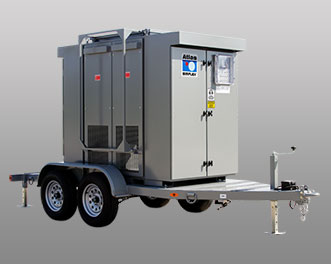
Dummy load looks like this: http://www.simplexdirect.com/images/pic-l-atlasTrailer.jpg It's "only" a megawatt but there are bigger ones as well.

Basically a big hairdryer. :-)

Re:OVH outage explained by wrigby on Saturday November 11, 2017 @11:52AM (#15677025)
My understanding is that it's the diesel engines that don't like it (the generator head itself is fine). Basically, some of the fuel in the combustion chamber doesn't get burned, and comes out the exhaust. This builds up in the exhaust system, forming an ooze in the pipes. I think it's worse on a turbo diesel, because now the ooze is coming into the turbocharger.

https://en.wikipedia.org/wiki/Wet_stacking

Re:OVH outage explained by TheSpiceIsLife on Saturday November 11, 2017 @03:58PM (#15678159)
Adding a heat-bank / load-bank[1] solves this problem.

1. Typically these are just big fan heaters https://en.m.wikipedia.org/wiki/Load_bank

Re:OVH outage explained by lima on Saturday November 11, 2017 @11:47AM (#15677001)
As far as I understood, it's mostly because it won't reach optimal temperatures and pressure, which then leads to incomplete combustion and carbon buildups in the cylinders.