jankey
Re:Jobs at Google (1999)
on Friday September 28, 2018 @06:27AM (#18092256)
I guess you're right, looks like she's 'only' got an MBA: https://www.bloomberg.com/research/stocks/people/person.asp?...
Re:Facebook’s New Message to WhatsApp: Make Money
on Wednesday August 01, 2018 @03:56PM (#17666358)
Well, they could, as Zuck has ~ 60% of voting rights.
Re:The EU's biggest fines on tech companies
on Tuesday July 24, 2018 @11:44AM (#17602059)
[ citation needed ]
Looking at https://en.wikipedia.org/wiki/List_of_countries_by_GDP_secto..., when adding up a couple of European countries I'd say it's third behind the China and the US.
Re:Improving URLs for AMP Pages
on Tuesday January 09, 2018 @03:56AM (#16104610)
Emphasis "when signed in".
Re:OVH outage explained
on Saturday November 11, 2017 @03:56PM (#15678149)
Dummy load looks like this: http://www.simplexdirect.com/images/pic-l-atlasTrailer.jpg It's "only" a megawatt but there are bigger ones as well.
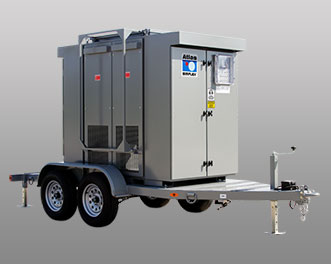
Basically a big hairdryer. :-)
Re:OVH outage explained
on Saturday November 11, 2017 @03:51PM (#15678120)
Huge DCs like Amazons and ours at Google are very efficient, cooling uses at most 10% of total power. So cranking up this wouldn't help. Nor wouldn't it be possible usual anyway, as these are typically using evaporation cooling, which can't really be cranked up like traditional compression cooling. And keeping a huge tank and heater ready would introduce another point of failure. The easiest is just to have your servers do some heavy calculations.
Re:iPhone X Teardown
on Saturday November 04, 2017 @03:46AM (#15624173)
It's not a lot, but there are a bunch of pictures on google.com/about/datacenters, including a 'street view' inside our DC in North Carolina.
There are also a bunch of papers on the network architecture, https://research.google.com/pubs/Networking.html .
But yes, a lot is closed for the obvious reason that this is really core to the business Google is running.
(I'm a datacenter engineer at Google)
Re:Android Studio 3.0 Release Notes
on Thursday October 26, 2017 @02:48PM (#15561820)
Not sure where you get this from, I'm not in an Android team, but from what I can see the top offered workstation one can get at Google has 64 GB of RAM.
Re:Google in, Google out
on Monday May 22, 2017 @04:27AM (#14391906)
Sure, you can review and delete everything here: https://myactivity.google.com/myactivity?restrict=vaa&utm_so...
(I work for Google)
Re:Lyft and Waymo Reach Deal to Collaborate on Self-Driving Cars
on Monday May 15, 2017 @01:35AM (#14339379)
If they'd really want to do that, Alphabet has > $90B in cash.
Re:Google's controversial groundwater withdrawal sparks question
on Monday April 24, 2017 @04:37AM (#14182755)
I was replying to the parent on Google not being industry leading efficient and especially comparing to the Yahoo Lockport DC.
But you're right, regarding to water usage we don't publish numbers (nor does anyone else afaik, I haven't found any WUE number for e.g. Amazon, Yahoo, Facebook...) so it's difficult to compare this to others.
I am however confident that a lot of things have been considered and this was the best option, we have imho a good track record trying to do the best for the environment, a lot of attention is being paid to this internally. E.g. everything running on green electricity, which is not the cheapest.
Re:Google's controversial groundwater withdrawal sparks question
on Sunday April 23, 2017 @07:20AM (#14177674)
We are industry-leading efficient, the water is used for evaporative cooling, very efficient. Other sites use water from an industrial canal or cold sea water.
Look here: https://www.google.com/about/datacenters/efficiency/internal... . PUE globally is 1.06, compared to Yahoo/Cap Gemini Lockports 1.08.
(Disclaimer: I work in (another) Google datacentre.)
Re:Google's controversial groundwater withdrawal sparks question
on Sunday April 23, 2017 @07:13AM (#14177651)
It's not being dumped, it evaporates.
Check https://www.google.com/about/datacenters/inside/locations/be... and https://www.google.com/about/datacenters/efficiency/internal... .
(Disclaimer: I work in (another) Google datacentre)
Re:The Australian Square Kilometre Array Pathfinder hits the big-data ...
on Monday January 16, 2017 @11:21AM (#13410838)
Either case, I doubt it is "15% of the internets current data rate" as they claim. E.g. the newish submarine cable between the US and Japan has 60 Tb capacity. And that's just one cable.
Re:F-35 Delays Mean US Marines Are Pulling Old F-18s Out of Desert Sto...
on Tuesday June 21, 2016 @03:48AM (#11944134)
That's what the F22 is for, no?
Re:OVH's hubiC offers 10TB storage for €50/year
on Monday June 13, 2016 @09:52AM (#11893846)
https://hubic.com/en/contracts/Contrat_hubiC_2014.pdf
The bandwidth is limited to 10 Mbit/s upstream and downstream.
Still, it's good to have a cheap offsite backup to complement a local one.
Re:Alphabet Becomes the Most Valuable Public Company in the World
on Tuesday February 02, 2016 @03:04AM (#11018166)
And this is how you recognize a Googler amongst a crowd.
Re:Pure JS OCR via Emscripten
on Thursday January 02, 2014 @09:23AM (#6999658)
Re:How long do disk drives last?
on Tuesday November 12, 2013 @09:47AM (#6718095)
Approximately 40 PB raw storage in our datacentres here, half of them Supermicro servers with whatever disk that came, half HP Proliant with $$$ HP Enterprise class disks, all < 5 years old, so quite comparable to the Backblaze situation.
80% drives surviving after 5 years seems right, this is what we're seeing as well. The hardware is decommissioned faster then the drives fail.