I don't see how your interpretation is based in anything other than wishful thinking.
Free education doesn't mean that everyone has a college degree. It means that everyone who chooses to study for a college degree has the opportunity to obtain one.
Most colleges and universities in the USA were non-profit, until the 1970's. Everyone didn't have a college degree back then.
Finally, as an aside- it's a bit problematic to measure the value of a college degree just by monetary gains alone. Job satisfaction is at least as important and probably more.
This is pretty much equivalent to how increasing the amount of investment in any area can lead to both productive investment (e.g. better roads where they're really needed) and unproductive investment (the stereotypical "bridge to nowhere", though usually it's a bit more subtle than that).
There are two actual empirical questions here:
1) Are there ways that universities can spend extra money productively, from the point of view of society?
2) Are they actually doing it?
I don't know of good studies on the former, offhand. For the latter, as far as I can tell, the answer is "no": increased funding in the recent past has almost entirely funneled into making the lives of college students ritzier and increasing the number and salaries of administrative staff at all levels. And this matches my understanding of the incentive structures involved. As a simple example, parents and students who feel like they're paying a large amount of money demand better service for it (nicer dorms, better food, etc)....
I believe that increasing government investment in education without implementing any brake on the tendency to simply misuse the investment on the part of the colleges is not going to improve actual outcomes for students much in general. It may (or may not, depending on how the money gets used) improve things on the margin a bit for poor people. It will _definitely_ increase the price tab for taxpayers (including those same poor people). Weighing the overall societal benefits is hard to judge. As in many cases, people agree that there is a point of diminishing, or vanishing returns, but disagree on where that point is.
But in general, if we agree there is such a point, we should be trying to figure out whether we've reached it or not. We should also be trying to figure out how to move that point around, e.g. by abovementioned brakes on the misuse of extra investment.
There are, of course, hard questions about how such a brake could be implemented. It could be done via direct government regulation, but I expect this to get a significant amount of pushback _and_ increase the number of adminstrative positions needed to deal with it, somewhat contributing to the problem. It could be done via changes to the incentives universities have, but it's not entirely clear how to effect those. We should strongly consider experimenting with "X percent of future income over Y years" funding models instead of the "pay us now and it's your problem how to raise the money". I say this especially in light of data like http://www.nber.org/papers/w23888 that indicates that this approach _increases_ access for disadvantaged students. Of course there are still incentive problems here, especially if you feel that the point of college is not just to increase salaries.
Which is all to say that there are some hard questions here, and research and experimentation is desperately needed. Anyone claiming that "we just need to increase government spending on higher education without changing anything else" or "we should just decrease government spending on higher education without changing anything else" is likely wrong. So is anyone claiming "we should just keep things as they are", because I believe the system is fundamentally broken and getting more so.
I don't even think research should be coupled to the universities the way it currently is. From what I've seen it ends up being somewhat of a mess. Seeing what goes on there - for example, how grad students are treated - has made me doubt the ability of most universities to effectively manage and oversee research labs.
It's also adds one more thing to the odd stitched together thing we end up calling a university. It's a certification program/4-year summer camp/undergrad education center/research institute/cultural center/professional training center/sports franchise/etc.
Treating researchers as students is just the beginning.
However, it's pretty challenging to see how it could work. For one thing, a lot of the best researchers are also the best ones to teach their subject or topic (and relatively fewer talented people want to teach alone without doing any research). For another, the grad school system makes sense because you need training to do research, and that training often comes while you're also learning and taking classes, and it makes sense that you receive that training from the most experienced researchers (currently, professors). Finally, having research sit within a larger university institution makes it less fragile to economic or political shocks.
Coupling of research and university in order to protect research against financial/political shocks does seem to have some merit. But I think we have to examine the costs. For example, in my department one of the professors has a poster that reads what is expected of their time commitment: 30% of their time devoted to service, 70% to teaching, and 100% to research. If the reaserch is that important to us, shouldn't it be done by someone who can spend all their time thinking about it?
Almost all research is funded through grants.
> "It's a shame that one political party in this country has taken to believing that all of the world's problems can be solved with lower taxes (not low taxes, lowER taxes)"
We have a budget problem, most of which is due to entitlements and it cannot be resolved through increased income through taxes. maybe it can be solved through higher taxes due to people doing more things, but not higher overall taxes.
my numbers are old, but they should be in ball park. if you took all the money off the rich (1 million$+ nw) in the entire world (not just US), its somewhere around 7 trillion $.
- Lets ignore the fact that they do pay the lions share of tax revenue, and that revenue would now be gone an the 99% would have to take on that burden - Lets further ignore their wealth is shared, as in if zuckerberg sold all of facebooks stock, Billy G would lose net worth because he owns facebook stock and the laws of suply and demand would dictate a lower price.
that 7 trillion would pay our deficit for only 16 years, and wouldn't even bring the total debt down to when Obama was elected president.
I dont agree that research spending should be cut, but I sort of get why its facing the axe. Universities (on the administrative level) aren't apolitical anymore, and increasingly neither is their research.
One example was that I noticed how well diabetes overlapped with obesity rates on the map. The areas that did not overlap did overlap with another thing: excessive alcohol consumption. When I brought it up in the lab, it was immediately dismissed - I dont disagree with the hyps, but science means looking into things not going by personal opinion. As an experiment, I showed the same trend to another group, but I told them the non-overlapping region was increased diabetes rates, and that the other factor was soda consumption. This drew immediate attention, they were ready to write grant proposals to NSF and NIH in hopes that this can be used to broaden soda taxes across the country.
I do think its a shame that the current president is focusing on so many things other than getting tech companies to bring their revenues 'home' to be taxed. I think that would benefit everyone. But when I look at whats going on, I dont agree with it, but I do get it.
You repeat yourself. A public good is a positive externality, in that it benefits third-parties.
Kind of weird how so much of republican policy seems to boil down to "externalities don't exist".
It mostly isn't.
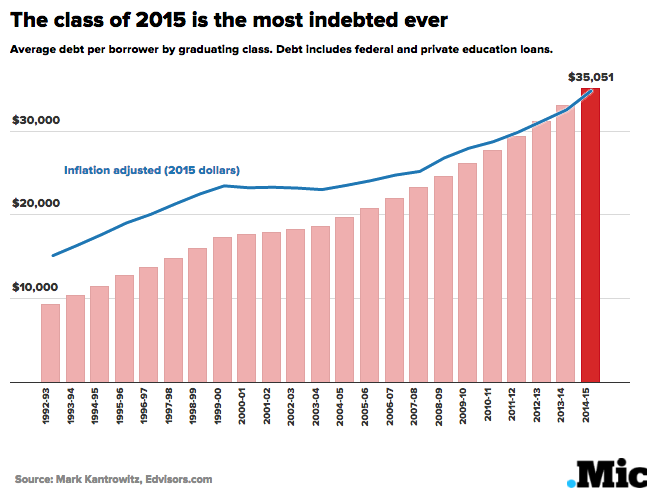
Research should never be funded by tuition anyway. That research is a public good, the burden for funding it should not be placed on the backs of the nations youth, who have to in turn finance that tuition with debt.
It's a shame that one political party in this country has taken to believing that all of the world's problems can be solved with lower taxes (not low taxes, lowER taxes). Externalities and public goods do not exist.