Large adjustments were already made to accommodate the baby boomer generation. That's why we have a $2.8 trillion-dollar trust fund. With current demographics, we should be able to pay 100% of promised benefits until the late 2030's. Afterwards, with a pure pay-go system, we'd only be able to pay ~80% of benefits.
There are simple fixes that could dramatically extend the reserve depletion date to sometime in the 2050s. Not doing so is purely a political question.
Trust fund stats: https://www.ssa.gov/oact/STATS/table4a3.html
Increasing the marginal rate of income tax for anyone making more than $120,000 by 12%+ may be a "simple" fix or just a matter of politics, but it's some pretty hard politics! (And also might lead to some unfortunate economic outcomes.)
Two things come to mind; The politics shouldn't be that hard in the current populist environment since only ~6% of taxpayers earn above the max.[1] Secondly, employees would 'only' see a 6% marginal tax increase since the employer portion isn't included with AGI.
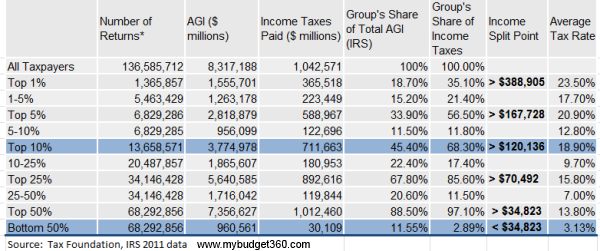
But there are numerous other options to extend the program as well. The top 5% of taxpaying households earned at least ~$170k in 2011. As a simplifying assumption, let's just say they all meet the cap. There were 6.8 million returns above this level, which would mean that only $800 billion of the $2.8 trillion in AGI earned that year was subject to the social security tax. If you levy a 1% tax on income above the FICA limit, it would raise an additional $40B/year which with simple perpetuity math would mean an additional $1.2 trillion into the trust fund.[2]
Alternatively, since the top 5% of income payers receive something like 1/3 of their income from capital gains (which aren't subject to any FICA taxes), a 1% levy on capital gains would likely raise a similarly large amount.
I don't have any specific preference for those two ideas, but they're just a few examples.
[1] - https://www.ssa.gov/policy/docs/policybriefs/pb2011-02.html
[2] - Base figures from here: http://www.mybudget360.com/wp-content/uploads/2015/06/irs-ta...
I think voters (especially the high income voters who would be affected) aren't likely to be fooled by the employer/employee split, even putting aside those who are self-employed. And raising taxes on a whole bunch of "moderately" high earners in deep blue, high cost-of-living cities isn't particularly popular even with Democrats: They worked hard in the last go-round to push President Obama to only end the Bush rate cuts for the "truly" wealthy households at $400K+.
I also think you're slightly over-estimating the money available over the cap: There are presumably many more households with two earners closer to $85,000 each than households with one earner at $170k, and SS taxes are collected per-earner.
A little calculation from here...
https://www.ssa.gov/policy/docs/chartbooks/fast_facts/2016/f...
...suggests that the total taxed income base of Social Security is around $6.4T. Total AGI is somewhere around $9T, so 1% of the difference is $26B (and of course that AGI includes capital gains, so that's all you can get in total with both tweaks). Maybe another $10B or so since the taxes could come off gross income rather than adjusted gross.
Anyway, it's certainly not impossible to make the numbers work, especially if the economy doesn't go into a Trump-induced tailspin.
The Baby Boomers will be dying off at a hefty rate by 2030. It includes people born between 1946-1964, which will mean they will be between 64-84.
Generation X is quite a bit smaller than the Millennial generation, so SS should start running a surplus again by the 2040s. There are plenty of things that can be done to bridge the 10 year gap. But reverting to pay-as-you-go for a short time isn't a terrible outcome.
Likely will not happen while the Boomers are still alive because as a generation they're huge and they vote, but I can't imagine that today's Millennial generation is going to keep Social Security around for us relatively few Gen-Xers when we need it.
Social Security may become unable to pay the benefits that you're expecting at some point because the input from workers will not be enough to pay those benefits. But that doesn't mean it will pay nothing. It will just pay less. You'll still get some payments.