It is much harder to meet friends who are separated by 5 miles of bus ride than 5 miles of freeway. It is much harder to actually hear each other at a crowded bar than someone's home, but only the very rich (or the suburban) can afford homes large enough to host gatherings. Economic circumstances may coerce interaction with roommates, but living with someone is more likely to destroy your friendship than strengthen it.
I think this is a cultural/attitude thing, not really a manifestation of urban planning.
It's easier to meet people in a city, where the 5 miles of a bus ride can cover a neighborhood of a hundred thousand people and hundreds of venues to meet them, while the freeway ride in a suburb will cover less than ten thousand. And what does living with someone have to do with it? We're talking about interacting with people outside your house. I think US urban planning has certainly sucked, and the sprawl will hurt us socially as well as economically.
Where? In New York, Chicago, and San Francisco, the only people who do that are begging, preaching, or rambling incoherently. The sense of community I'll observe on a public transit vehicle is when something has gone wrong, or when everyone shares a look of relief after someone who was trying to start unwanted interactions has left. Granted there are some magical moments like the sax battle [0] that could never happen on a freeway, but did any of those people exchange contact information or form any lasting connection?
There are people who will sit down next to you and start talking. Groups of friends traveling together will "rescue" each other from these interactions. People traveling solo will just get off and move to another car, or wait for the next train. The mood afterword is "can you believe that creep?" not "wow aren't we so connected!"
> It's easier to meet people in a city,
From a pure numbers perspective, there are more people to meet per unit area. But are there more people to meet per travel minute by fastest viable means? I doubt it. If we accept 50 minutes (time for a walk to bus to train journey from mid south side to near north side Chicago by CTA), well, that is 50 miles at 60mph.
If my friend lives in a distant suburb it is not a problem, I can drive to his home in 10 minutes. If my friend lives in a distant urban neighborhood, I'm looking at a 50-minute 3-segment public transit journey.
You also have less free time living in a public-transit-oriented city. A New Yorker whose primary mode is the subway spends 90 minutes per day commuting [1]. A national average car commuter spends just 51 [2]. What would you do with an extra 3 hours per week? I'd see friends more often.
> And what does living with someone have to do with it?
Parent claims it is a problem that people live in separate boxes. Density does prevent this, in that real estate contention means relatively few people can afford their own box, but I claim that roommates of economic necessity don't actually strengthen social ties that well, and may weaken them.
[0] https://www.youtube.com/watch?v=1_9IMZcbKHQ
[1] http://origin-states.politico.com.s3-website-us-east-1.amazo...
[2] https://project.wnyc.org/commute-times-us/embed.html#5.00/42...
Agree with the other replies to you; I've had lovely chats with people on the subway in literally all three of the cities when I've visited. Also at the laundromat, or at a bar, at a museum, and other places.
> ...did any of those people exchange contact information or form any lasting connection?
I never made a lifelong friend from these conversations (though I have received business cards or other contact info), but I got a sense that I mattered to a stranger, even if only for a little bit. That's certainly part of what the article is talking about.
> The mood afterword is "can you believe that creep?" not "wow aren't we so connected!"
I can genuinely tell you that many conversations I've had did not end with either side thinking the other was creepy.
Of course, I've avoided conversations with people who I felt were creepy. Typically, these conversations happen when the person is speaking to me and I've given pretty clear body and vocal language that I am not interested in speaking.
I do my best to initiate chatting only with people who show interest in talking. Having an idea of who's interested in that takes practice, and some other identification skill I have a hard time describing, but which would likely fit the definition of "emotional intelligence."
# # #
Here's a little chestnut similar to what btmorex mentioned:
A young couple moved to a new town, and upon driving up to their new home for the first time, saw their neighbors outside. After a few pleasantries, the young couple asked, "So, we're wondering, what are the people like around here? Is it a good place to live?"
The neighbor paused, then said, "What were your neighbors like at your last town?"
The young couple agreed, "they were great!"
The neighbor, audibly relieved, said, "well they'll be great here, too."
# # #
What you look for and expect from others will greatly color your experiences. I figure most people are generally friendly, and I tend to be able to recognize when someone wants to chat... and they likely see my desire for a friendly chat, too.
The point is that crossing paths is naturally going to lead to more spontaneous interactions. All else equal, driving alone and living in silo'd suburban houses means less interactions with strangers compared to living in an apartment in NYC.
I grew up in the suburbs and now live in Manhattan. I meet a lot more people in Manhattan than I ever did in the suburbs, and this is the main reason why I have no intention of moving back to the suburbs.
I'll also add that I spent my youth living in both suburban America and rural Japan. I made a lot more friends and had a lot more fun in Japan largely because I could get anywhere via walking or biking. In America I was dependent on adults driving me everywhere, so I spent way more time alone playing videogames in my house.
I'm talking about the kind of people who have to choose between part of a shared apartment in a conveniently transit-connected part of SF/Manhattan, or their own studio/1-bedroom somewhere with low density and poor transit. Y'know, software engineers making $100k.
I don't live in the NY metro area but I visit several times a year since I got friends there. I always crash on the couch.
I vary rarely socialize with people with high income because, one, I grew up poor so most of my childhood friends are still below average in income but more importantly I find it very difficult to relate to people who grew up well off. Sometimes I hear my co-workers talk and I feel I am living on a different planet.
As far as shared housing, yes, 99% of college kids live in shared housing and the vast majority of them still socialize.
In a big house, the party often naturally squeezes into the kitchen, leaving the handful of introverts to sit quietly in the living room.
I also became good friends with a bartender who I met when she was serving me. She no longer bartends now that she's out of school but we still see each other all the time.
A lot of my friends now usually prefer to meet out rather than have someone come over. It takes the pressure off to be a host.
Very likely. There are bars where people go to be alone; bars were people go in a group to stay purely within their group; bars where people go to meet between regulars and are closed to newcomers; bars where people are opened to anyone, regulars or 5-minute newcomer; etc.
The most classy, and also often the most hyped ones are the coldest ones. The most popular are often the warmest... providing that you manage to get into the 'family' circle if it is a matter of regulars/locals; or that you belong to the same scene if it is a subculture oriented place.
And it also depends also on you. And not necessarily as you expect. I am amongst the most introverted, shy, less talkative persons ever, and yet bartenders and regulars generally great me by calling my name on my 2nd or 3rd visit in a bar while some mates who've been coming to the same place dozens of times in are given the cold shoulder (I have plenty of examples like this, it was quite funny sometimes to see how upset by the situation my mate was :-).
I too have made friends with strangers I've met in bars, as well as with servers and bartenders at places I've been a regular.
Here's a book that can help you stop thinking it has anything to do with luck:
How to Talk to Anyone: 92 Little Tricks for Big Success in Relationships [1]
[1] https://amazon.com/How-Talk-Anyone-Success-Relationships/dp/...
A tip if you do decide to try this advice, don't let anyone know you aren't drinking. Not only will you often get accosted "Come on buddy just one!", but at the end of the night you will often be pressured to become some sort of unpaid Uber.
For sure some people are extremely obnoxious when they drink, especially heavily, myself included (which is a reason I don't like getting drunk - I try to stay mildly buzzed if I do drink, but usually I don't at socal gatherings, unless they are major social gatherings, and I even usually only drink water at bars) but the vast majority of people are fine after a couple brews. Most people stop getting blasted at around 25 or so anyways.
Your attitude indicates to me that if your perception of someone changes when they've had a beer, just because they've had a beer, rather than their actual behavior. I don't mean to be rude when I say that - I can understand. I used to not be able to stand being around people when they were drinking. I avoided anywhere where I thought there may be alcohol... but that was because I grew up with an abusive alcoholic father and I was projecting my hatred of my father onto other people. It wasn't until years later I learned to be comfortable around social drinking. I learned to realize that my father did the things he did because he is a bad person, not because alcohol somehow forced him to.
As I said in another post, I actually ended up meeting the person I ended up marrying in a bar!
(I also did start drinking myself later on.)
To be clear I don't want to put you down or anything, just sharing my perspective.
Bars in big cities provide more opportunities but then I think people are generally seen as more "disposable" if that make sense.
This is coming from someone who also feels like they have been going to the wrong bars.
In NYC I feel much more welcome talking to strangers in bars than I do in London.
I usually went because I wanted to meet someone new. I had very mixed results. While I had mixed results; people did seem to interact with eachother. Yes--it was small talk, but interaction.
Fast forward to today. The smart phone seems to have just ruined the experience all together.
I can blame myself--I'm not the same social person? I've aged? I don't find people and their stories as interesting? Blah--blah--blah?
I don't know? I do know that Phone Stare is really played out. It seems like everyone is engrossed in that screen?
The last time I was out, I was in an Irish themed bar in San Francisco. The older Bartender was asked a question by a patron. "This place is dead?"
He then said, "Maybe you should put the phone away? Plus, the led light brings out all the fine lines around the eyes?"
Yea--it was kinda rude, but he said it in a joking way, and with that Irish accent it came across as kinda endearing. Someting a father might say?
The phone eventually went into the bag. A person sat next to her, and asked her if he could buy her a drink. They talked, and talked. They genuinely seemed content--
I walked out, and it seemed like 90% of the patrons were still staring into that screen. All looked kinda misserable. I thought--what could be so interesting? A fifteen dollar drink, and waste the time on the screen?
I don't know if we are going to put the phone away, but I hope I'm still around if that day comes.
(I understand pulling out the phone if your socially awkward, or shy, but after awhile of Staring into the Abyss, put it away? And yes, if your at lunch putting together that huge business deal; I get it, but most of us just arn't that important. You're in a bar because your lonely. Admit it! Own it! Life is short--no one is judging you, nor cares. That phone is a huge turn off on so many levels. This goes two fold for guys.)
https://en.wikipedia.org/wiki/Irish_pub#North_America
A typical "Irish pub" these days is usually the bar equivalent of Applebee's. However, the bartender in your story definitely sounded legit. :)
I find that small, established live music venues that operate a bar regardless of shows tend to be far more "real". There's usually only a few of these in any given major metropolitan area.
The phone stare ratio is far lower than average, but you run into the opposite problem: everyone knows everyone, and you're the outsider. Of course, that's usually a healthy sign that just indicates the place is worth becoming a regular at.
Just a city boy, born and raised in south Detroit, he took the midnight train going anywhere...
Never live with someone you aren't prepared to hate. Nothing kills a friendship like becoming roommates.
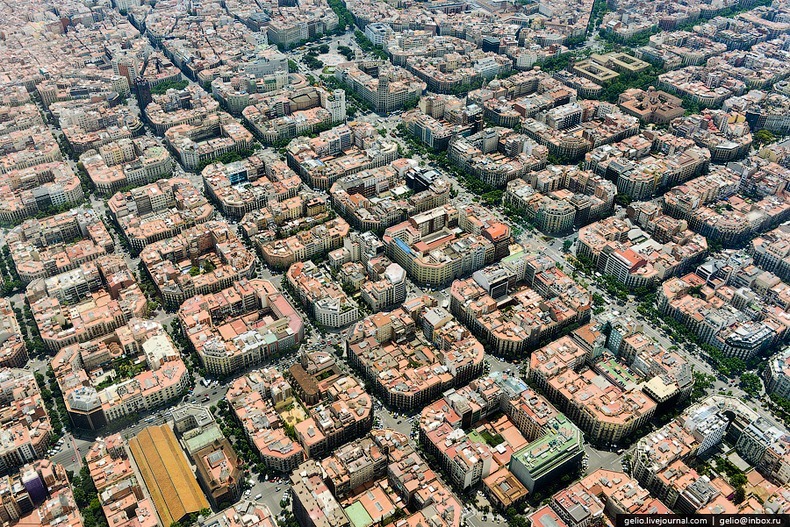
I live in Barcelona and the majority of people live in flats/apartments, my apartment building is like a large family, mixture of retirees, families, young couples and mixed flats of people just out of university. Everyone knows each other and relies on each other, for our neighbours' 90th birthday almost the whole building (10 flats) took her cake and stayed and chatted and had fun. (My partner and myself are both foreigners here and we're still accepted into the culture and events like this. IMO it's really hard to overstate how crucial this sort of interaction and sense of belonging is in a large city. What intensifies this even more is in Barcelona the first floor of a lot of apartment buildings is where there are shops/bars/butchers/restaurants etc. For most of my food and leisure needs (including the gym for example) I don't need to go more than 400m, this also creates social situations where you bump into the same people and staff over and over creating a real village feel.
Here's a great shot of Eixample, a district in Barcelona divided by distinctive grids that lends itself to these 'micro' village communities. http://lh4.ggpht.com/-I28z_xwspR0/UdgqfgPxzCI/AAAAAAAAqCY/Mj...
Sorry that was quite the tangent to go off on!
The way I see it, the level of community involvement and social interaction in general have almost nothing to do with infrastructure, unless you decide to go full-on hermit in the mountains. It matters what people are in your life, not just how many are in your proximity.
> surrounded by people who don't care about you
That's the difference. Not city vs. suburban. Where are the people that care about you and that you care about? That's where you will feel less socially isolated.
I'd bet that if you went to a suburbia that doesn't contain your family, you'd feel just as isolated as you do in the city.
It matters how many of the people you meet actually know you.
That said, I do not feel that expectation of social and civic engagement in San Francisco.
We work all day, come home at 8pm, watch TV while surfing with phone, update Facebook, text a friend, go to bed. Repeat.
Go back 10,000 years and almost all people encountered would be people familiar to you. Any other instances would've been a potential stand-off. I'd guess it's a carry over from that.
That's not the highways fault in any way. Walkable neighborhoods are expensive, and most Americans are too poor to afford anything like that.
You can't jump in early, because you'll just get gentrified out as soon as decent density & transit exist. You can't jump in after, because the costs are 3x to 50x higher. If your not wealthy, it's a loose-loose situation. That's why walkable neighborhoods can't maintain their "variety of incomes and backgrounds".
If anyone could afford to put their family in walkable NYC / San Francisco / Seattle / etc, many more would choose to do it. But until high-quality safe family housing in walkable neighborhoods drops to $150k - $250k, it's just not going to happen.
Suburbs don't happen because people love looking at asphalt. Suburbs can be made cheap, safe and affordable for regular middle-class people. Dense urban housing is almost never affordable, even in tiny little towns with no zoning or permitting in low-cost-of-living places like the Midwest.
Until people honestly address the exploding high costs of density (and not just blame "red tape" or "design" or "subsidy" for it), that won't change and suburbs will continue to get built.
I'm not defending suburbia... I don't like it in general, and now have a small homestead in a small town, but my dislike of suburbia does NOT stem from social isolation.
Neither of these is proof that one is inherently better than the other, just that there are many dependent factors which can change the fabric of a neighborhood in any setting. That's the point of the entire field of urban studies existing; to understand what makes these types of places happen. As you would expect, many of the communities that we have in reality don't implement the best solutions that have been discovered due to local resistance, funding issues, misguided political mandates, etc.
It's pretty time-consuming, but it's a big responsibility, making decisions that affect lots of people's lives. So, trade-offs.
How would you stop this as governor? I have a feeling your solution would be far worse than the problem you're trying to solve.
knock knock knock <opens door> "Huh?"
"I'm Sergeant Jones with the 665th Airborne. Our records show you haven't been out all week. Come with us, sir... "
It'd be different if he handed you a beer first, I guess.
I'd also fix the schools. But that's a much larger discussion.
This is my opinion.
You'd probably have better luck as a senator.
The national highway system was great for a nation on the brink of all-out war. We needed to move troops, tanks, people, supplies quickly and efficiently. This system ended up being used to separate black people from working class whites. Naturally we have drug and violence problems in those communities that were segregated from the more educated and affluent white population.
Terrible. I wish I could be governor or something and make sure that we stop this. It makes me sad.