ktRolster
Re:What Did Ada Lovelace’s Program Actually Do?
on Monday August 20, 2018 @10:00AM (#17799905)
I can smell your program. All that new hardware around me. The smell of dot matrix ink.
Re:Show HN: A simple, fast and user-friendly alternative to find, writ...
on Sunday October 08, 2017 @06:17PM (#15430318)
You can also add the --back option as an alias, so you don't need to type it in every time on systems where that is important. You could also use an environment variable to modify the behavior.
The GNU team did this when they added or changed behavior to the original tools. A lot of them have flags like -posix and such which give them a strict set of behaviors.
Re:Alan Kay is still waiting for his dream to come true
on Saturday September 16, 2017 @08:33PM (#15267573)
It's not a problem. It's a way things can be better.
Re:Alan Kay is still waiting for his dream to come true
on Saturday September 16, 2017 @01:28PM (#15265579)
Alan Kay is the one who said "The best way to predict the future is to invent it." He did so by inventing quite a bit of the technology that is in every PC and smartphone today.
Re:Alan Kay is still waiting for his dream to come true
on Saturday September 16, 2017 @01:24PM (#15265564)
more-discoverable undo
I think he wanted more discoverable everything, the undo was just used as a particularly bad example on the iPhone.
He wants the world to be more discoverable, to modify our very culture so that learning is easy (an example he gave was with math, so it's not just a small, 'smart' percentage of the population who actually gets it, but everyone absorbs it from a young age).
Re:Alan Kay is still waiting for his dream to come true
on Saturday September 16, 2017 @01:21PM (#15265550)
His ideal vision is always described in very abstract terms. If he took the care to write it down precisely, what it should look like, I'm sure there would be hundreds eager to build it for him.
Look at Squeak. http://squeak.org/ The idea that you should be able to dig in and modify things is very powerful.
Another way to look at it is in terms of discoverability: you are at one level of understanding (using the phone, clicking on things), and it should lead you to a deeper level of understanding (perhaps moving things around, modifying them). At each level, there are hooks inviting you deeper, drawing you in. Ideally you get down low enough to start programming, to actually understanding how assembly and the CPU works, so there is no longer any area of magic.
Re:Patching is hard; so what?
on Saturday September 16, 2017 @03:16AM (#15263375)
Back in the 90s people used to have their pager connected to CERT to make sure they knew if anything happened. Of course no one uses pagers anymore, but there are places you should definitely pay attention to if you're looking at the software.
Re:Cost of iPhone X in 1957
on Saturday September 16, 2017 @03:04AM (#15263342)
It's worth investigating what Utah did, they have some nice internet. http://archive.sltrib.com/article.php?id=3062258&itype=CMSID (their internet has improved since that article, too). Those lucky people have multiple high speed providers.
It seems to be something that's easier to do at a local level.
Hiring Behaviors That Would Work for Developers, Too
Re:Thanks, but I have accepted another offer
on Tuesday September 12, 2017 @12:08PM (#15228462)
Let's be honest: the corporations that hire us will drop us as soon as it becomes convenient to the bottom line, and as likely as not without a severance package.
You owe it to yourself to get the best possible compensation package, because no one else will do it for you.
Re:Why Sub-Prime Lenders Didn’t Cause the Housing Crash (2015)
on Sunday September 10, 2017 @03:11PM (#15213770)
That article is a little deceptive. It is mainly tracking TARP, it doesn't track the money injected into banks by other methods (like the FED directly buying subprime loans and manipulating the market).
http://www.zerohedge.com/sites/default/files/images/user5/im...

Re:Why Sub-Prime Lenders Didn’t Cause the Housing Crash (2015)
on Sunday September 10, 2017 @01:38PM (#15213272)
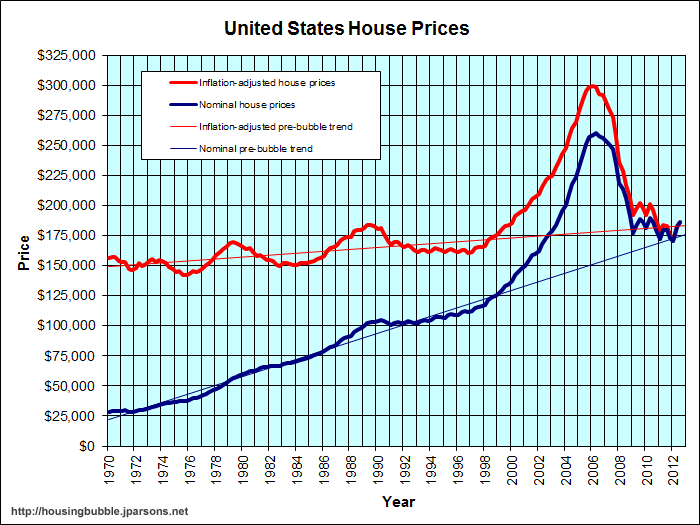
In retrospect (as the housing prices have mostly recovered: http://www.doctorhousingbubble.com/wp-content/uploads/2013/0... ), the hosing crisis can be seen as an irrational bubble, with the major problem being that the banks were under-capitalized for the risk they were taking on. After several years of injecting capital into the banks for several years, they are fine. Arguably the banks didn't worry about the risk because they trusted the government would help them out.
Re:An Opinion in Defence of NATs
on Thursday September 07, 2017 @03:47PM (#15195097)
It's not dead simple, it just seems that way because the router already comes configured for it. If you had a router already configured with a default firewall, that would seem dead simple, too.
Re:Some Were Meant for C: The Endurance of an Unmanageable Language [pdf]
on Wednesday September 06, 2017 @01:39PM (#15185561)
Hi! I can't imagine how you understood what I wrote. I specifically said to not use those C library string functions.
I fully admitted that string manipulation is absurdly bad and error-prone, then built on that by showing a way to make it better. Use ktStrcat() instead of strCat(), then you don't have to worry about truncation. Use ktSprintf() instead of snprintf(), then you don't have to worry about truncation. I wish you had understood.
Re:Some Were Meant for C: The Endurance of an Unmanageable Language [pdf]
on Wednesday September 06, 2017 @03:06AM (#15181745)
Oh yeah, you're right.
Another thing I've done that will work if you have a lot of strcat(), is make a string struct:
    ktString {
       int len;
       int memlen;
       char *str;
    }
    bool ktStrcat(ktString s1, ktString s2);
    bool ktSprintf(ktString s1, ...);
#define ktCstr(x) (x)->str
write(sock, ktCstr(s), s->len);
Re:Some Were Meant for C: The Endurance of an Unmanageable Language [pdf]
on Wednesday September 06, 2017 @01:15AM (#15181392)
I assume you're referring to OpenBSD here, they didn't use snprintf(). They used asnprintf(), which solves the problem of who should allocate (but not who should free).
Re:Some Were Meant for C: The Endurance of an Unmanageable Language [pdf]
on Wednesday September 06, 2017 @12:03AM (#15181123)
OpenBSD takes a fairly minimalist approach, which is vaguely described here: http://www.freebsdforums.org/forums/showthread.php?threadid=... They basically replace the unsafe functions with things that are easier to use. Their idea is that it isn't the format of the C-string that causes security issues (null-terminated string), it's the poorly defined functions (with weird corner cases that are hard to get right). It's worked well for their use cases.
DJB did something similar in qmail, I don't recall the details but you can look at the source code as easily as I can, and it eliminated security problems.
When I'm working in Java, I find that most of my string parsing uses the split() function. This is a pain in C, because even if you had a split() function you'd need to deal with memory allocations. Most of these are solved with a memory pool. In my own library, I also added runtime, grammar-based parsing functionality. So to parse a CSV line you might do something like this:
    char *g = " S   -> WORD | WORD , S;"
              "WORD -> [^,]";
    results = parsegram(g, inputString);
Re:Some Were Meant for C: The Endurance of an Unmanageable Language [pdf]
on Tuesday September 05, 2017 @11:02PM (#15180883)
shrug It doesn't fall over. I've done it, the openBSD team has done it. DJB has done it. Maybe something is wrong with your implementation that I can help you with?
Re:Some Were Meant for C: The Endurance of an Unmanageable Language [pdf]
on Tuesday September 05, 2017 @10:50PM (#15180845)
It was quite state-of-the-art at the time.
Most of the criticisms you hear about C today (type safety, memory safety, no garbage collection) were criticisms that C got when it was first invented.
In fact there are fewer criticisms of C than there used to be: a lot of the early criticism centered around syntax, but the C syntax kind of won, so you don't hear that anymore.
Re:Some Were Meant for C: The Endurance of an Unmanageable Language [pdf]
on Tuesday September 05, 2017 @10:14PM (#15180690)
That particular problem (strlen/strcpy/memcpy) comes from the problems of the standard library string functions. It can be solved by creating your own string library. Then string manipulation is easy.
Re:Some Were Meant for C: The Endurance of an Unmanageable Language [pdf]
on Tuesday September 05, 2017 @10:13PM (#15180686)
For that situation, you would need to mark the end of the variable-length memory block at run-time.
Re:Some Were Meant for C: The Endurance of an Unmanageable Language [pdf]
on Tuesday September 05, 2017 @08:11PM (#15180133)
It's not just the mental ease, it's also the physical typing ease (and in some cases, the possibility).
For example, he points out that to connect C to existing parts of the system (which is the OS and OS level tools), all you have to do is call the functions. If you want to call a C library from a Java program, it's a lot more work. Furthermore, C has the capability of understanding Java structures (although it's awkward), but Java has no way of understanding C structures from within the language. There is no way to model a driver I/O port in Java, but in C there is.
The paper is worth thinking about. If you are creating a language, take interoperability between already existing languages into consideration. JNI is ok, but think how much better it could be if it did auto-marshalling of objects!
Re:What the Industrial Revolution Tells Us about the Future of Automation
on Tuesday September 05, 2017 @04:32PM (#15178857)
You can, but you'll be dirt poor. Back when "dirt poor" was normal, and luxuries like "bathing every day" or "carpet" were uncommon, being dirt poor seemed acceptable. Now most people won't accept that as a lifestyle.
Re:16% of the code on the average site belongs to Facebook
on Monday September 04, 2017 @02:34AM (#15166170)
Here you go, I uploaded an image of the file transfers showing just the html and javascript:
Re:SharknAT&To: Vulnerabilities in AT&T U-verse modems
on Monday September 04, 2017 @02:27AM (#15166140)
I have no idea
Re:Flat UI Elements Attract Less Attention and Cause Uncertainty
on Monday September 04, 2017 @01:16AM (#15165885)
The whitespace is there because people design first for mobile, then port to desktop browsers as an afterthought. That's not going to change any time soon.
Re:16% of the code on the average site belongs to Facebook
on Monday September 04, 2017 @12:38AM (#15165759)
You should check out Google's homepage sometime. One wouldn't expect that such a simple front would hide so many k of Javascript, but I guess it does a lot.
Re:SharknAT&To: Vulnerabilities in AT&T U-verse modems
on Sunday September 03, 2017 @07:56PM (#15164672)
I would roll my own. I'm totally confident I can do it better than the OpenSSL team. Of course, I would see what I could do with GnuTLS, first.
In practice, OpenSSL should not be considered secure. At best it can be considered as a way to stop script kiddies.
Re:SharknAT&To: Vulnerabilities in AT&T U-verse modems
on Sunday September 03, 2017 @06:22PM (#15164303)
Update: 4 of 535 members of Congress have computer science degrees.
That's higher than I expected.