I was under the impression that child-safe pool fences (legal requirement in Australia) have reduced the number of children drowning in the family pool.
I was also under the impression that the various ad champagnes over the decades about not leaving children unattended in the bath have also reduced the number of kids drowning in the bath.
I was also under the impression that requiring all new homes to have RDCs (Residual Current Device) installed has reduced the number of electrocutions of children and non-children.
I was also under the impression that providing various first aid techniques can and does save lives.
As far as I'm aware requiring all occupants of a motor vehicle (except buses, for some reason) to wear a seat belt, and requiring all new motor vehicles to be fitting with airbags, has reduced the number of children being injured or dying in motor vehicle accidents.
Also see: traction control; ABS braking; smoke detectors; PDFs (Personal Flotation Devices); food safety regulations; bicycle helmets / skate helmets / etc; bicycle lighting; step barrier / balustrades & handrails; exit signs and fire escapes.
I could go on.
As someone who leans a little left of centre (but only a tiny bit, I'm a closet right-wing), I think some regulation is a good thing. But maybe that stance just encourages the weak to thrive, thereby diminishing the viability of the entire species. Only time will tell.
I imagine the vast majority of people reading this don't have a problem with requiring houses to have smoke/CO detectors, for example.
Where you get into arguments is when some behavior is only somewhat common or where, as discussed here, the safety benefits seem to be more a matter of perception than statistics. And "the children" complicates things because it's not a clear case of exercising personal responsibility as is the case with adult behaviors.
Metal, glass, ceramic, stone... there is no need for alarms if you avoid building a house with firewood. Note that this includes the roof support, roof exterior, studs (metal is standard for commercial construction), insulation, cabinets, and flooring. Do things right, and the alarm becomes pointless. All it does is annoy you when you stir-fry or make toast.
In case of government regulation, each regulation ends up imposing significant cost on the entire society to prevent handful of deaths which is a massive waste of resources. I am pretty sure destruction wealth also results in some human misery.
Consider USA:
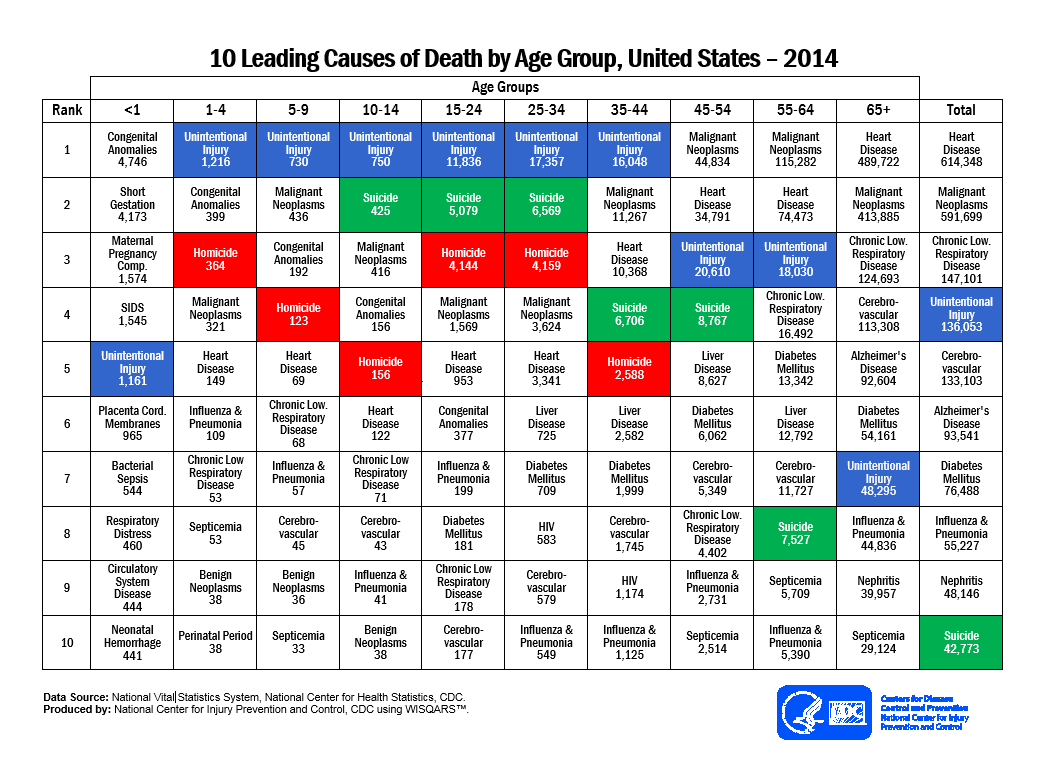
Total deaths caused by unintentional injury in 2014 for children below 14 is 3857 [1]. For a population of 300M it is pretty insignificant. Even if we just look at population below the age of 14 (30M) it is merely 0.00012856666. This is just pure noise.
Sure you can come up with a regulation that imposes a very heavy cost on entire society to eliminate one cause of unintentional injury but I really wonder if it has any impact on the overall number at all.
Unfortunately I don't have more data to backup this claim but if I had to put my money on whether these rules will bring down child mortality I would bet it wont make a difference.
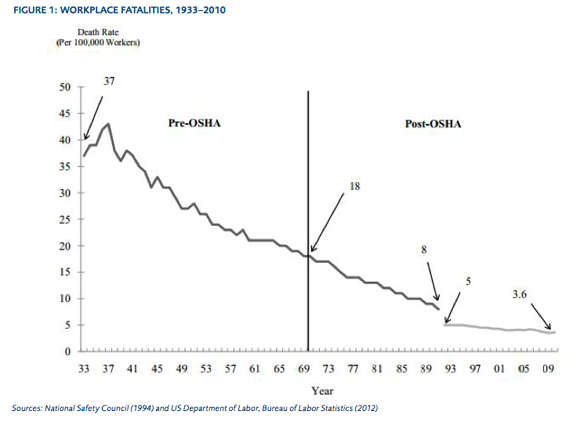
I also think that child mortality will go down over time even if we don't pass a lot of laws and people themselves will figure out solutions to avoid these deaths. A good data point to verify is this OSHA's impact on worksplace safety in USA.
I turns out that workplace safety was getting better even before OSHA and the giant regulation made absolutely no difference what so ever to the decline in worksplace deaths but put a significant cost on businesses. [2]
[1] http://www.cdc.gov/injury/images/lc-charts/leading_causes_of... [2] http://mercatus.org/sites/default/files/workplacefatalities5...
Here's a mother who left young children (oldest was four) to fend for themselves for a day while she went off on a drink and drug "binge": https://www.theguardian.com/uk/2009/nov/17/binge-mother-drug...
Plenty of deaths feel preventable. Her's a mother who didn't supervise her children and they ran into traffic. That event caused social services to take interest in her, and they advised her to cover a garden pond. She didn't, and one day while she was not paying attention to her children one of them died. That's a tragedy for that family.