There is so much code copied around these days. This is all just the way it is and how we have decided to move ahead as a society. Making judgments on others is uncalled for.
He said exactly that: http://www.vanityfair.com/news/tech/2014/10/jony-ive-lessons...
And yes innovation is incremental but this is Xiaomi not simply borrowing design cues but literally cloning a design. See for yourself - here's their take on Japanese company Balmuda's air purifier: https://www.balmuda.com/jp/airengine/
Xiaomi's version: http://www.mi.com/en/air/
Meh. Him and Apple have stolen plenty! Isn't Steve Jobs famously quoted as saying "great artists steal"?
Anyway, what's the fucking difference if you steal a few pieces here and there or the whole thing? Nothing.
(EDIT: A piece of something is still a whole piece that you've stolen. And Apple has also stolen entire apps, like Konfabulator. They get no sympathy from me.)
Remember in 2006 Nokia, Motorola, RIM and others made literally everything but rectangular phones. They were covered in buttons and other crap.
Ive's vision of a virtually button free phone was strikingly different at the time, a device even simpler than the Star Trek communicator pad.
>Anyway, what's the fucking difference if you steal a few pieces here and there or the whole thing? Nothing.
It's very hard to strip something down to the essential components and integrate those into a package that becomes obvious in retrospect. The steering wheel in a car, the magnetic seal on a refrigerator door, these are all obvious now but at the time were huge breakthroughs.
If you can't see the difference between copying and working to reduce something down to the fundamentals you're obviously unaware of how one is lazy and the other is crazy hard.
The reason phones didn't look like rectangles wasn't because no one had the idea, but because screens were expensive and touch technology (and other technologies like data) wasn't mature yet. That's why you had something like the LG Prada come out at the same time (or even slightly before) the iPhone.
Just because you are first to adopt something (e.g. because your customers don't mind paying a premium and you've secretly developed it for years including controlling the supply chain) doesn't mean you should have the sole right to use a concept derived from evolution of components.
P910 http://pdadb.net/img/sony_ericsson_p910.jpg
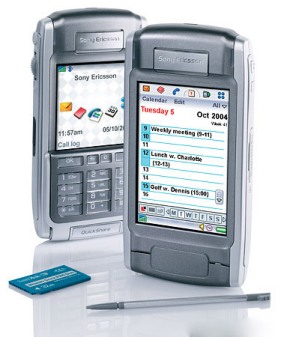
Neonode N1 http://images.dailytech.com/nimage/Neonode_N1_Sept_2004.jpg

Sony Clie PEG-TH55 https://cnet3.cbsistatic.com/hub/i/r/2010/08/03/b26d3392-67c...

LG Prada http://image.cellphones.ca/images/phones/74/767/lg-prada-ful...

Don't get me wrong: Apple deservingly got tons of credits (literally, in their bank accounts) for the combination of great hardware/software/ui design/marketing of the past 10 years. They still do.
But their success means that just like Jony Ive got "inspired" by Braun, Apple is not inspiring everybody else.
If you look at the mock-ups people made of the hypothetical and long-rumored "iPod phone" that Apple was working on you'll see how many of the design decisions Apple took were completely unexpected: https://www.engadget.com/2009/12/28/how-early-iphone-predict...
Apple didn't invent everything under the sun, and they didn't even "invent" everything they use. What they do is try hard to come up with a striking, simple design that they know will differentiate their products. They also get very upset when people steal their design without even trying to make it their own.
Notice how Apple's been quiet about the Microsoft Surface device, and even though it directly competes with the iPad, they're still partnering with Microsoft to build Office apps. I think they respect Microsoft here because re-inventing the tablet and making a compelling notebook product of that sort takes a lot of bold engineering.
Apple's appropriation of the keyboard cover (http://www.theverge.com/2015/9/9/9297805/apple-ipad-pro-micr...) is one of those things that's inevitable. I'm not sure what else they could have done here, they were boxed in, so it ends up being 'theft' by some definition of that term. Microsoft doesn't seem to have raised this as an issue, so I'm sure there was some communication here between the two parties to make sure it didn't poison the waters.
Xiaomi "thin, machine-metal" laptop looks as much like an Macbook as iPhone's 6 antenna lines look like HTC One M7.
Apple has been quiet about Microsoft (and vice-versa) because if Samsung v Apple design patent wars taught us anything is that it's pointless and expensive to engage in these fights.
The iPhone redefined what a smartphone should be using nothing that wasn't available to anyone else in the market. Except, perhaps, a Jony Ive with a mad man like Steve Jobs pushing him.
That said, the unibody MacBooks set the gold standard for stylish laptops. It's natural someone else would follow the formula many years later. Even with only evolutionary changes, the MacBook is still light years apart from its Windows-running copycats.
Since it was released so close to the launch of the iPhone that it's not like Apple could have possibly dropped everything and rebuilt their entire design strategy around it. The protracted lawsuit with Samsung showed how Apple had been working on that design for some time and had already settled on a number of key design elements, the "rectangle" being one.
Those are interesting historical artifacts, but none of those had any lasting impact on the market, they were merely historical curiosities that nobody ever copied.
> Just because you are first to adopt something...
No, it doesn't give you an exclusive right per-se, but there's a lot of ways you can make a touch-screen phone short of copying Apple's design millimeter for millimeter like Samsung did.
So long as there's such a thing as a design patent then, legally speaking, yes, you do have the sole right. That's what patents are for. I'm generally not a fan of patents, but you can't argue that they don't exist.
There was incredible variety in the phone space prior to the iPhone, phones came in all shapes and sizes with vendors exploring increasingly implausible formats out of desperation. Post-iPhone they all converged, coincidentally I'm sure, on Apple's design. It's only now we're seeing some divergence from that.
Today we're seeing the same ridiculous convergence with keyboards where everyone plus dog is using the Apple layout. This hurts consumers since there's far little choice than there was before.
There's a huge difference between "copying" meaning "taking a good idea and giving it your own spin and making it even better" (e.g. Android vs iOS) and "copying" meaning "making a shitty knock-off version of a thing that looks almost identical to the other thing superficially", as in all the bargain-priced knock-off phones that are sold using Apple's branding (http://mashable.com/2016/06/17/apple-china-knockoffs/#qO0bF3...). Most companies fall in the middle here, but some skew very close to the bottom.
"Of those only the Prada is close"
No, the P900 was a smart phone and therefor a rectangular phone like the iPhone, but with a hardware keyboard in addition to the virtual one since touch technology wasn't very good. The Neonode had a touch interface because they had developed their own touch technology. The Sony PDA has a very similar design since it was made for using applications similar to what would later become common with phones when larger screen and faster processors became available. The LG Prada was also a premium phone, which is why it could look similar to an iPhone.
"they were merely historical curiosities that nobody ever copied."
Except Apple then I guess.
"There was incredible variety in the phone space prior to the iPhone"
Not really. Most phones looked largely the same with a keypad and maybe a joystick, because that was the state of technology at the time. Just like most phones look the same today, because of the state of technology today. Even if you wanted to make a different phone today there wouldn't be much point. Because you would have to create your own parts, your own operating system and your own application ecosystem just to be 99% similar to everyone else since you're using the same technology. Look how things went for Google Glass, which isn't surprising since the technology isn't ready.
"Today we're seeing the same ridiculous convergence with keyboards where everyone plus dog is using the Apple layout."
Do you mean the Sony layout? Because that's where the chiclet design was copied from.
http://www.cnet.com/products/sony-vaio-x505/
"as in all the bargain-priced knock-off phones"
Those are novelty phones, you literally have to search them out to find them. They have about zero percent of the market.
By that definition the Ford F-150 is a copy of the Porsche 911. I mean they both have four wheels and an engine and things like door handles and windows.
The Sony x505 has "chiclet" keys, but they didn't invent them. These things were on calculators decades prior, and infamously the IBM PC Jr.'s wireless keyboard.
What I'm talking about is the peculiar arrangement of the arrow keys and other subtle things that are very distinctly Apple. Given how quirky some keyboards can be, where seemingly every vendor has their own spin on how big the Caps Lock key should be or where backspace should be positioned, they're all using Apple's keyboard as a blueprint going forward, literally copying it.
Apple's fairly unique arrow key layout showed up in early versions of the iBook and other Apple machines in the 2000-2001 era, possibly earlier.
Apple has always copied, just like they copied much of the current iPhone user interface from their competitors.
This quote is meant to make you think about the differences between stealing and copying ideas. It isn't literal. It doesn't even make sense literally. Stealing means you make it yours. It is no longer theirs. How do you do that with an idea? You make it so much better that people forget about the previous idea you took.
Imagine if I said: Atom is such a rip off and the sublime guy must be feeling that GitHub is lazy and a thief. I wonder if GitHub compensated the sublime author who is a small indie dev!
http://cache.filehippo.com/img/ex/2794__Sublime_text_2_1.png http://1.bp.blogspot.com/-9QBldnFnock/U3PgeKnq-SI/AAAAAAAASt...


Edit: my original comment wasn't very constructive.
My issue with the analogy is that Xiaomi openly copies the design of competing products that have gained success, at least in part, due to having differentiated designs. Usually they copy without providing even incremental innovation or product differentiation.
In the case of Sublime Text vs. Atom, GitHub developed an editor with a fundamentally different underlying architecture. Github also made Atom open source, which addressed one of the main complaints against Sublime Text. Atom offered obvious and non-trivial product differentiation.
Also, Xiaomi specifically targets products that have distinctive designs. Sublime Text's design doesn't look that distinctive. What are the components of the design (excluding configurable parameters like a light/dark theme) that Atom copied? The main similarity I see are the tabs, but neither look distinct from most other tabs (i.e., Chrome browser tabs).
http://www.pcworld.com/article/2858592/xiaomi-faces-copycat-...
Imagine if someone complained because a tire manufacturer came out with a gasp round wheel.
Alto: http://s7.computerhistory.org/is/image/CHM/500004657-03-01?$...
Lisa: http://www.digibarn.com/collections/systems/apple-lisa2xl/ap...
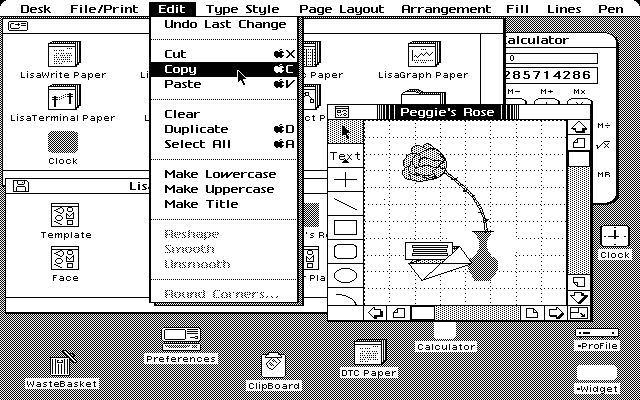
Mac System 1: http://applemuseum.bott.org/sections/images/screenshots/syst...
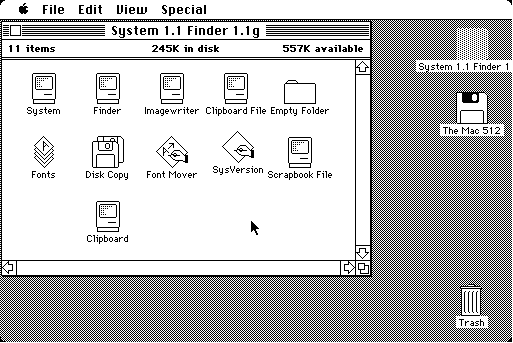
http://b-i.forbesimg.com/anthonykosner/files/2013/11/jony-iv...

(I'd use the phrase "has been inspired by and has applied to the contemporary times" instead of "copied", but if he likes that verb more...)
I'll never understand designers. I don't mean that as a criticism, I literally don't understand the mindset. This is my problem for not understanding.
It sounds really undemocratic (why shouldn't everyone have their say?). And it undoubtedly contributes to the sterotype of the designer as diva or precious about their work. But can you think of an open source project praised for it's visual and interaction design that was colloboratively develeoped with dozens or more participants? If you can, it will be an exception, not the rule.
When there are too many participants in the design of a program, you end up with a project pulled in every direction and pleasing to no-one. But if you go the opposite route and limit design decisions to a dedicated UX team, you end up generating resentment from contributors or users who feel their input is being ignored (just look at Ubuntu for an example of this).
From a designers perspective, either of these scenarios will seem like a no-win situation.
If someone copies my software work, I don't go around calling them lazy. Even I spent all my weekends on this lovely piece of code, only for someone else to "steal" it.
And if you do, good for you.
How can you paint such a broad stroke, like THOSE DESIGNERS, I'LL NEVER UNDERSTAND THEM! With the implication being those designers aren't open and collaborative and willing to share and don't understand iterating in the open like us developers. The quote is from one specific designer.
UX is fleeting. Even the best UX will grow stale over time as styles change, and it's style propagates (as it will if it is truly revolutionary) it will become mundane.
Technology breakthroughs are hacks in the laws of physics. Humanity hasn't fundamentally redesigned the Steam Engine since James Watt. It just can't become more efficient. Nobody cares steam is mundane, or well understood. We still use it in nearly ever power plant.
So no I don't stand why people feel the need to own something as fleeting as a singular moment in the pseudo-cultural-artistic space Product/UX design fits in knowing that it'll pass and forever be looked on as an out of style relic of a by-gone age. To do so honestly and earnestly makes you sound like a diva.
One analogy is brute force searching for an approximate solution to an optimization problem.
It's problematic when others take your solution if you did all the brute forcing.
Design is only fleeting inasmuch as an approximation could be fleeting. Others build off an approximation to find better solutions. But without the earlier solution, we'd find ourselves in a much different part of the sample space.
Definitely, could definitely understand if it was about money/business. But that is never mentioned when designers get angry about their designs being stolen.
I think it's not about money/business. I think it's a different mindset where a "stolen" design devalues your own contribution. A developer who makes a breakthrough never feels like their contribution is devalued if someone else copies your idea; quite the opposite, copies validates that you made a genuine breakthrough.
In Xiaomi's case, what they're doing is, more or less, that last bit: the only work they're putting into their designs is the work necessary to make them look like somebody else's designs, expressly because the designs they're copying are successful in the marketplace. If I was a designer they copied I wouldn't be very thrilled by that. Money definitely plays into that, but credit for the design work is a big part, too.
Read history, then comment, okay?
The PARC machine barely scratched the surface of what could be done, and it was far from being packaged in a way that could be marketed to consumers. It was inspiration, and any engineer knows that's a long, long way from a working product.
Even Microsoft has gone its own way with Windows after some heavy overlap with MacOS and other windowing systems (DESQview in partcular). Windows 3.1 was more different, and Windows 95 borrowed more heavily from OS/2, which was wildly different from MacOS. If anything Apple was forced to adopt the right-click menu popularized by Microsoft since it became the de-facto standard.
Meanwhile other companies have damning memos that say "Make it look exactly like Apple's product".
This is pure conjecture, but every company does it. My point was let's not act like Apple is innocent and does not.
Xiaomi has built its entire company on blatant theft of designs. Let's not say "oh, it's okay because Apple once did X" which is like saying murder is no different from a speeding ticket since both things are illegal.
Their ideal product entry point is when consumers are familiar with the product but are unhappy with the current offerings because they lack the right contextual fit.
Maybe if you have a specific example here of where Apple's flagrantly copied something like Xiaomi has we can talk specifics.
Apple Watch: It's a smart watch, they didn't invent the category, but it's a novel form-factor, instantly recognizable. The operating system is also highly distinct from others. You'd never confuse an Apple Watch for anything but an Apple Watch. Some of the Android based ones are going out of their way to look like non-smart watches. At least Motorola has their own design language here.
F.lux: Significant functional overlap but these sorts of tools have been around since the 1990s. It's not like F.lux invented this, they just popularized it. Maybe it was a dick move on Apple's part, or maybe it was just a thing they thought should be core to their product.
When Microsoft wanted to add faxing functionality to Windows they could have bought WinFax, but they instead made their own thing. Is this stealing?
I think your definition of stealing and copying is extremely loose, to the point where the term has lost all meaning.
Your comments use words similar to mine like "the" and "a". Are you stealing my words?
Not reinventing the wheel is a great business strategy. Everyone copies everyone in the tech space. Apple didn't invent lightweight laptops.
It's either lower wages, better productivity or both, either way, it's better for us, consumers, which now have additional money to spend on other products and services which further enrich our lives (where additional money = Price of the Japanese product - Price of the Chinese product).
The Japanese company should have recouped their additional costs between the product launch and the Chinese company's product launch. If that interval was too short for them to do so it means that, as I said before, their "costs to create the product in the first place" were too high to begin with. For society's greater good we should put no premium on "I was here first/I did it first!", but only on "I build this product using less resources, hence it has the lowest price!".
I disagree completely.
If we didn't care about being there first we wouldn't have patents, and without patents, why would companies bother spending any money on R&D?
If you spend money on R&D, you have to recuperate those costs. If a competitor could just make an exact copy, then even if they made it in the same exact way that you did, they'd be able to sell it at a lower cost because they spent nothing on R&D.
Patents aren't perfect, but they exist for a good reason: to promote innovation for "society's greater good"
Yeah, it does seem like we're on two different sides of the barricade. Patent-related discussions never seem to end once they get going (even more so on HN), but I just wanted to add that I was surprised to read recently that James Watt himself was being criticized during his lifetime for holding patents for too long and for too important an industry.
Can't find the exact quote right now (it doesn't help that the book I read it from was a 500+ page Italian translation of a history of the Industrial Revolution, originally written in French - https://archive.org/details/bub_gb_9CEeAAAAIAAJ), the closest that I could find was this, which is a contemporary view on it: https://fee.org/articles/do-patents-encourage-or-hinder-inno...
> By patenting the separate condenser Boulton and Watt, from 1769 to 1800, had almost absolute control on the development of the steam engine. They were able to use the power of their patent and the legal system to frustrate the efforts of engineers such as Jonathan Hornblower to further improve the fuel efficiency of the steam engine. By way of contrast, and fortunately, Trevithick did not patent his equally innovative high-pressure design.
> Ironically, not only did Watt use the patent system as a legal cudgel with which to smash competition, but his own efforts at developing a superior steam engine were hindered by the very same patent system he used to keep competitors at bay. An important limitation of the original Newcomen engine was its inability to deliver a steady rotary motion. The most convenient solution, involving the combined use of the crank and a flywheel, relied on a method patented by James Pickard, which prevented Watt from using it. Watt also made various attempts at efficiently transforming reciprocating into rotary motion, reaching, apparently, the same solution as Pickard. But the existence of a patent forced him to contrive an alternative less-efficient mechanical device, the sun and planet gear. It was only in 1794, after the expiration of Pickard’s patent, that Boulton and Watt adopted the economically and technically superior crank. The impact of the expiration of Watt’s patents on his empire may come as a surprise as well. Far from being driven out of business, Boulton and Watt for many years were able to charge a premium over the price of other steam engine manufacturers.
And I'm pretty sure that our industrial past includes many such cases in which the greater good was sacrificed for the interest of the few, like it happened even in Watt's case.
Parasites depend on their hosts survival, since if the host dies, the parasite dies too.
Now it's China's turn. In ten years it'll probably be someone else as Chinese development continues. Just as Hollywood got their start years ago.
“When you’re doing something for the first time, you don’t know it’s going to work. You spend seven or eight years working on something, and then it’s copied. I have to be honest, the first thing I can think, all those weekends that I could have at home with my family but didn’t. I think it’s theft, and it’s lazy.”
Xiaomi have done this to others. Their new air filter for example basically clones a Japanese design and sells it for a fraction of the price: http://www.gizmochina.com/2014/12/09/xiaomis-air-purifierbor...