It is bad enough that the recent monster home epidemic is consuming every inch of a lot up to its maximum permissible limit to build supersized single-family homes. This legislation, in effect, enables the trend for a monster-home-plus-in-law at the cost of further eroding our mid-block open space that is a community resource providing residents with light, air, privacy, visual relief, and a much-needed psychological comfort zone.
I've never actually seen words like these penned, in favor of NIMBYism. SF is experiencing a "monster home epidemic"??? This is legitimately disgusting.
[1]: http://articles.chicagotribune.com/2014-06-02/business/chi-a...
For other cities/locales you may be right, but in SF, it just seems offensive. We all know what the consensus epidemic is in the Bay Area, and attempting to use that word to imply that these poor landowners are being encroached upon is something I find reprehensible. Their "epidemic" is a trifling concern compared to what some are going through.
I can see why a block filled with yards/gardens and small buildings is preferable to a block filled with large buildings and not much else.
There are plenty of places in the country where you can find that. When very wealthy people stubbornly want to hold onto that in the middle of one of the most dense metro areas in the country, while people are being pushed out of their homes and homeless fill the streets, yeah I find it disgusting for them to talk about preserving their "much-needed psychological comfort zone." They can move out to the country if they really want all that stuff, they can afford it, not everyone can.
i find it hard to believe that the homeless problem is due to the soaring house prices in SF.
Preferable to whom, though? Look at it from the perspective of one of those people who are renting in SF, and can barely afford that rent given your paycheck (or cannot afford it, actually, if you had to pay market value). I bet they would prefer a residence they can afford to the one they cannot.
So long as freedom of movement and freedom to buy and sell property are in place, it's either-or - either a given block will be affordable, or it will have yards/gardens and small buildings. The latter carries an implied statement that people below a certain income level simply shouldn't be there. I think it's clear why some would find it "legitimately disgusting".
I don't see how "a legit neighborhood group asking residents to contact their officials" fits that model; why do you say it's astroturfing?
Telling the existing John/Jane Q. Public, who already agrees with you on the issue, to actually do something based on that agreement, is just regular activism and doesn't connote the "aha! caught you" aura of an astroturfing allegation.
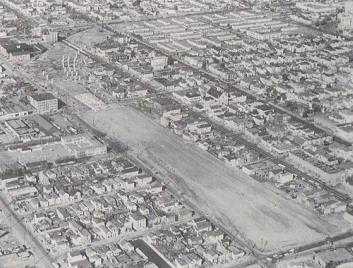
Geographically speaking most of SF already suffers from poor quality of life. Except for the northeast quadrant of the city, SF is dominated by flat, boring, ugly zones of car-centered banality.
https://www.google.com/maps/@37.7398485,-122.5023375,3a,75y,...
There's nothing in this photo worth preserving.
With high rise buildings, all you need to do is convince ONE place to build a bunch of them. Perhaps in a place such as south SOMA, which is packed with industrial warehouses that could be replaced with apartment sky scrapers.
Nobody is going to be gentrified when the old dirty warehouses in south SOMA get replaced.
FWIW, the city thinks that warehouses and auto body shops are an important part of its jobs plan for non-techies. Apparently it pays better than working in the service industry.
Well, there was a decent uproar when a large wholesale flower market was slated to be shut down.
Now, Eric Mar, the Supervisor from the Richmond. This is a man I detest.
In the Midwest, if someone built that photo (exactly) it would get called a strong downtown urban design, and the builder would be praised for creating "missing middle" housing.
https://hoodwork-production.s3.amazonaws.com/uploads/story/i...

http://www.janetdelaney.com/south-of-market/
http://oaklandplanninghistory.weebly.com/uploads/1/8/1/1/181...
"In the Richmond District neighborhood in San Francisco, CA, residents most commonly identify their ethnicity or ancestry as Asian (50.0%). There are also a number of people of German ancestry (10.9%), and residents who report Irish roots (6.9%), and some of the residents are also of Italian ancestry (4.5%), along with some Russian ancestry residents (4.1%), among others. In addition, 35.2% of the residents of this neighborhood were born in another country."
http://www.neighborhoodscout.com/ca/san-francisco/richmond-d...
Holy crap. Every inch of ground is covered in concrete yet it looks like less actual housing than say a rowhouse neighborhood like: http://static1.squarespace.com/static/55d2a119e4b03323486a5e...

+street five times too wide
+snout houses with huge garages and driveways but few yards and porches
+low rise housing with one floor devoted to parking in a high demand area
+not nearly enough trees
+no street corner retail
But if you think that's bad, you should see 98% of the United States where it's much worse than the worst of San Francisco.
You also have to consider that decreasing cost in SF will lead to increased demand.
Including land costs, is that really true? I sort of doubt it, since those sorts of high rises are built in cities where land prices aren't that high.
> You really want your housing, jobs, education, retail, and leisure spread around such that people can conduct most or all of their daily affairs on foot.
Don't you want the opposite of that? If it is spread, you spend more time traveling. Public transit that is spread out is very hard to accomplish. Cities with that stuff all spread out are car cities.
I always trot out Paris, but that's only because it's such a good example.
https://www.google.com/maps/search/bakery/@48.8858374,2.3347...
I think adding high rise is the right choice, as long as it is accompanied with increases in transport links. It's all very well to add in a couple of thousand people, but they all have to get in and out and buy groceries etc. you don't want each of those people owning a car and making the traffic worse.
I think there should be mor emphasis on making other parts of the Bay Area more like the things people want from the city / peninsular proper. Whether that is transport, cultural or liveability, it should all be possible.
That point so often seems ignored in these discussions (with respect to many growing/popular cities).
So an example of the reality in the Boston area is that the Green Line extension is on hold last I read because costs have doubled to $2 billion or so. (And the Green Line is basically the oldest and crappiest line in the overall not-bad Boston metro system. It's essentially a trolley with underground sections dating to the turn of the last century.)
So 20 years and $20 billion or so in transportation infrastructure would certainly set San Francisco up to do more building in areas where there are good opportunities to expand housing stock beyond what's already being built.
The frustrating thing about this NIMBY argument, is that it's usually presented as the progressive option, it's standing up for the people. But in reality it's often selfish - homeowners/landlords who have a lot to gain are gaining support for their cause, by getting the disenfranchised to basically decide "If I'm going to be priced out of the city anyway, I'm gonna take as many other people as I can out with me". When in reality, many of them would have a shot at not getting priced out at all with better policy (or at least a shot at making "getting priced out" not so bad, e.g. more housing supply in the city & in neighboring towns -> prices drop a little in the city -> prices drop a lot outside of the city within easy commuting distance).
Fundamentally, if people outside the country want to buy our housing, we should be happy about that, and create jobs by building housing to meet the demand. Imagine if our reaction to Chinese demand for Buicks was to limit car manufacturing and complain that foreign investors are making Buicks unaffordable.
If we could prevent them from getting a visa to come at all, we could do the same thing and we wouldn't even have to build the building. Just allocate a few address numbers on ritzy street corners and sell the "buildings" to investors stashing Russian or Chinese black market cash.
Heck, we could do high-frequency house trading!
More realistically, investors rent out the properties they buy. So a market with tons of foreign investors spending irrationally would have an undersupply of homes to buy and corresponding oversupply of homes for rent. Renters would get a great deal and buyers would get bad ROI.
Anyone who owns property in the city, whether they are a homeowner or a landlord, likes the current situation. For non-landlord homeowners, the current situation keeps their property values and home equity high and it ensures that the neighborhood and quality of life they bought into stays permanently stuck in time.
My local Nimby group, for e.g., sends out monthly notices (e.g http://pastebin.com/0TJiV0aM ) letting us know where the next development is, why we should protest it and sends us sample templates on how to email politicians to protest any new development. While large developers are probably able to lobby politicians, I doubt they're able to do this kind of astroturfing.