Not to mention the fact that the EU was also never meant to be a debt collection agency, which means that since German and French banks insisted on buying up higher-yielding Greek debt, they richly deserve to share the consequences of it being unsustainable with the Greek taxpayer.
If you know of good stats I'd love to see.
They took Federal contracts, grants, direct payments and insurance payments to a given state and weighed it against the IRS data for the residents of that state.
Interestingly enough, of the 50 states received back less that $1 for every $1 they paid in, meaning they were net payers. The rest of the states were net receivers of federal money.
A bit easier to see this conclusion here: http://cdn.theatlantic.com/assets/media/img/posts/2014/05/Sl...
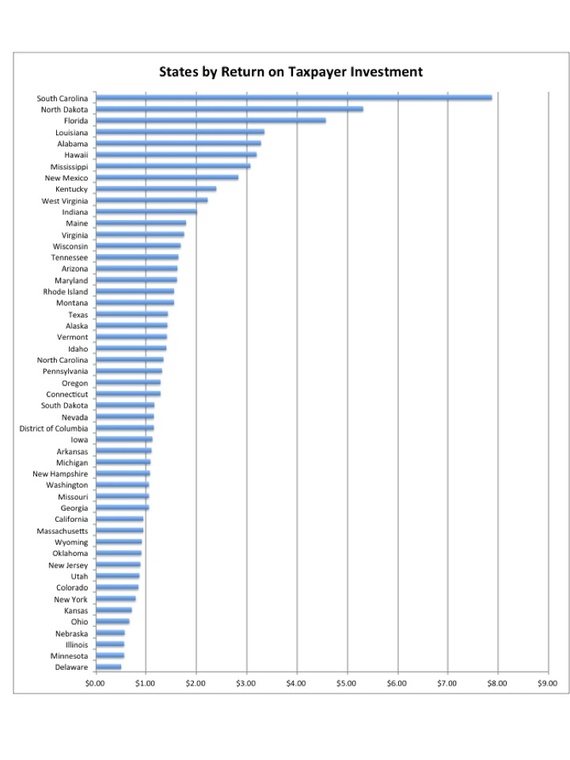
IMO any state that's over 2:1 money in vs out is clearly being subsidized. Granted it's a rough estimate as VA probably receives more money than suggested as so many people commute into DC for federal jobs.
The only thing you've pointed to that looks anything remotely like heading toward bankruptcy is Puerto Rico, which is not a state.
And yet if nations are going to share a currency, they need to have a coordinated economic policy, and that ends up happening. Wealthy states in the US perpetually give money to the poorer states, but there isn't an uproar about it. Seems like the EU was doomed to fail if it didn't allow for this.