This is an interesting post from WalletHub that was also quoted by the Atlantic: http://wallethub.com/edu/states-most-least-dependent-on-the-...
They took Federal contracts, grants, direct payments and insurance payments to a given state and weighed it against the IRS data for the residents of that state.
Interestingly enough, of the 50 states received back less that $1 for every $1 they paid in, meaning they were net payers. The rest of the states were net receivers of federal money.
A bit easier to see this conclusion here: http://cdn.theatlantic.com/assets/media/img/posts/2014/05/Sl...
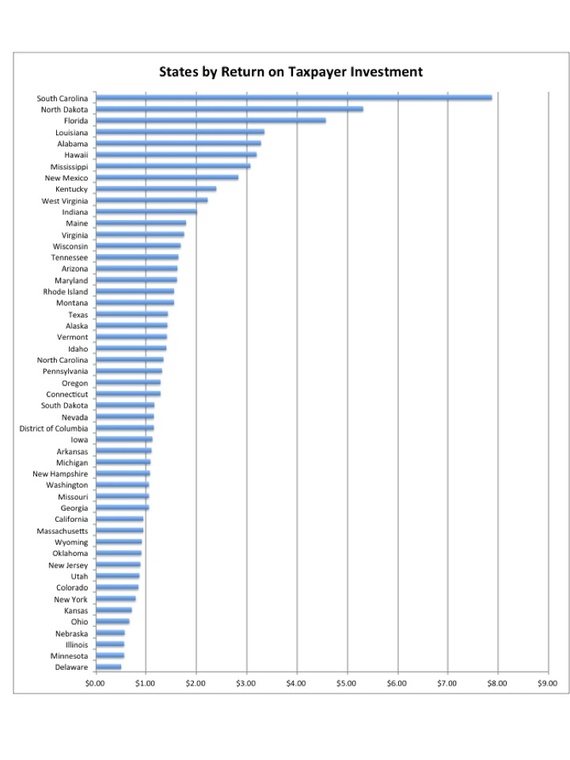
Bases that are on the BRAC to be shutdown list really should be a viewed as a subsidy. So we could quibble about what counts as a subsidy aka Corn ethanol. But, in the end you can look at any state with more federal money in vs money out and see a transfer of wealth. http://www.theatlantic.com/business/archive/2014/05/which-st...
IMO any state that's over 2:1 money in vs out is clearly being subsidized. Granted it's a rough estimate as VA probably receives more money than suggested as so many people commute into DC for federal jobs.
Re:Greece to Default on $1.73B IMF Payment
by AnimalMuppet on Tuesday June 30, 2015 @11:59AM
(#9806217)
And things like I-80 across Wyoming are treated like a transfer to Wyoming. But if you want to drive I-80 from New York to San Francisco, you need I-80 to exist across Wyoming. It's not needed for the locals; it's needed for the cross-country traffic.
If you know of good stats I'd love to see.