- MANY students had the admin password. It was freely passed around for the students to complete work from home remotely.
- The admin password was the last name of a popular teacher.
- He logged in using the same admin password all the other students use and freely have access to.
Just because the students had the admin password doesn't mean that they had permission/authorization to access that teacher's physical computer. Even if they had permission to do that, they probably didn't have permission to access the wallpaper settings.
This is really a failure of the laws in question to be less broad, and a failure of prosectors / cops to show some sort of restraint.
Can you pause to examine why you think it's necessary to substitute "friend" for "teacher" in your analogy to make it work for you?
Presumably, "friend's house" is a place where you've been before (possibly even overnight), where all the household members know where you are and where you are generally welcome.
This is analogous to the student noticing the teacher left their keys at their desk, taking the keys to unlock a private desk drawer, and putting some naughty picture in the drawer. At most, such a prank would merit a week of detention. Calling it a criminal offense of felony hacking is insane.
There is an interpretation of your above words that the occupants are unsafe because of what the intruder could do even it doesn't happen.
That is analogous to the argument that the privacy and integrity of the data stored in that computer were unsafe, because of "who knows what this teenager might have done".
> One's home is one's sanctuary, and an invasion is quite frightening.
Whereas, say, an invasion of your e-mail, social networking, bank account, credit card, or medical or government file or whatever else just something you can brush off and move on with your life.
Situation one: Imagine the students break into the teachers house to pull some prank while the teacher is sleeping. The teacher gets terrified, calls the cop, and the students get caught.
Situation two: the students wait until they know nobody is home, then break into the teachers house and pull some prank, like leaving a naught blow-up doll on the couch. Later someone tattles and they find out which students did it.
Situation one, you are more likely to have to treat the crime like felony burglary, since they caused trauma, and for all you know the claim of it being a prank is just an after the fact excuse. If you let them use that excuse, then any burglar could use that excuse.
Situation two, you treat them leniently, since obviously if they intended to do real harm, they would not have left a call sign, and they would have actually stolen something. So you know there was no malicious intent, so you do not need to treat them like felons.
It's the same with the computer. If the teacher walked in on the students using the computer, you would have to treat it a lot more seriously, because you would have to assume maliciousness. But once the prank is pulled, then you treat it more leniently, since if they were truly malicious they would have stole the information without leaving any footprints.
I make this distinction because destruction of property could be an issue with a physical break-in (via the act of breaking in).
The teacher has had students over before, and unlocks his/her home by grabbing the key out of the fake rock sitting on the doorstep. The student uses that key and wrote something obscene with the fridge magnets.
It's not quite breaking and entering, but it's more than trespassing.
The offense is an abstraction that doesn't require physically damaging any security mechanism.
By your reasoning, picking a lock or guessing a combination couldn't be breaking in because you didn't literally break anything.
What reasoning? I said that "breaking and entering" can happen through an open window. My point was to modify the analogy so that the act of breaking & entering was "easy" and non-destructive bringing it closer to the level of severity in the situation that we are discussing.
Gaining access to someone's password has a much lower bar than something like picking a lock which requires a certain set of skills, and may imply a certain level of intent. The student didn't hookup a laptop to the school network and run metasploit.
http://en.wikipedia.org/wiki/Breaking_and_Entering#United_St...
In New York, the intent is not required. However, ironically with regard to this case, it is that way in Florida.
Or, more likely, the teacher's briefcase.
Yes, using a computer feels a lot like going to an actual physical place. But we forget, it's a portable piece of property. It contains sensitive documents, but it's not breaking and entering.
> but it's not breaking and entering
Well, nobody said it is, including the prosecutors, who are charging the kid with some information-technology-specific crime (informally, "hacking"), and not "burglary".
It's called an analogy. "Breaking & Entering" is the first thing that comes to mind when thinking of a situation where the act of someone gaining access to something is itself a crime. In this case, the student is being charged with "hacking" which according to the Federal law is gaining "unauthorized access" to a computer system.
What would be the crime committed in breaking into the teacher's briefcase? Theft during the duration of time that the student gain 'possession' of the briefcase to open it?
Which is again BS. Kids used to do all that and much more when America was a freer country, with not much more than a smack at the back...
Fair enough this was a prank, and sure, we all used to do a lot more... and these days you can't let your kids run free without the police picking them up on their way to or at the park and attempting to charge the parents with criminal neglect. There is little that makes sense about any of this.
This kind of event is simply caused by the excessive increase of policing, and the political profit of such events; it's not a really special or complex phenomenon.
The major consequence is a context which supports excessive penalties for people, in which unreasonable laws, vampire prosecutors and self-obsessed politicians prosper. Proceedings like this are a product of all the above - in the era of cyberwar, the government turned even minor incidents are into major crimes, in order to make an example, and to get the political monopoly on cyberoffense; such cases are quite common.
Wherever the excessive increase of policing comes... well, that definitely is a complex and special phenomenon, but I guess it's off topic.
I'd like to see a reliable source on that. The cultural differences with most countries in western-Europe certainly don't seem to support your assertions.
In societies much safer, saner and less violent, back in the days when what I desribed used to be the case (30's, 40's, 50's, 60's etc)?
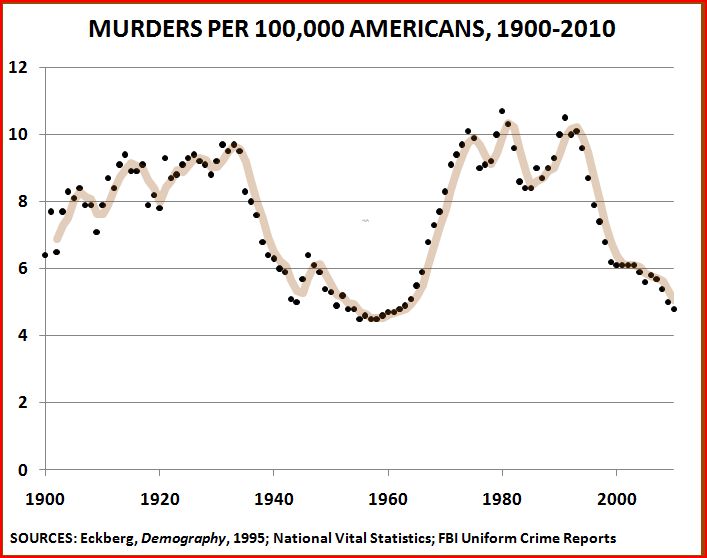
Whether you illegally entered someone's house, garden shed, school office, car, briefcase, lunch box, coat pocket, smartphone or computer are things that are different in important ways.
Whether you had to force your way in, schemed and lied to perform your act or could perform it without any trouble matters.
What someone subsequently did is also relevant. Planting a note 'your ... was open' differs from planting a turd or an explosive.
We are dealing with someone that changed the background of a desktop on a computer obviously left easily accessible. That is what should be discussed.
I think any judge / jury will agree that giving a felony to a kid who has only changed a wallpaper is absurd. But that isn't the point, the point is that the prosecutor wants to appear "tough on crime" and jack up the numbers on the "number of cases prosecuted".
The problem here isn't the law. The problem is the widespread culture of prosecutors.
EDIT: I found a better quote from the officer. It looks like this kid was a repeat offender. That's a big no-no actually... hmm....
edit: I'm guessing it's this: https://news.ycombinator.com/item?id=9408038
Throwing the book at him is a bit harsh... but it really depends on the context. Fair enough, they don't know what he did. Fair enough he copped to the crime and that at first glance appears to be the extent of the "damage".
If this was a one off, okay, laugh it off. "You got me, you little bugger, but I'll get you back." No police needed. In which case this punishment is off the charts heavy handed... the punishment should definitely fit the crime.
If this is the actions of a kid that was constantly engaging in persecution of this teacher, he's been warned, sent to the principal's office, suspended etc. then it's easy to see how it could escalate. I fail to see how anything beyond expulsion is necessary... but some people do tend to blow things out of all proportion.
On the edge of being accepted? It's been part of standard English for over 500 years!
Read into that what you will, but perhaps you're just trying too hard to take offence.
There has been cases of 17-year-old minors raping and killing that went completely free (or spent a few months in juvie).
What I'm saying with this is that yes, I agree with you: The age of the perp should be considered. But we should also consider the crime in question.
In this case, both age and 'crime' account for what is just a prank with no harm done (apart from bruising some teacher's ego). Even expelling the child would seem to me a bit excessive, but I could understand the school doing that. Anything more is just disproportionate.
Am I the only one who thinks parents should be held criminally responsible for not training their kids properly? It makes sense, doesn't it? If the child isn't considered responsible, then the person responsible for the child should be.
Did you participate in that candle march?
Lets not be careful at all at uploading some basic truths - minors are minors and we _adults_ can't change the definition based on our communal level of outrage.
The incident I mention, by the way, happened a few years ago and it was a group of high schoolers, all of them minors (except one, whose 18th birthday had happened a few months before, he was the only one charged as an adult).
A felony charge used to be a big deal - now it's a catch-all charge used to intimidate defendants into pleading out instead of risking a jury trial.
> So you're going to charge teenagers with crimes based on "what they might have done" now? A bit minority report, don't ya think?
They are throwing the book at him for a crime that he has admitted to committed (unauthorized access of a computer system). This a crime regardless of "what he may have done." The fact that no one is stopping to say, "Let's rethink this guys," is an indictment the police / prosecutors involved in this case.
This is a bit like charging a child with Breaking & Entering because he snuck into his friend's house through a window to play a prank on him, and the cops "aren't sure what he really did while in the house."
Edit: Fixed formatting