You've got the gear set up... would you mind terribly repeating the experiment but blocking the light with cardboard or something?
This property of diodes can be used in a fun way: LEDs emit light, but they can also be used as photodiodes[2]. It's easy with a microcontroller pin that can act as both a digital output and analog input. LEDs are of course not optimized for this use (small sensor area, the package may absorb useful light particularly in the UV, phosphor if present may get in the way), but they can be used as photodetectors. There's even an Arduino sketch[3].
1. http://image.slidesharecdn.com/lect12-photodiodedetectors-13...
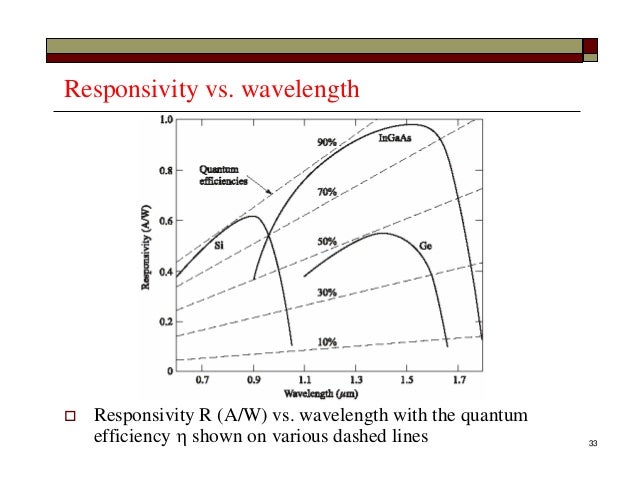
The problem should happen with near-infrared, visible, and UV-light. Glass is transparent in the visible range, and depending on type, also in IR / UV, so glass won't work as a shield.
The easiest, reliable way to shield would be wrapping in aluminum foil (also helps against RF-interference).
I should change the hostname to nemi. ;)
There's another 'shiny' chip on the board too, next to the HDMI port, U8 I think, but it doesn't seem to give a damn what you do to that.
Compared to having to resolder all the Ethernet ports by hand, or USB power issues, this is a pretty minor errata! I presume the factory will pop a blob of epoxy on it for future runs, if they can't get this chip with a package on it.
[1] http://www.raspberrypi.org/forums/viewtopic.php?f=28&t=99042...
I thought the original poster would be in a very good spot to help us determine if the effect if photoelectric or the result of EM because he's got everything set up. All he has to do is repeat the experiment while blocking the light from hitting the Pi.
V ~ E_0 - Ω
where hf is the energy per photon and Ω is the work function of the target. If Ω > E_0, no voltage is produced. This provided the basis for Einstein's demonstration that energy is proportional to frequency (E_0 = hf), and won him the Nobel prize.
What does this have to do with xenon? Xenon lamps produce not only visible light, but also ultraviolet light, in fact, xenon lamps extend further into the UV than natural sunlight:
http://en.wikipedia.org/wiki/Xenon_arc_lamp#mediaviewer/File...

LEDs by contrast produce almost no UV light:
http://en.wikipedia.org/wiki/Light-emitting_diode#mediaviewe...

With this data we can determine that the work function of silicon (in the Raspberry Pi 2) is somewhere in the range of hc/(400 nm) < Ω < hc/(250 nm) or 3.1 eV < Ω < 5 eV. Using data from
http://journals.aps.org/pr/abstract/10.1103/PhysRev.127.150
http://www.sciencedirect.com/science/article/pii/00223697599...
we see that the work function of silicon is around 4.7-4.9 eV, which agrees well with our observations.
draws a little box
To interfere with the electronics, the wavelength only has to as large as the band gap in silicon (as someone else has noted, around 1.1 eV). This means that IR light (and all visible light) can cause the interference too.
A strong enough light source will lift a lot of electrons from the valence band across the band gap into the conduction band, effectively turning a transistor into a conductor for the duration of the flash. Since the sensitive part seems to be related to the power supply, it's quite plausible that this leads to the voltage fluctuations on the power rail.
I have seen that happen plenty of times, but I have never seen a light flash disrupt a power rail like that.
I'm not saying it couldn't happen, just playing the odds...
At last, a use for all those write-protect stickers we collected for floppies...
edit: Wow yeah, here's a look at the 3.3V power line when you flash the board, it drops almost down to 0V and then wildly fluctuates for about 100 nanoseconds: http://imgur.com/hG86pRy
edit 2: Another interesting measurement, with the board _totally unplugged_ and flashing it you can see a big voltage spike on the 3.3V rail. Up to 6-7 volts or so for a few nanoseconds: http://imgur.com/td262QK
I guess not only can you learn about electronics but also Einstein's photoelectric effect with the Pi 2!