It's not that complex as someone who lives in the UK, Buildings are built for the average climate you had over the preceding decades ath the time they where built with the understanding that the outliers will happen, it's just a naturally lagging thing - We haven't caught up with the new reality that sustained periods of high heat (by our standards) are much more likely, the South East caught it particularly bad this year, London baked.
Not hard to see the problem when you look at the longest continuous longitudinal temperature record in the world (the Central England Mean Temperature) averages - https://www.metoffice.gov.uk/hadobs/hadcet/graphs/ts_meantem...
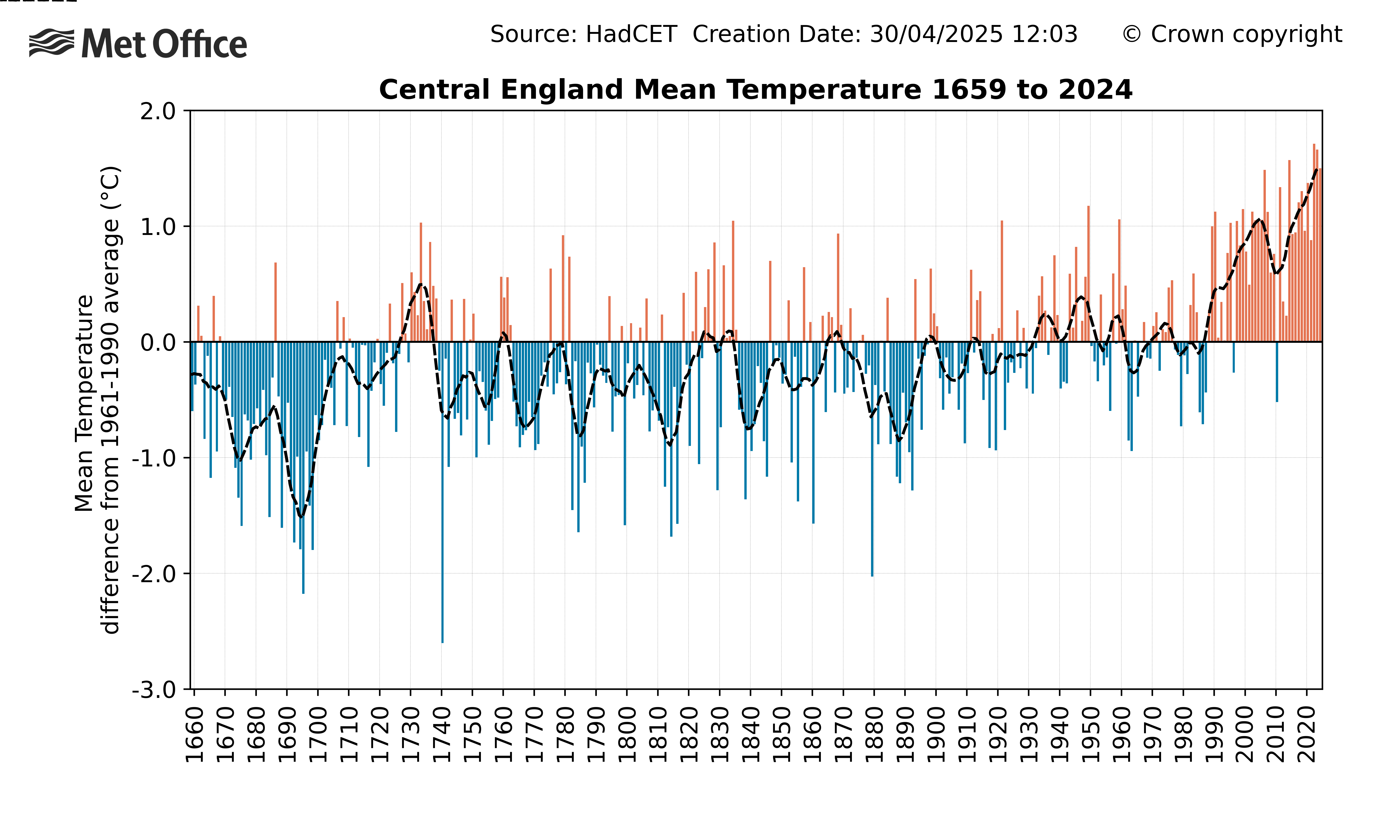
My house was built in the early 1980's, it's becoming less and less suited to our climate now and that'll get worse.
Long term the plan is to re-insulate the loft, insulate the walls, install shutters on the flat windows (and look at them for the bay windows, our windows are a pain as they aren't flat and they usually open outwards), heat pumps/AC and PV (complicated by roof been east/west but if you panel both you get not far off the same as the same area facing south and more nicely you get power in mornings/evenings which is when we use the most).
The house my boy inherits will be more suited for the climate he'll be living in when he inherits it (hopefully not for another 30-40 years but the universe may have other plans).
One unique characteristic of the eastern US is that people here live in a climate with hot and humid summers but imported the clothing norms of a subcontinent (Europe) with warm and dry summers. If you look at traditional — pre-colonial — dress in Africa or India, you'll find it's much less warm. Even in China, which resembles the eastern US from a climate perspective, loose and lightweight clothing (silk!) was much more common prior to the global adoption of western norms.
I know this because I grew up in a house in Florida built in the 1950s, with no A/C. Southern vernacular architecture includes high ceilings (so the heat rises above the people), lots of windows (to let the air go through and heat escape), and with the house raised off the ground (so cooling air flows underneath). While my house didn't have it, another typical design element is a wraparound porch, to provide extra shade and let the windows stay open even when it rains.
If you build for A/C in the South then you want a building with good insulation and little airflow, to save on power. If the A/C doesn't run then these places get very warm, humid, and stuffy. Nearly every house is built this way.
Further, if you are used to the chill that A/C provides then your body doesn't adjust to the heat.
Which, I get it. Nevada is hotter. Extremely so. But I also thought all of the middle east was hotter, as well. Not so much?
It does give me empathy to all of the people that laugh about how bad the US south is with snow. With the added amusement that Seattle is exactly the same on that front.