they're just a tiny company with shareholders who are really tired of never earning back their investments. give 'em a break. I mean they're still so small that they must protect themselves by requiring that macs be used for publishing iPhone and iPad applications.
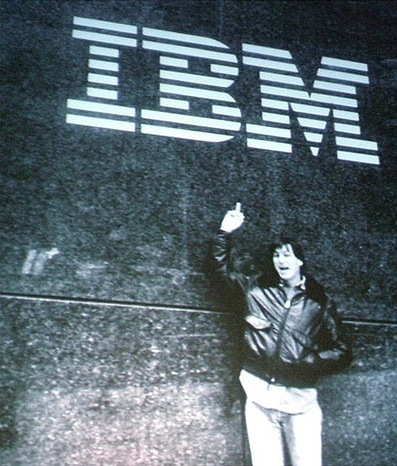
I mean, that's usually how it works though. When IBM launched the PS/2, they didn't support anything other than PC-DOS and OS/2, Microsoft had to make MS-DOS work for it (I mean... they did get support from IBM, but not really), the 386BSD and Linux communities brought the engineering effort without IBM's involvement.
When Apple was making Motorola Macs, they may have given Be a little help, but didn't support any other OSes that appeared. Same with PowerPC.
All of the support for alternative OSes has always come from the community, whether that's volunteers or a commercial interest with cash to burn. Why should that change for Apple silicon?
Apple briefly supported a Linux distribution on PowerPC Macs: https://en.wikipedia.org/wiki/MkLinux.
> they're still so small that they must protect themselves by requiring that macs be used for publishing iPhone and iPad applications.
They're not talking about Apple's silicon as a target, but as a development platform.
Apple could either create a 2U rack hardware and support Linux (and I mean Apple supporting it, not hobbysts), or have a build of Darwin headless that could run on that hardware. But in the later case, we probably wouldn't have much software available (though I am sure people would eventually starting porting software to it, there is already MacPorts and Homebrew and I am sure they could be adapted to eventually run in that platform).
But Apple is also not interested in that market, so this will probably never happen.