No, it wouldn't have taken 'exactly as much work to transition'. See another reply. In 2024, I'm still reading about BGP/routing table issues, and hardware having problems keeping up with IPv6 networking - it's just too large. How was this supposed to work in 1999?
A smaller stepped transition from 4 billion addresses to... 64k of those would have been an easier transition step, and the ease - mental, UI, training, testing, security, etc would have given everyone involved the confidence and positive feedback to tackle a next stage to IPv6 (eventually).
But even if they had the counter argument to "128 bit addresses are too long, 48 bit would have been better" is obviously not "that's the same thing just with 48 bit addresses!"
Part of this would just be transitory, but... would take up far less space. Even as late as last year, I'm reading stories about BGP issues and slowdowns because routing tables are too large/many for the hardware. In 2024. How on earth was this expected to work on hardware from 1999?
https://blog.apnic.net/wp-content/uploads/2023/01/Figure-1-%...
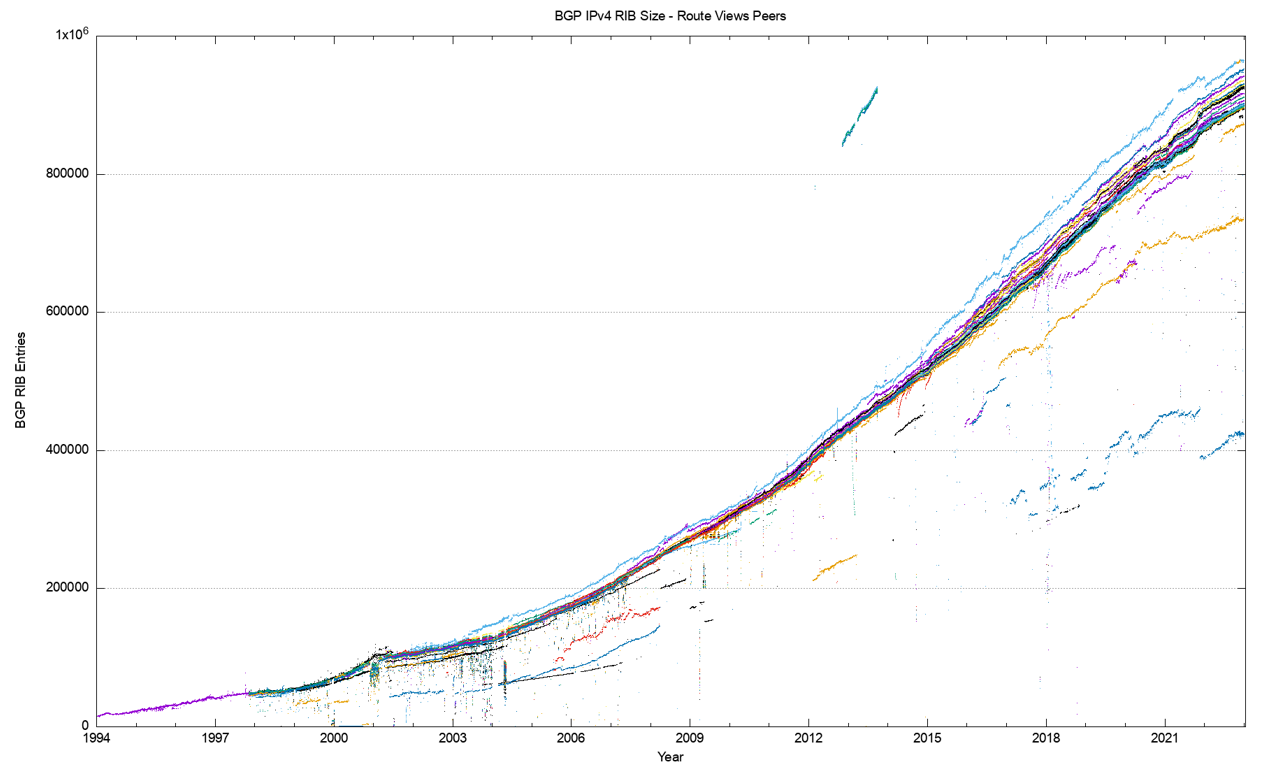
https://blog.apnic.net/wp-content/uploads/2023/01/Figure-14-...

I've been convinced of this since around 2000. Every network utility dealing with IPv4 had... dotted quad addresses. You could remember them, you could read them, you could speak them to someone else. Brainwise, we can remember 3-5 things - segments, digits, etc. Remembering more is harder for the average person.
Having the 6 be literally dotted sextant(?) - 5.73.192.168.0.4 for example - would have been much much much easier to transition in to, and would have given us 64k x 4 billion addresses. Yes, it's not the near infinity we have with IPv6, where apparently every molecule in the universe can have multiple IP addresses or whatever the max number is. But it would have been much much easier to transition. 27 years later we're not transitioned from ipv4, and we've got another 27 years of dotted quad baked in to daily usage everywhere.