I visited Japan some years back and loved this aspect of the culture as well. An Australian ski guide (this was a winter visit) explained it like so: "the Japanese attitude is to want to do a good job by default. Tipping implies that a good job is only done because of pay. The Japanese see quality service as intrinsically valuable in itself."
I have a friend that basically shops as part of her job. She has been power-shopping, mostly in Europe (dream job, I suppose), for decades.
She tells me that she runs into the same sales associates, year after year, and has watched them “grow up” over years.
So it seems to be possible, at least in Europe, for people to make lifelong careers in the service industry.
HN folks are privileged. We have careers that interest us, engage us, and reward us.
That's not the norm, in this world. I'm grateful for my career. I know quite a few folks that make excellent money, doing jobs they hate. In my mind, that's kind of a nightmare.
https://ic.pics.livejournal.com/icon_uk/11800056/855574/8555...

One of the big differences between here in Japan and other parts of the world I’ve visited and lived in, is the near absence of service staff who actively make a point of looking like they hate their life and treat you like crap, though this is slowly changing here too.
As a kid, having grown up in the UK I knew that if the price label said £1.99 and I had £2 in my pocket I could afford it, with £0.01 change. First time I went to the USA as a young teenager I remember being quite embarrassed when the thing I thought I was getting for $1.99 was actually not $1.99 but $2.17 or whatever, and I had to leave without buying. Felt quite deceptive and totally incomprehensible.
In the case of sales tax, it's deliberate propaganda. "Here's what we would have charged you if it weren't for greedy old Uncle Sam."
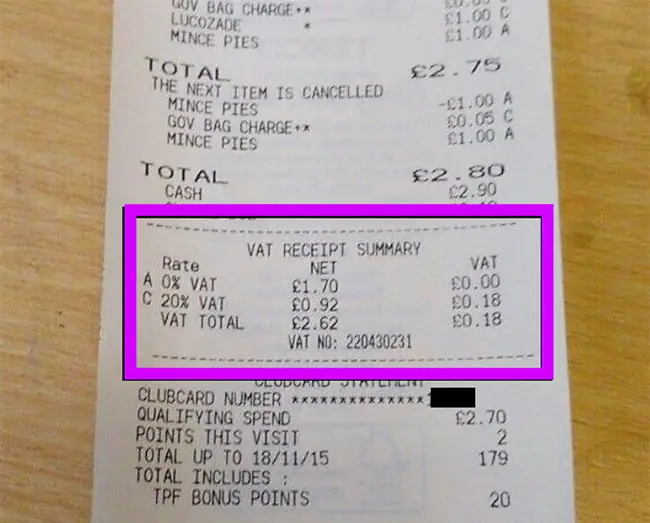
All the while the prices you see as a shopper are inclusive.
The price excluding tax is the only one you can read at a distance, that draws you in. As someone from the UK who is used to seeing price tags show the final price you pay at the till, I was constantly disappointed that items weren't quite such a bargain as I'd first hoped.
On the whole there are still many things that are much cheaper than in the UK though :)
I traveled to Tokyo for over 20 years, and always paid what was on the sticker.
I was told that the tax was included in the price.
I remember one of my bigger purchases, was a ¥75,000 Oceanus watch, and that was exactly what I paid.
As a tourist you don't always have to pay the consumption tax though.
I remember the saleswoman asking to see my passport, when I was buying the watch (it was that big department store in Akihabara).
It's crazy to me that in the US I can never be sure how much I'll end up paying...
Also, while it is the norm in Japan to include the tax, there are some exceptions.
(Japan has 2 rates, 8% for certain items like food, and 10% for everything else).
Have you ever heard the term "Fronting"? In most stores, employees are required to individually ensure each and every item on the shelf is organized and pulled to the front for optimum display. They do this sometimes multiple times a day. In busier stores, you will have to restock high volume items multiple times per day.
The technology for digital pricetags has been cheaply available since the first kindle in the late 2000s. Most companies have avoided spending the money on buying them because the cost of labor in America is cheap enough that you can just have the normal employees do it every day. Digital pricetags are only now becoming common. Mostly because store companies are trying to figure out a way to charge you a personalized price that takes as much of your money as possible.
Yet at any given moment, every proprietor is miraculously able calculate the taxes due at the point of sale. The variety of tax regimes, and the fact that the amounts change doesn't impact the ability to calculate the final amount due.
Where in the US do the sales tax rates change so frequently? I've never seen this.
There is a caveat -- if you count the "sales tax holidays" in various US states, it means in those places, tax rates for some products change at least twice a year -- from 7% to 0% then back to 7%, for example.
The exception here is also the holiday surcharge (an extra fee on holidays and Sundays), which has to be "disclosed" before ordering. Usually there is a small sign somewhere that nobody pays attention to.
That's the norm, not the exception, in developed countries.
It's obviously not the norm in countries that have sales taxes which vary by locality.
Whether a country is "developed" or not has nothing to do with it. The vast majority of countries in Africa have a VAT, while the world's richest country has a sales tax.
Why not? If each store or restaurant or theatre or whatever in each locality know what price to bill you, they know the applicable price to show you upfront.
> Whether a country is "developed" or not has nothing to do with it. The vast majority of countries in Africa have a VAT, while the world's richest country has a sales tax.
The relevance of developed or not is how much of the economy is informal or includes a part of negotiation.
Because it makes state-level or national-level advertising of prices impossible. Or even local-level in many cases.
> The relevance of developed or not is how much of the economy is informal or includes a part of negotiation.
No it doesn't, where are you getting that? Feel free to browse:
https://en.wikipedia.org/wiki/Developed_country
and Ctrl+F for "informal" or "negotiation". There are a lot of indicators of developing vs developed countries, but your idea is most assuredly not one of them. Also, sales tax vs VAT has nothing to do with an informal economy or price negotiation either.
In large countries like Canada, and I would imagine the US, you probably don't want to advertise prices nationally. The cost of goods to will be different for a business in Vancouver and Southern Ontario compared to the Atlantic Provinces. Never mind small towns in remote communities connected to the road network, such as Northern Ontario. Especially never mind small towns in remote communities that are not connected to the road network.
Hardly impossible, just slightly less easy ("available for $X* (pre-tax)" / "starting at $X").
And are seriously claiming that ease for advertisers takes precedence over ease of use and pricing transparency for consumers?
> and Ctrl+F for "informal" or "negotiation". There are a lot of indicators of developing vs developed countries, but your idea is most assuredly not one of them. Also, sales tax vs VAT has nothing to do with an informal economy or price negotiation either.
Thank you. What I meant was that the only reason it might not be the standard in some developing countries is that they might have more informal economies with more negotiations involved. Literally the only legitimate excuse. But when that's not the case, from Morocco to Sri Lanka to Uzbekistan, price is shown upfront, everything included.
The price on the tag, is exactly what you pay (same with services, like hotels).
Since this is Japan, it's a high price, but no surprises.
Also, the service is amazing, and they won't accept tips. If you leave money on the table, they will chase after you, to give it back.