in deference to 082349872349872’s curiosity, human beings can, in principle, train dogs (in this very limited context) to walk the fine line between bad faith (not exhibiting distress) and good faith (exhibiting distress).
Can they, in reality?
*or, maybe like Athena, born fully salvated from a crack in Zeus (athenogenesis)
"Sometimes you find live people, which is sweet, and sometimes you find dead people[1], which is a bummer, but I am a good boi no matter which because I search thoroughly and report immediately."
[0] take the above with a grain of salt; almost all my canine experience is second-hand, with scent and herding breeds, so that "ideal" is a cross between a short conversation with a neighbour who trained avalanche dogs and a friend who is a ski instructor, and believes:
"Sometimes it's sunny and the clients are talented and resilient, which is sweet, and sometimes it's snowing hard and the clients have no talent and no nerves, which is a bummer, but I am a good ski instructor no matter which because I bring them to at least 80% of the improvements which could have been possible given the conditions and clients of that particular session."
[1] unsolicited moralising: there are weather reports. use them. there are beacon/pole/shovel avalanche sets. buy them. there are guides. hire them. So many of the deaths reported in the local papers are because people are not good bois: they go off piste, without a guide, without self-rescue equipment, on days when there were already avalanche warnings given in the morning.
(advice on choosing a hunting prospect which I've run across: put something startling [alarm clock, etc.] next to the litter, and see how they react. Your best prospects should be among those puppies which first investigate, then ignore, the novelty. Those who never investigate probably won't be curious enough to easily train; those who never ignore probably won't be able to focus enough to easily train)
EDIT: maybe that wasn't what you were asking. Dogs obviously engage or disengage with other people based on whether or not they believe their person approves. But I don't think dogs ever (like someone asking a leading question of a third party not because they wanted to hear the answer but because they want their so to hear it yet are unwilling to say it directly) instigate a dyadic transaction explicitly for the effect it has on third parties. Horses for sure don't. (there is "dogpiling", but I think for dogs and am pretty sure for horses that that's a side effect of dyadic jockeying, not the social game monkeys make of it) What say the dog people?
2024-09-06 Dogs with prior experience of a task still overimitate their caregiver https://www.nature.com/articles/s41598-024-70700-3
(With suggested related content)
However, a direct comparison of overimitation timing with humans is necessary to understand if this approach is indeed partly what differentiates dog overimitation from that of humans.
Yes, will consider the 3-way communication styles at some point (and the Rao talk chart) but right now exploring what a purely dyadic interaction can bring us, e.g. how to model the occasions on which Sir Humphrey/Hacker considered rewriting their firmwares post-startle (with or without npc intervention from Annie or Woolley)
There were 5 seasons of Yes, [Prime] Minister so even if things were pretty episodic intraseasonally IIRC Sir H "wins" all their initial dual duels but by the final seasons, in addition to having climbed the greasy pole, PM H even comes out ahead in direct conflicts with Sir H from time to time.
Oh, I believe my wife is saying there's a message for me: about a Criollo horse, from a Señor Modelo. Sorry, so sorry.
I don't have anything further to contribute to this discussion, so if not for that bemusing remark of yours, I wouldn't have engaged.
If I'm being honest, I don't understand the middle two paragraphs, either. (Why "bad faith" and "good faith"? Why do you say it can be done in principle, while leaving "in reality" an open question? and how does what's essentially a theory defer to anyone's curiosity? Surely I'm missing context.)
The bad vs good faith is a theoretical curiosity of mine, which i can unpack later if either of you are so interested. This theory, as well as the inaccurate epithets, can be said to originate from my reading of 2 comments by you!
https://news.ycombinator.com/item?id=41205833
So clearly, you’re not middle management, even if you claim you are clueless, but your uh, soul, was “salvated” — by virtue of working on something the experts dismissed. [If we take seriously your claim that you weren’t being clever, then that’s good faith in my book. I will say no further about my theory except that it could be a “dial” for scientists to consider.] If nothing else, i would like (quixotically?) to condense your chain of thoughts in that situation into something worth propagating, into science-curious folks’ realities.
As to the curiosity i was deferring to.. (it could also be related to the revolutionary approach of yours, if i’m being very presumptuous — and wrong???) 082349872349872 expressed his inspirational feelings on the matter here https://news.ycombinator.com/item?id=40600845. Mariatta, child of beauty)
[PDF] A representation of antimatroids by Horn rules and its application to educational systems http://arxiv.org/pdf/1508.05465
Specifically, i wonder if anybody has tried to apply these supposedly efficient algorithms, which model states of teacher+learner, in “real life”.
So in this model, scientists are the avalanche dogs who report "nope, no people over there" and thereby help narrow down the rescuers' efforts?
So, if i understood ww4 correctly, it is more like,
dog reports correctly that theres no person, but the rescuers are actually looking for a horse.
Here is a real life (albeit informal) example: when I was still in the Old Country, a professional trainer told me the following (translated here to the notation of [Yoshikawa et al 2018]) about his process of "tuning up" horses that someone else (usually the client themself) has messed up:
1. Be an expert: this means (at least implicitly) knowing R*
2. Ask the horse to do a task involving Q. If the horse does it perfectly, the owner needs work. (if you like dealing with humans and also know R'*, start over by teaching the owner at step 1 and Q'; if you don't like dealing with humans or don't know R'*, pass the buck to a colleague who does both)
3. At this point determine if the horse either (a) doesn't realise you wanted Q, (b) can't do Q because they're insufficiently fit, (c) can't do Q because they don't know how, or (d) could have done Q but doesn't want to. In the cases of (a) or (d), the remedy is (for the purposes of this example) straightforward. In the cases of (b) or (c) it's more complex, leading to:
4. Walk the antimatroid A(R*) to determine which subsets Q_p the horse can physically do and Q_m the horse knows how to do; in the generic case this will give you a task Q_1 which can be trained having some subset of Q_p ⋃ Q_m as prereqs with a single novel q (unit inference?) to work on.
5. Until the owner says "good enough" (common) or can't ask for Q_n (common, see step 2) or you reach Q (rare), train the other steps of a minimal path Q_2...Q [Exercise: does such a path exist?]
https://en.wikipedia.org/wiki/Transactional_analysis#Outline
...are grown-up children, utterly irresponsible; not immoral but unmoral; they “please to live and live to please” themselves. They do not realise that their actions may prove costly to others and therefore do not count the cost. They are children of impulse not of calculation. [1]
then TA would be completely dandy, but I kind of thought the initial ideal, at least, was that people would attempt to stay in A<->A Straight Talk modes. Should we judge Transactional Analysis by what Berne wrote (TA as antimeme), or by what everyone read or claimed to have read (TA as meme)?
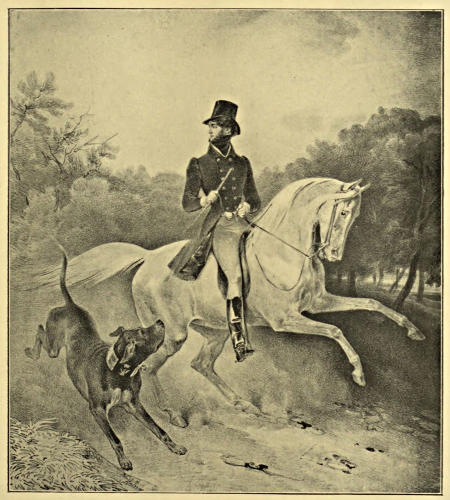
"...your real dandy is not an ordinary man and must not be judged by common standards. He stands outside and above the ordinary rules of life and conduct; he has not any conscience, and questions of morality do not affect him. All that is for us to do in viewing such a one as D’Orsay is to weigh his physical and mental gifts, and to examine the uses to which he put them, to look to the opportunities which were given to him and the advantage which he took of them." [1]
Dandyism as sociopathy? It certainly has a pocketbook-dependent valence: poor dandies are trashy; rich ones, classy.
> I don't play accurately —any one can play accurately— but I play with wonderful expression. —AM
[0] cf the Xenophobe's Guide to the Americans, which claims this behaviour wasn't just the 1970s, it's the national character.
[1] https://www.gutenberg.org/files/56581/56581-h/56581-h.htm
EDIT: I prefer https://www.gutenberg.org/files/56581/56581-h/images/illus5.... (who needs a marshall's baton when you have a hunting crop?), but have to admit D'O---y may even have inspired a predecessor of our age's bobbleheads: https://www.nationaltrustcollections.org.uk/object/1221047
as a contrived example to argue that point, the advantage has been adapted into YC’s metric for equity transferees.
https://news.ycombinator.com/item?id=9239203
In order to keep things simple, lets forget abt memes, because i’m more interested in the failure modes of Straight Talk no BS OG TA.
attributes - things you were born with
accomplishments - things you have via practice (paid the time)
acquisitions - things you have via purchase (paid the cash)
[and I'm calling Altman's anecdote weak sauce; I agree it's hustle not hack. Lagniappe: https://www.youtube.com/watch?v=c412hqucHKw ]
EDIT: showing up on the client's doorstep has been done by salescritters since the day after commission was invented. A hack involves exploiting a property of a system that no one had previously realised exploitable. (Note here that despite popular usage, I only consider most computer crackers to be airquote "hackers".)
> The somber picture presented in Parts I and II of this book, in which human life is mainly a process of filling in time until the arrival of death, or Santa Claus, with very little choice, if any, of what kind of business one is going to transact during the long wait, is a commonplace but not the final answer. For certain fortunate people there is something which transcends all classifications of behavior, and that is awareness; something which rises above the programming of the past, and that is spontaneity; and something that is more rewarding than games, and that is intimacy. But all three of these may be frightening and even perilous to the unprepared. Perhaps they are better off as they are, seeking their solutions in popular techniques of social action, such as "togetherness." This may mean that there is no hope for the human race, but there is hope for individual members of it.
(IIUC after hearing "all three of these may be frightening and even perilous to the unprepared", Michael Scott would be likely to retort "that's what she said")
https://news.ycombinator.com/item?id=41481141
insanity-inducing games are very intriguing! for the purposes of formalization
I'll be low on bandwidth for the next few days, but will try to think of insanity inducing games. The glass bead game being good for pareidolia, I could imagine that if one played it to the point of seeing everything connected to everything else might lead to institutionalisation about as often as to enlightenment?
(Mark Vonnegut's experience as detailed in The Eden Express (1975) suggest that mixing psychedelics with stress is an insanity-inducing game)
(background: https://en.wikipedia.org/wiki/Imam_Shamil#Musical_compositio... )