There's an analogy to networking there, too. You don't necessarily need to know how wave-division multiplexing, BGP, or DNS work to communicate over the Internet. For some categories of problems, though, a little bit of knowledge allows you to punch just a bit above your level.
I don't know if it's missing in people's course work or what, but I've had to use http://www.tcpipguide.com/free/diagrams/ipencap.png many a times to explain how stuff like VPNs work, correct statements like "firewalls don't have a routing table, firewalling is layer 4", explain things like MTU and payload size, or why certain traffic doesn't go beyond a broadcast segment normally.
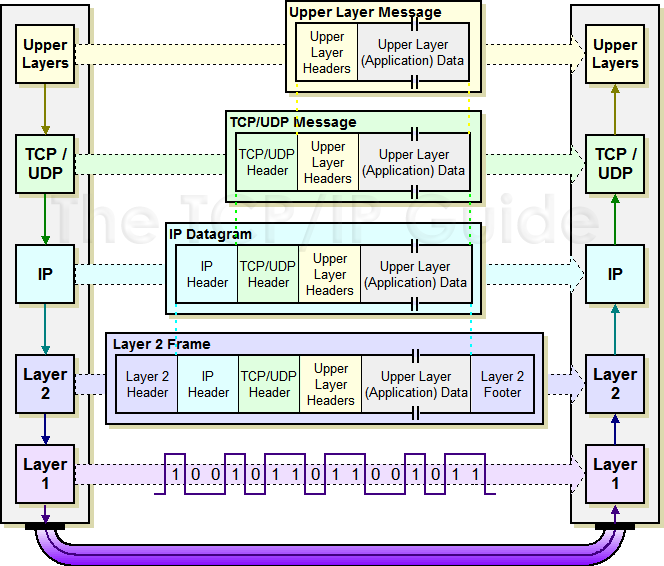
Personally I think this is one of the better visualizations.
Both asymmetric routing and ECMP routing are visible from L3. In the latter case, the routing decision can utilize some L4 data, so some L4 frobbing to get useful data points in practice is necessary for useful real-world diagnosis.
I agree with others that the OSI model is a good metaphor and a framework for reasoning about networking, but it is far from perfect, and the reality for those designing and operating network protocols and devices is messy.
MPLS is admittedly invisible and there isn't a thing you can do about it in the same way that you can't expect traceroute to give you a view of the switch ports it went through on a LAN. Of course it is useful to understand and keep in mind the fact that there may be, sometimes huge, gaps in your traceroutes. A sudden huge jump in RTT from one hop to the next can be confusing when trying to understand and troubleshoot a network issue.
You don't think about the life of the electrons going through your processors when you code.
Traceroute is a view at a certain level of abstraction. It also doesn't tell you if your packet was delivered using ethernet, wifi or a token ring. It just doesn't matter.