In 1977 (and in 1972, when construction began), vessels of this size did not exist, and certainly were not allowed in the harbor[1]. But over time, they were given authorization, despite the fact that they could collapse the unprotected bridge like a load of toothpicks.
The real crime here is that there was no retrofit to protect the pylons. It was almost certainly considered and rejected due to cost.
[1]: https://logisticselearning.com/wp-content/uploads/2022/06/Co...
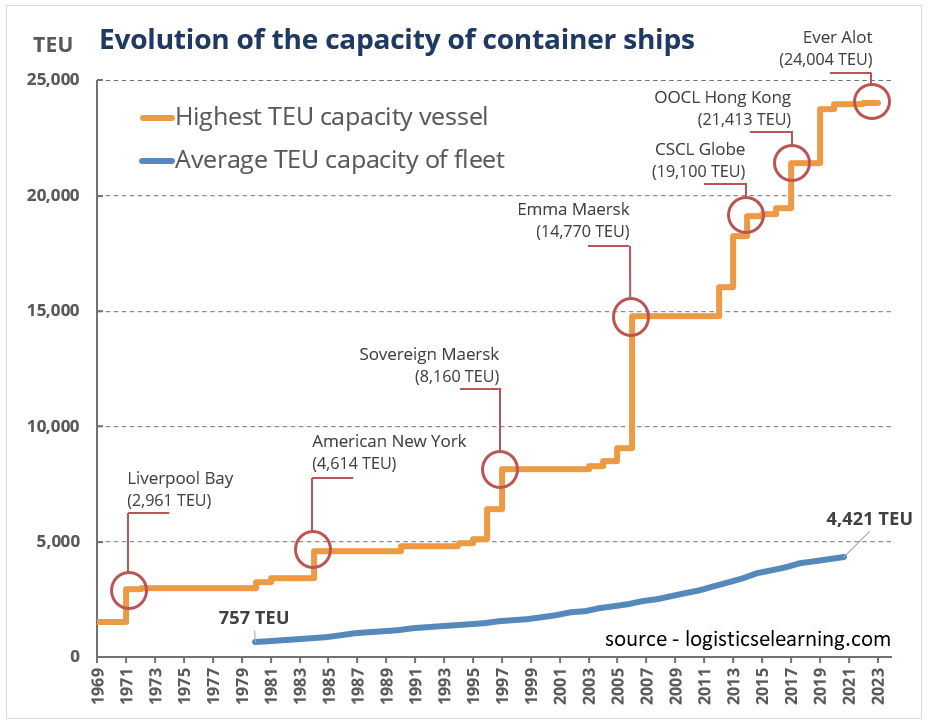
The ship in question here was 10K TEU.
The container vessel in question is tiny compared to e.g. the Seawise giant or Batillus Class.
The smaller VLCCs are dime a dozen and they are 2-3x the weight of the Dali.
Even ports on the US Gulf Coast do not generally have the capability to dock VLCCs.
https://www.eia.gov/todayinenergy/detail.php?id=36232
If Baltimore had been anticipating VLCC traffic in the 70s, then presumably the bridge would have been built accordingly and this incident would not have led to a collapse.
You put in sheet piling 50 meters upstream, and you fill the box with rocks. That's state of the art practice, nowadays, but that bridge was 50 years old.