Seems expected when you consider that most people have never built a shelter, and those that have aren't often doing it on a regular basis using whatever happens to be lying around. Same for fishers and hunters who are highly skilled in the environments they regularly work in. You can only expect them to struggle when placed in new environments with new added restrictions. You'd just hope they'd struggle a bit less than an novice would in that situation.
The most consistent failure was in way overestimating their ability to do hard physical labor without food.
It's clear from watching the show that the path to victory, given woodcraft skills, is doing as little physical exertion as possible. Build a minimal shelter, spend all the rest of the effort obtaining food.
P.S. I wouldn't last a week on that show.
P.P.S. Anyone building a shelter out of 8" dia logs is doomed.
Normally, Aboriginal groups were easily able to find enough food for their entire clan in three or four hours of hunting and gathering each day. They know which fruit and animals are available at certain times, how to gather or hunt successfully and how to store foods.
How do we know this to be true?
There are still aboriginal people alive today that gather fod in the traditional manner - when I was 20 or so the Pintupi Nine wandered in, some stayed a few left and returned to the desert.
https://www.bbc.com/news/magazine-30500591
There are still many people living hybrid lives, using modern metals and traditional knowledge to gather food, eg:
https://www.youtube.com/watch?v=7gmCX7R-W4c
A key point here is 30+ thousand years of getting to know and shaping the landscape - promoting plants and animals over others, learning the movements and habits of animals, seasons of plants, not having closed in winters, etc.
my guess is that you probably picked a particular sparsely living group in particular favorable climate that eventually probably got wiped out by a hungrier group.
furthermore, hunting for three hours no freaking way can sustain population density of say Indonesia, or some other Asian countries which have been populous for many centuries.
What infomation do you have on pre European landing famine in Australia?
> my guess is that you probably picked a particular sparsely living group
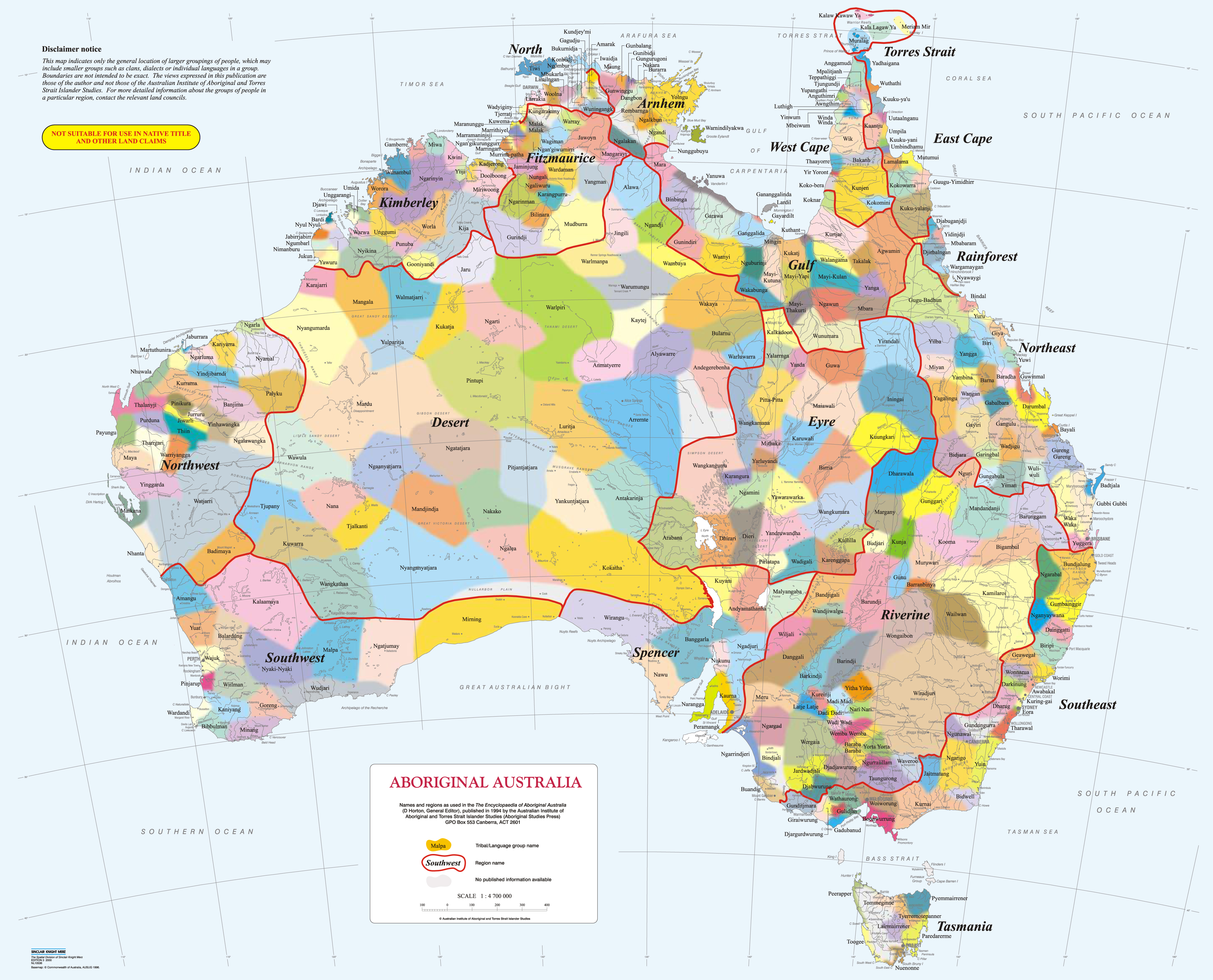
The Swan Valley quote above applied to Western Australian and Central Desert groups prior to being shunted off traditional lands by European settlement (an area comfortably three times larger than Texas) - it continues to apply in areas where traditional practices on traditional lands continue.
https://mgnsw.org.au/wp-content/uploads/2019/01/map_col_high...
> that eventually probably got wiped out by a hungrier group.
Recent genetics has confirmed what was also the local oral history, that people arrived, fanned out, and stayed where they first settled:
https://www.nature.com/articles/nature21416
This runs contrary to the views espoused for decades by Windshuttle in Quadrant.
> furthermore, hunting for three hours no freaking way can sustain population density of say Indonesia
?? Pre Dutch contact Indonesia ?
I specifically linked to the example of Australian hunter gathers.
You can take it that my earlier comment doesn't apply to Iñupiat, Yupik, Aleut, Eyak, Tlingit, Haida, Tsimshian, etc peoples of Alaska.
so you are reducing "humans" in the comment you are replying to, to Western Australian and Central Desert groups? that's not the majority of humans, who really did have to fight for calories
Look back in history before the invention of nitrogen fertilizers (only about a century ago).. we spent nearly a century harvesting guano off uninhabited rock islands in order to produce fertilizer & gun powder. We even past laws to encourage it!
What's funny is how good that one first season guy was at doing everything, especially shelter, and then after only a couple days to have an indefinite setup, just missed his wife and immediately left. "Everything looks good, just don't have Barbara!"
Spoiler alert: the winner built a simple hut, shows how to do it on his YouTube channel afterwards too. With a properly chimneyed fireplace though he had to improvise because his area did not have enough clay in the soil.
He's had the channel for a long time. I knew his channel before. His bow was a simple longbow he made himself. He regularly goes elk and boar hunting with his bows. He also tried fishing but had a bad spot but got lucky encountering a deer. He built a smoker with an automatic bear alarm. They really don't show a lot of him on the show if you compare. I think basically because he just did so well overall. He did carve toys to bring back to his sons too.
It's season 10 now, and they're back to making spectacular log cabins and then tapping out!
Only one was able to make fire without a fire starter. After watching Alone, I bought myself a fire starter, to carry when hiking.
I remember one father/son team. The son had some sort of fisheries degree, and considered himself a fishing expert. Father and son would fish, the father caught fish regularly, the son couldn't catch one. A lot of the fishing experts turned out to be not so good at fishing, the same for the hunting experts.
What's kinda sad is how bad most were at building shelters. They'd spend all their calories building a magnificent log cabin, and then were too weak to continue. Season after season they'd do this. Or they'd spend time carving toys. Or they'd burn down their shelter with a bad fireplace or poison themselves with the smoke.
The point is, humans have evolved to need an economy for mutual survival. Can't realistically do it alone, from scratch.