Intermittent electricity produced now is worth more than baseload in 14 years later.
Renewables look great if you just look at generation. But the goal isn't simply to generate clean energy, the goal is to displace fossil fuels. This is why non-intermittent sources like nuclear and hydroelectricity are, contrary to your assertion, far more valuable for decarbonization.
1. https://en.wikipedia.org/wiki/Duck_curve#/media/File:Califor...

But NYC has a few gas-fired peaker plants, and during summer they are fired at the hottest time of the day, when AC load soars.
More solar power would certainly help this specific problem. I suppose that somewhere farther from ocean, where day and night temperatures vary more, a solar plant should have an even bigger effect in the summer.
(In the winter though the picture changes.)
I still see some (tall, multifamily / office) houses in Brooklyn and even on Manhattan adorning their roofs with solar panels. I know only one house that incorporated them right from the start though, it's on Coney Island, facing the ocean.
I think when someone comes up with translucent solar panels which can work as window shades on a skyscraper while looking good from the outside and not requiring a fortune to deploy, that will change the face of metropolises around the globe.
1. https://en.wikipedia.org/wiki/Wind_power_in_the_European_Uni...
2. https://en.wikipedia.org/wiki/Solar_power_by_country
3. https://ec.europa.eu/eurostat/web/products-eurostat-news/-/d...
All of which is not to say solar won't be more important than gas, coal or nuclear in central europe going forward. Just that wind will take the front seat.
In case you aren't aware latitudes reduce solar energy collected per square meter of land. This can be motivated by tracking solar panels. But what can't be mitigated are shorter days in winter that get more extreme the further your are from the equator. In Helsinki right now the sun rises at 9:30 and sets just after 3pm.
I don't doubt your critical reasoning ability, but I do doubt the wisdom of treating the challenge of provisioning and operating massive seasonal storage on the order of terawatts as a solved problem because of a few district heating projects.
Yes. Huge problem. Very nice and good faith objection to something that can be done incredibly simply with a few dollars per kWh. What if some hot water or sand leaks out and contaminates an entire country?
In Europe many household solar installations are connected to batteries, and don't feed directly into the grid. You won't see such use in production statistics, only indirectly as a reduction in demand.
Some of those also don't produce electricity, but use solar for heating.
Maybe I'm wrong (either the numbers encompass that, or the difference isn't substantial). But it seems to me that you'd get a bias against solar if that's correct. Wind installations are usually more centralized, and feed into the grid.
The solution is non-intermittent energy generation. Hydro and geothermal are great for places that have the right geography and geology. But nuclear is the only other non-intermittent form of decarbonized energy we have*.
* Some would point to biomass, but I don't consider them decarbonized: the biomass could have been a carbon sink if it wasn't burned. An it's not a very scalable form of energy anyway.
IMO, gas is going to be around for quite a while as a peaker for renewables - and the more renewables come online, the less necessary it is as a peaker, but it will still be needed.
I agree with you: if we use renewables we'll be using gas for 40-50% of our electricity needs until some scalable system of storage is found (batteries lack the scale, hydro lacks the geographic independency). But that's not an option if we want to decarbonize. The goal isn't to just have CO2 output. The goal is to eliminate CO2 output.
The cost effective way would be with wind farms, pumped/battery storage and demand shifting.
(this would be a nice problem to have, by the way, but we are STILL churning through terawatt hours of gas while the sun is shining and the wind is blowing all over).
Nuclear power isnt dispatchable. It's not just 5x more expensive. It would overproduce during times when we don't need electricity and underproduce when we do.
Nuclear power is dispatchable enough to satisfy grid usage. The difference between peak and minimum demand is typically 20-30%. And it's a pretty gradual transition, happening over the span of multiple hours. You're right, you can't just crank nuclear from 0 to 100% in an hour like a gas turbine, but a 100% nuclear grid is totally doable by overcooling the turbines to reduce outputs during low demand. The French have successfully used nuclear for over 85% of their electricity, so this is demonstrably capable.
Also your SA example is cherry picking a time when a bunch of transmission infrastructure has been destroyed because it was built to sub par standards and hit by a storm. When this happened last time there was only large centralised fossil fuel generation and there were weeks of blackouts and other problems. Seems like a pretty good case for more rooftop solar.
Sweden is the country making the most progress into green hydrogen, but it's still experimental at this point. Sweden also gets 40% of it's electricity from nuclear and 40% from hydropower, too. It's hardly a poster child for the success of wind and solar over nuclear power. Intermittent sources need to be backed by a dispatchable source. For countries that don't have widespread hydroelectric potential like Sweden, intermittent sources are not viable except as a supplement to fossil fuels.
They're viable even without storage as evidenced by installing new capacity at a rate of net generation of about 20% of the entire cumulative nuclear fleet per year. And getting enough storage is well understood, it is just not a priority in most places until around 70% penetration and progress towards decarbonizing transport is met.
> Australia is not a big success story: Fossil fuels still comprise over 60% of electricity sources for Australia - it's no better than the USA. They are not using renewables for chemical and metallurgy industries. And this is despite Australia having some of the best weather and geography for solar power.
Australia has languished under a government that was openly hostile to renewables for years. South Australia has been operating at over 90% gross renewables for a week and this is after only a few years of large scale effort with insignificant storage and limited ability for interstate transmission due to storm damage.
> Sweden is the country making the most progress into green hydrogen, but it's still experimental at this point.
https://gh2.org/countries/sweden
https://gh2.org/countries/australia
Looks like about the same level of investment for similar targets to me. Could it be that was another example of blatant lies?
> For countries that don't have widespread hydroelectric potential like Sweden, intermittent sources are not viable except as a supplement to fossil fuels.
Yes. 90% for a week right near the beginning of the transition is a 'suppliment'. Very sound conclusion from the evidence at hand.
This constant lying must be exhausting. Just sell your coal shares.
> Looks like about the same level of investment for similar targets to me. Could it be that was another example of blatant lies?
As per your links, Australia merely has targets while Sweden has actually produced and delivered green steel. In fact, again as per the link, Sweden has made the world's first delivery of steel produced without fossil fuels. I'm struggling to see how saying that the country that has actually produced green steel is making more progress than one that has not is a lie.
1. https://www.energy.gov.au/data/australian-electricity-genera....
It would be much better in both ways to feed that energy into the electric grid to replace fossil fueled power.
Norway has a similar initiative to produce carbon free ammonium, but that, too, depends on dirt cheap electricity supply to be rational.
https://www.horisontenergi.no/blue-ammonia/
In both cases, Hydrogen is used, and I suppose if large amounts of hydrogen becomes available and very cheap (for instance due to excess wind power supply), it _could_ be good to already have this tech available.
But based on what I can see from electricity flows from Denmark and Germany to Norway, it is still very rare for the European grid to have excess power due to good wind conditions.
https://www.nordpoolgroup.com/en/Market-data1/Power-system-d...
Norway can still absorb a lot more wind power on such days by temporary pausing hydro production. (Max hydroelectric electricity production in Norway is around 20GW, or about 4KW per capita).
For now, that makes a lot more sense economically AND it replaces more carbon emissions per kWh.
You're still making the point for me here. After only 5 years or so of actually supporting renewables and meaningful growth, and around two years of solar being the cheapest option, they're meeting 65% of the total electricity.
> As per your links, Australia merely has targets while Sweden has actually produced and delivered green steel. In fact, again as per the link, Sweden has made the world's first delivery of steel produced without fossil fuels. I'm struggling to see how you conclude this is a lie when your own sources explain how Australia has no plants or production, while Sweden has actually produced green steel.
Ah, so you're back to claiming that things that aren't already finished are impossible and irrelevant. Really working hard to find somewhere you can put those goalposts.
Also Lulea is in Sweden's north so your pathetic attempt at a gotchya was powered with hydro and wind, not Nuclear.
The world uses 60,000 GWh of electricity per day. Global battery production is only build ~400 GWh of batteries per year. A day's energy storage amounts to over a century of battery production. Storage is nowhere near as simple as "buy a battery".
This is 8 hours storage for every W of nuclear added in the largest historical year of generation.
> And what powers the turbopumps that make your plumbing work
Because moving water around using wind power is far future scifi tech and not something done for centuries.
And again, the question is how do you move the water around when the wind isn't blowing? Or do you think citizens are just going to be okay with plumbing that only works on windy days. The point is that household energy use is hardly the only kind of thing that needs to be backed up by a storage system. Energy demand cannot easily be cut without making significant sacrifices in standards of living and industrial output.
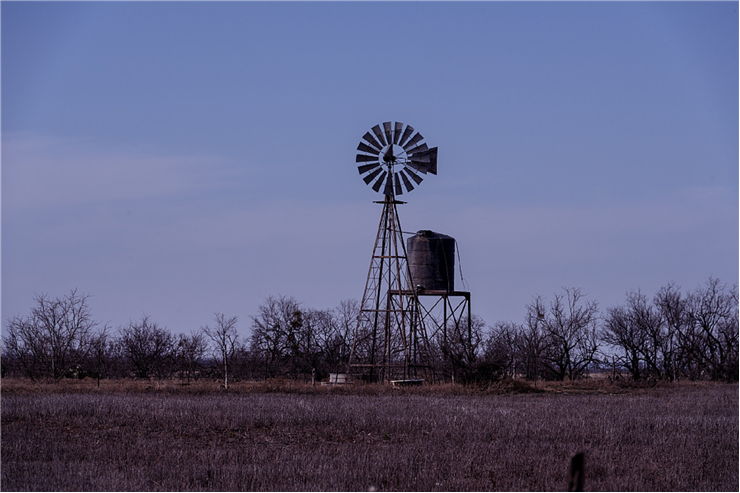
Yes, people have used wind pumps to pump wells in villages and homesteads. But that's because they didn't need that water on demand, it's just a labor saving device used opportunistically. But it's a lot harder to pump water to the top of a skyscraper, and to a city of millions of people. This kind of pump [1] is not a drop in replacement for this [2] kind of pump.
In conclusion, we'd need a way to provision massive amounts of storage to get renewables and o become a reliable source of primary energy. It's costs are being measured in the context of opportunistically replacing fossil fuel power. But in a context where fossil fuel use is not permitted, it would be highly impractical without an incredibly performant form of storage. Perhaps heated sand, compressed air, electrolysis, etc. will deliver that. But thus far they haven't, and in the absence of such a storage system nuclear power would be a more reliable path of decarbonization.
1. http://www.historyofwindmills.com/images/historyofwindmills/...
https://upload.wikimedia.org/wikipedia/commons/5/54/Wood_Scr...

Oh no, storage might only be buildable at a consistent 4x the peak rate of nuclear additions instead of 8x. Guess we better give up and use fossil fuels for 20 years while the nuclear industry starts up.
Not only are there a host of ways of covering constant energy demand with VRE, but you still don't seem to be able to comprehend the idea that water can go downhill. Why would we listen to energy advice from someone who doesn't understand ideas that are millenia old like a water tower or that bricks can stay hot for a day or two?
https://www.nytimes.com/2018/05/26/realestate/how-new-york-w...
https://www.hkywater.org/education/i-didnt-know-that/why-wat...
For the handfull of situations where the buildings are too tall for more than firefighting water then batteries are more than sufficient.
And oh look, now there is enough overprovision to increase grid penetration to 90%
Now with the leftover time and resources a little bit of storage still leaves us with change.