To get that beautiful wood again, we would have to plant the forests, let them grow for hundreds of years, then harvest the wood. Well, that's not going to happen, so we end up in the situation we are in of having to use a very poor substitute.
Translation: it's made from the smallest possible tree you could plausibly saw a 4x4 out of. And the pith (the center of the trunk) running through the middle guarantees that the post will split along the radial plane as it dries.
If you go to a better lumber yard, you get better lumber. Except, apparently, for 2x3's. They are universally crap. Source: built a chicken coop with 2x3's and bought from a local outfit because they deliver inexpensively. Everything else was gorgeous compared to the box home improvement store. The 2x3's were pretty much the same.
Makes sense that the larger cross-sectional lumber needs to come from a larger cross-sectional tree with few defects. The crap-wood they can turn into 2x4, 2x3....
Wood can have a fair amount of internal stress in it, and cutting it can release it in ways that cause your boards to warp, twist, or bend.
(Freely available to download for anybody who's curious)
https://lostartpress.com/collections/books/products/the-anar...
https://miro.medium.com/max/2976/1*zUezbWclc1bubBJOS0qiew.jp...
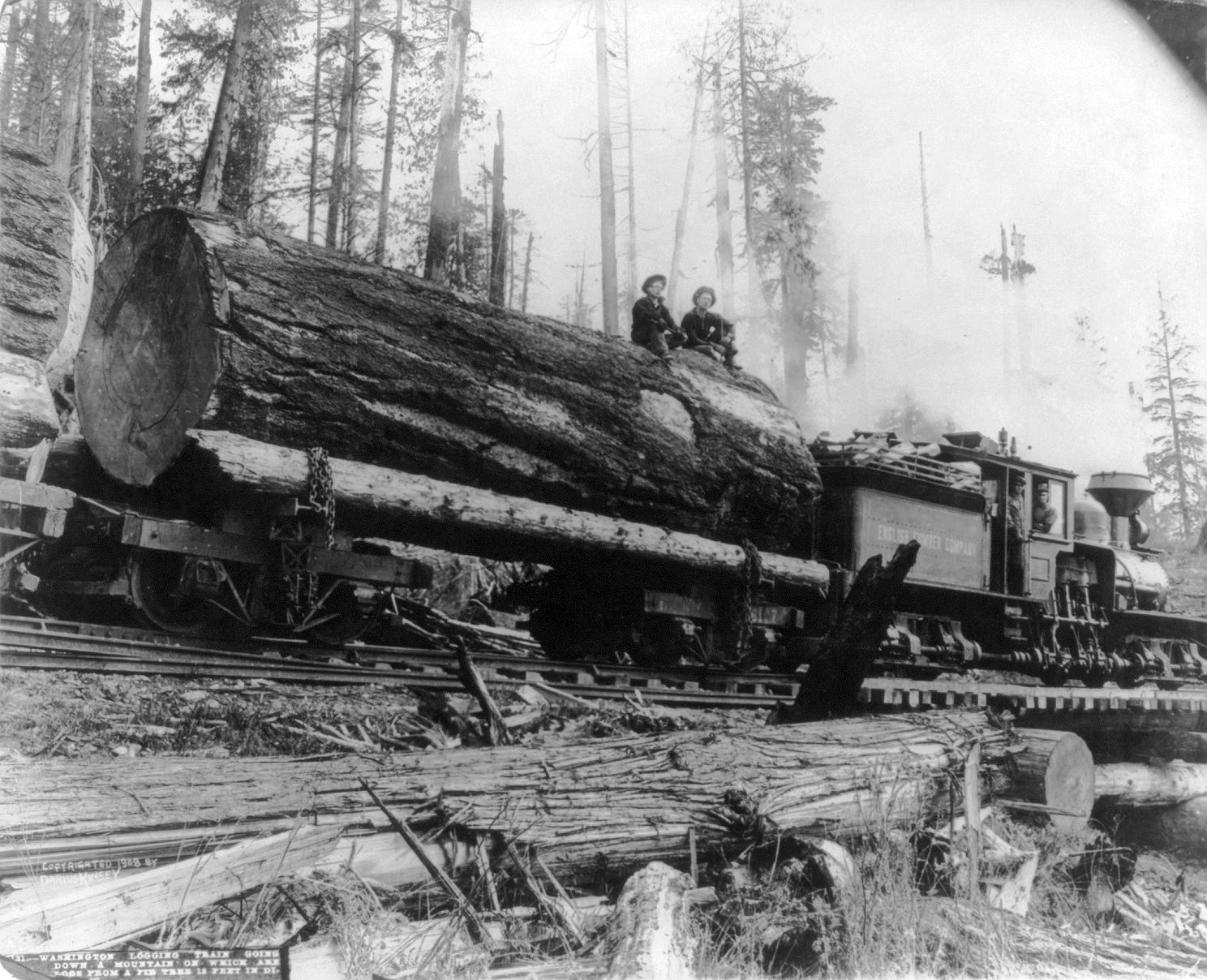
Old growth trees aren’t exactly growing back on a timeline that matters to you and me.
^ this is pure speculation
Trees grown among other trees have to grow up to reach sunlight. The innermost part of the lower trunk might have knots from branches when the tree was young, but once they reach harvestable size, there's a fair amount of clear lumber down low.
Trees grown in the open don't have the pressure to grow upwards, and end up with branches down low throughout their lives (from the center all the way through to the bark). As a result, there's very little clear lumber in them.
Disclaimer, I'm a furnituremaker, not a forester. The above is somewhat better than pure speculation, but likely misses some important bits.
For hardwoods, it's typically the heartwood that's more desirable. Walnut and cherry both have pretty strongly contrasting sapwood that does not match the customer's expectation for the color of those woods, for instance.
The wood used to built those houses was the old growth timber of the western united states. Its basically gone now. As well as the second, third and fourth growth.
Wood of sufficient quality to do the things we used to do with it simply doesn't come from industrial forests.