> Debt to GDP is 130% and structurally basically guaranteed to nominally increase over the next 10 years
Debt to GDP has actually been declining since Q2 2020 and sits at ~125%. There is nothing that says increases are inevitable.
> CPI for energy is 25% percent right now.
Yes and it was at negative 17% for April of last year and stayed negative for the whole rest of the year. Were you worried about deflation at the time? If instead of spooking yourself with rates of change, you switch your graph to Average price data and look at Gasoline, you'll see that we're still below 2014 levels.
> The inflation writing is on the wall.
Why don't we look at US food price staples?
Eggs are nowhere near their 2015 high: https://fred.stlouisfed.org/series/APU0000708111
Milk has yet to reach 2014 levels: https://fred.stlouisfed.org/series/APU0000709112
Sugar has yet to reach 2012 levels: https://fred.stlouisfed.org/series/APU0000715211
Pork chops spiked up hugely, almost back to 2014 levels! They're going back down now. https://fred.stlouisfed.org/series/APU0000FD3101
Chicken too spiked higher (than ever before this time), and is now back at 2014 levels: https://fred.stlouisfed.org/series/APU0000706111
Rice is still lower than it was during the 2008 recession: https://fred.stlouisfed.org/series/APU0000701312
Ground beef is the only one that's surpassed 2014 levels: https://fred.stlouisfed.org/series/APU0000703112
> Debt to GDP has actually been declining since Q2 2020 and sits at ~125%. There is nothing that says increases are inevitable.
125% debt to GDP is well into the territory where countries do not pay their debts back in real terms. The US is a democracy, it is all but infeasible that the borrowings will be meaningfully repaid in full. Although physically speaking it is possible, if the US politicians thought that was feasible then the time to act was the 2000s. It is a bit late now. They've been at emergency debt levels (literally world-war level borrowing) for a decade now. Graceful recovery from that seems unlikely given the total lack of political will to do things the straightforward earn-more-than-spend way.
There absolutely is - there are a series of steps that will need to be taken to reduce that debt load. If anyone was seriously planning to see them through they wouldn't have let the numbers get that high.
This is emporor-no-clothes levels of debt; the plan is not to pay it back. If the plan was to pay it back then the plan would need to have started more than a decade ago. Who is trying to do that? Nobody. The plan is inflation.
Debt crises only happen when debt payments exceed ability to repay and the cost/rate to take on new debt spikes.
Everyone fails to appreciate the second factor when looking at large economy, stable country debt levels. High debt:GDP ratios are dangerous, but not intrinsically a crisis... until the market also loses faith.
Given that in the current international economic climate, the US can issue new debt, and find buyers, at <2%, that's a cheap way to buy time for even normal inflation levels to nibble away at debt.
Ironically, now is the perfect time to deficit spend, in the same way it's a perfect time for an IPO. Why would you not take money, invest it in something productive, if people are screaming to give it to you at negative real rates?
Sure it isn't a crisis right now. But the debt will continue to grow and at some point there will be a crisis because either rates will spike, or government manipulation of rates will turn out to have killed off real investment and critical parts of the economy will give out. And in neither of those scenarios are the people lending the US money going to see all of it come back.
Hopefully it is all lent by foreigners and not pension funds, that is all I can say.
First of all there's no need to pay it back in one year (or 2, or whatever fixed timeframe), it's very-very-very likely that if paying the debt service ever becomes a serious problem it's possible to switch it out with longer maturity bonds, and/or restructure it.
“The Treasury is already extending the WAM of the debt gradually over time under the current issuance profile.”
"The weighted average maturity (WAM) dropped from around 70 months just before the pandemic to less that 65 months - or just over five years - at the end of 2020 ..."
https://www.reuters.com/article/us-usa-economy-yellen-bonds-...
It's entirely logical to take on debt as long as it leads to positive revenue/growth. (Meaning as long as it has a positive return on investment.)
https://www.taxpolicycenter.org/briefing-book/how-do-us-taxe...
https://files.taxfoundation.org/20210517160849/The-tax-burde...
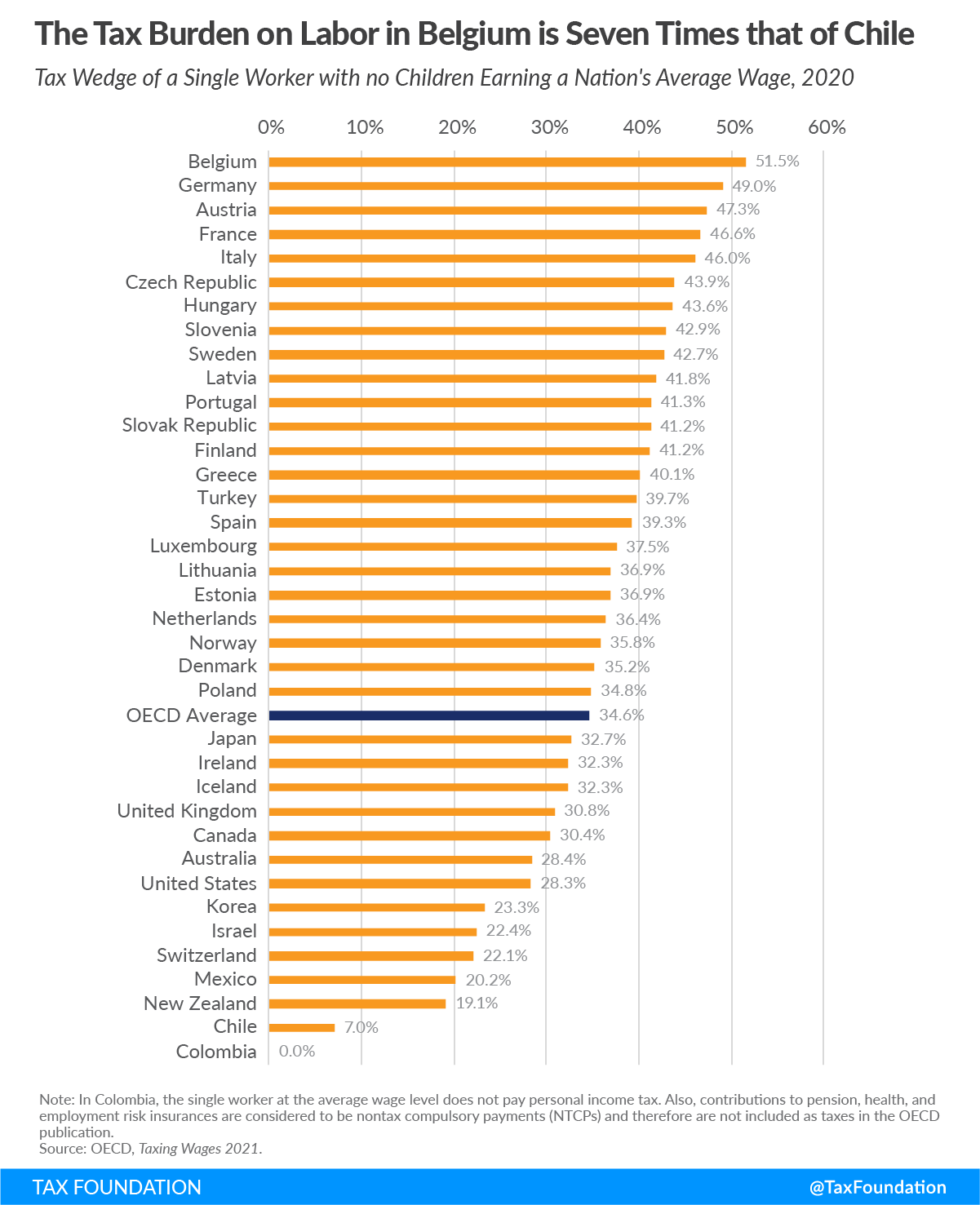
Several trillion dollars in new spending proposals make it inevitable.
So, no, the existence of spending proposals absolutely does not make it inevitable.
But, the birds eye view formula from my macro classes is MV = PY, where M is the money supply, v the velocity of money, P prices, Y real GDP.
GDP is usually going up, we have more people (and we hope they are each more productive). So that means that either the money supply or velocity must go up, or prices go down (deflation). Velocity is fickle and probably interrelated with consumer expectations around P (if you think things are going deflate for one thing, you might wait longer to make a purchase hoping to pay less in nominal terms, and this has the effect of shrinking MV even more relative to PY).
Since V is hard to control directly, in practice M has to increase regularly to prevent deflation. What we saw with the pandemic was large decreases in V and unexpectedly small decreases in Y. The fed increased M and it absorbed this differential. My understanding though is that the inflation doomers think the drop in V was transitory and now we'll see a sudden spike in all that money being unlocked and circulating
Through the velocity lense, the fact that QE and stimulus checks have very different inflation effects also becomes apparent- if you give a check to someone living paycheck to paycheck, they will spend it in their local community nearly immediately and it will be passed around quite a bit before getting locked into an asset price somewhere. If you edit the banks accounts at the fed or have the fed buy assets though, it seems to go quickly into asset prices where it sits for years before leaking into the economy as a whole, with a much much lower velocity. So $1 there != $1 here in terms of increasing prices.
Secondly, printing those dollars does immediately devalue the dollar, just not to the degree you might expect.
The average American has no savings, they will not immediately renegotiate their wages upon the news that this money has been created. Therefore, their opinion about the value of the dollar has little impact. They have no dollars to sell for other things, they spend just as they used to, demand stays the same, prices are stable if not for supply issues. Stimulus checks are an exception to this, but we did see price increases in anticipation of that spending.
Those who manage wealth on the other hand already know that dollars are trash, now they are just a little bit trashier. They do not hold large dollar positions in the first place, instead they buy up all sorts of assets - stocks, bonds and real estate. This inflates prices and depresses interest rates, increasing paper wealth and encouraging cheap borrowing - exactly what the government wants.
In other words, massive inflation has existed for years, it just does not affect every part of your life equally. If you are in the market for a house, your purchasing power as a worker has been completely annihilated. If you are in the market for a hamburger, you are fine.
Past spending isn’t relevant to the claim I was responding to.
https://www.wsj.com/articles/the-3-98-trillion-trojan-horse-...
First, I don’t take exception to the Penn Wharton decision to assume permanency of a bill (though it’s odd to me when the press then refers to it as a scoring of the reconciliation proposal, when it explicitly notes that it isn’t a scoring of the proposed legislation). However, it does seem odd to me to rely on such a scoring to describe the inflation of that assumed spending as “inevitable”.
Is it fair to say it’s the goal of the Democrats pushing this legislation to make these programs permanent? Yes, that’s the goal. Does that guarantee that will be the case? As someone who wants many of these programs to become permanent, no, it’s absolutely not inevitable that these programs will become permanent.
Second, the argument was not that spending will increase, but that debt to GDP to increase. For that to be the case, you need to show that the debt will increase (and faster than GDP).
To do that, you need to consider the revenue side as well. The JCT score considers the actual proposal (not the assumed future proposal) and finds revenue that mostly offsets the spending [2]. This means the “spending proposal” would have limited impact on the deficit, and therefore the debt.
The Penn Wharton scoring does absolutely nothing to convince me of the inevitability of the debt to GDP increasing. First, it’s based on at least two pieces of hypothetical legislation. Second, it assumes no revenue changes are made when those programs are made permanent.
[1] https://static1.squarespace.com/static/55693d60e4b06d83cf793...
[2] https://www.jct.gov/CMSPages/GetFile.aspx?guid=3fbf5966-deea...
The WSJ used to not suck. I had a subscription through college up into the early 2000s and my college roommate interned for them prior to joining as a copy editor in the early 90s so I have a bit of a soft spot for what the WSJ used to be. The opinion/editorial section was always hot garbage, but it used to be the case that the articles were high quality; ever since Murdoch bought them the quality of journalism has gone to shit and now the journal is only useful to wrap fish or as the punchline to a bad joke.
I don't understand how this argument can be made in good faith. Q2 2020 GDP was down over 9% (32.9% annualized.) That that trend was transitory is shown by the 33.4% annualized growth the following quarter.
You didn't just draw a trend line from an outlier. You drew it from the single most extreme outlier in the recorded history of US GDP.
Ah yes, newton's 4th law.
Also, one of the things I don't really understand is why people in the US quote debt to GDP ratios when net debt to GDP is strictly superior.
Inflation: your cash loses real value.
Negative rates: your cash loses real value and nominal value.
Using the normal inflation measurements gives you a number around 5%. Which is all of 2% above the FED’s target. It’s a point of concern but no where near the double digit numbers people are talking about.
As to energy costs, those always fluctuate. Oil is at 81$ today and it dipped under 20$ in 2020, except in 2008 it hit 140$ even ignoring inflation.
Oil price is also not a good gauge of inflation because it’s heavily controlled and doesn’t always reflect what you see at the pumps. When oil went to negative in 2020 you didn’t see free gas, maybe slightly cheaper, but no where near the change in crude/WTI prices.
So yep nobody knows real inflation out to even 3 decimal places, but that’s not a big deal in practice.
Also I am not sure whether the decision to hyper-inflate is in Fed's hands. If inflation continues to rise faster than anticipated (contrary to what Powell said on Wednesday) then the Fed is caught between a rock and a hard place as the only feasible course of action will be to hike rates substantially and inevitably trigger a market correction. I leave you with this little chart I like: https://i.imgur.com/dIJXesa.png

"Pulling a Japan" and "Hyperinflating" are not choices that bureaucrats can dictate will or will not happen.
But the record is pretty clear, there are a limited ways out of this situation.
1) Default on your debt : The US is never going to do this. It would be insane given the global position of the dollar and the fact that the fed can always buy treasuries to finance debt
2) Run persistently high inflation: This is how the US managed it's debt after WW2 : Real rates were around -15% for the better part of the decade. And at the end bond holders were screwed and the country was solvent.
3) Hyper inflate : basically off the table for the dollar given the huge structural demand for dollars and also going back to the point that the Fed doesn't want to short term implode all global capital markets.
4) Pull a japan and have no growth for a third of a century.
The easy choice is # 2. We have to have inflation. The supply chain stuff is just a detail.
CPI for energy is 25% percent right now. I've seen a figure for housing sales prices at around 17. Spy is up 33% year on year. Bitcoin is up I think about 600 yoy. The inflation writing is on the wall.
https://www.bls.gov/charts/consumer-price-index/consumer-pri...