The Tesla numbers are correct and verifiable, actually. The problem is that the EPA "highway" test is designed to capture the "average highway mile" driven by a US vehicle (which makes sense, it was designed to inform purchasers of aggregate fuel use). Here's the driving schedule:
https://www.epa.gov/sites/production/files/2015-10/hwfetdds....
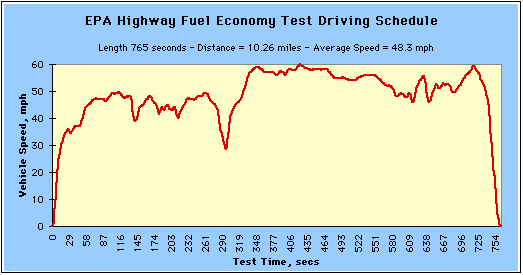
Note that it never goes above 60mph, and spends most of its time between 40 and 50. This isn't wrong, but it corresponds to an urban highway commute (again, which is pretty much the "average highway mile").
The problem is that this does NOT match what typical consumers think of as "highway driving", meaning blasting 75mph+ down an open road. So people get in their Model 3's and measure their consumption at those speeds and it doesn't match.
And it's true that other EV manufacturers (Ford, especially -- the Mach E actually does somewhat better than sticker consumption on the highway) chose not to run the full test and used other methods that put a higher number on their stickers. And in context that's probably more informative.
But nothing was "rigged". In fact Teslas in stop-and-go urban commute traffic really do get close to their sticker mileage. It's just that no one cares because one's battery doesn't run out on an urban commute before you get home to charge it. Ironically, EV owners in this case care LESS about efficiency than gas owners.
There are caveats. The lower end Model 3s hit their estimates pretty reliably. The Performance trim usually misses by a pretty big margin for most people. There are exceptions to every rule, but I owned a P3D and hung out with other P3D owners as well, and this was a commonly shared experience.
IIRC there was some youtube video a year or two back that tested a few variants on a track using what they claimed to be a replica of the EPA highway test, and the cars came out almost dead on.
There have been some independent tests and IIRC the consensus is that the standard range Model 3 was rated pretty accurately, and the Performance trim was rated something like 25-30 miles too high compared to reality.
But again, you're using the words "on the highway" to reflect what I assume to be your driving habits in rural open road conditions and not the test that was actually performed to produce the numbers in the product specs. And that was my point. It's not about advertising fidelity at all, it's about regulation and its mismatch with the expectations of a modern EV driver.
By that you must mean Tesla bothers to do the full suite of EPA tests instead of accepting a somewhat penalizing multiplier, like how other manufacturers do?
There's no rigging whatsoever and the same option is available for other manufacturers as well. If they bother to do the longer and more demanding test cycle, that is.
My old 2010 Prius was EPA-rated for 50 MPG. If I drove it with kid gloves over flat terrain, I could hit that mileage. If I drove it in a way that doesn't piss other road users off, I would get closer to 46 MPG.
If I was doing 80+ MPH over the Rockies on the Trans-Canada, I'd be getting a cool 35 MPG, because air resistance is very high at those speeds, and because most of my braking was exceeding the regenerative capacity of the car.
Model Y will blow the doors off the Nexo in performance due to much larger electric motors.