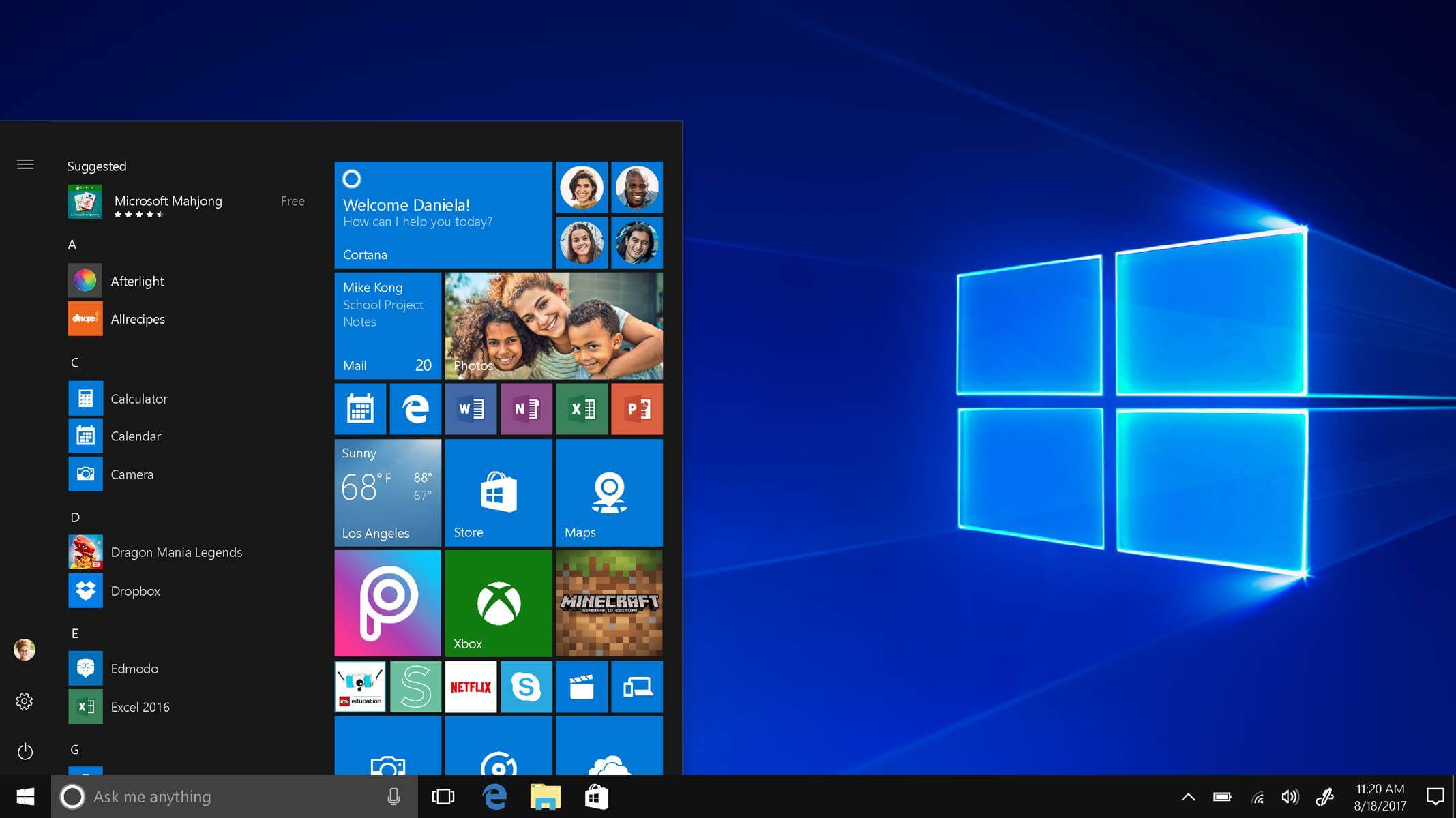
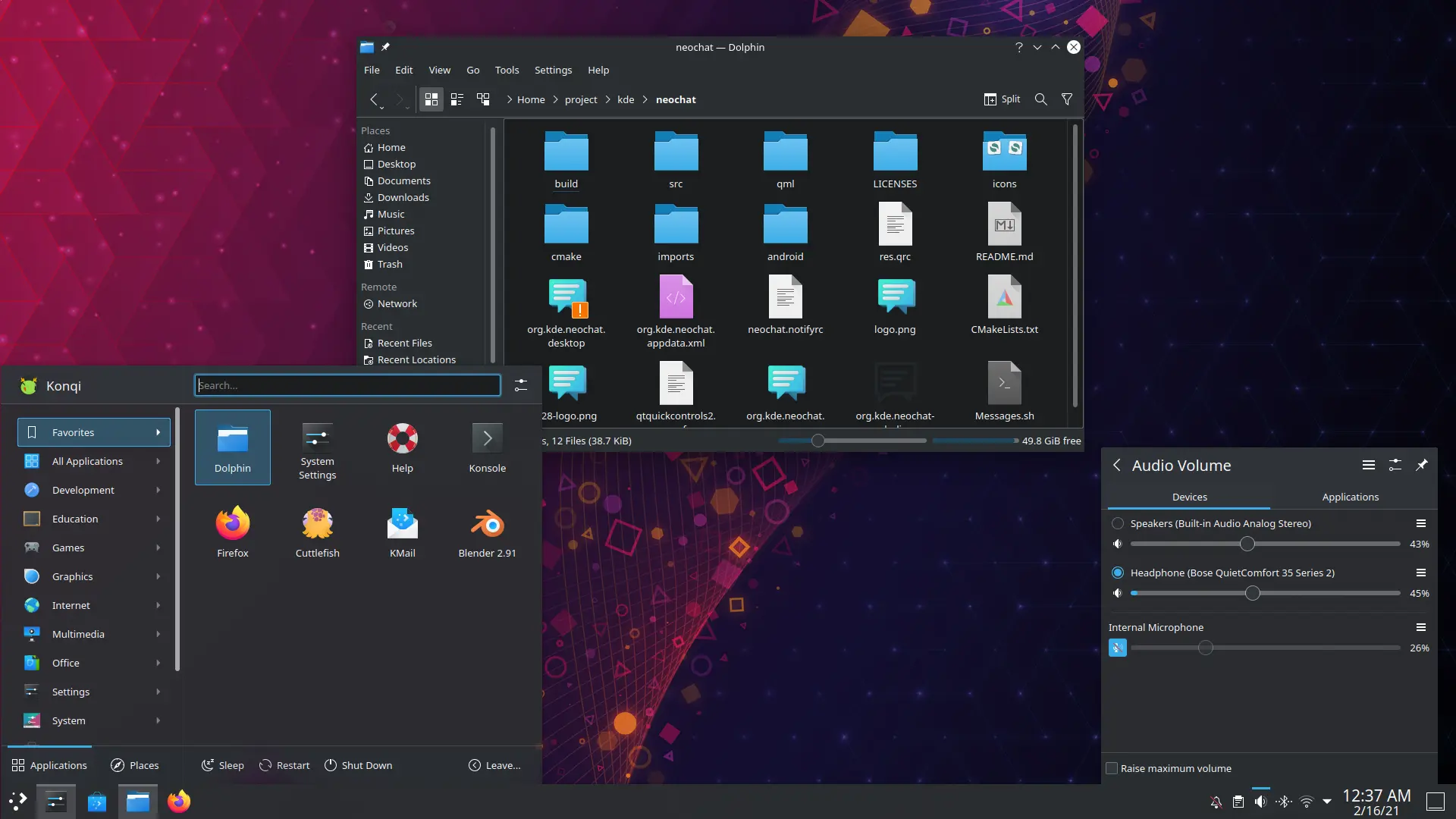
Perhaps by "dock" you are referring to using an icon-based taskbar rather than one that also contains the window title? That's not what most people mean by a dock.
[1] https://cdn.windowsreport.com/wp-content/uploads/2018/11/win...
[2] https://kde.org/announcements/plasma/5/5.21.0/plasma-dark.we...
[3] I don't think it would be fair at all to call ChromeOS's taskbar a dock. The icons are centered like a dock, but they're in a full-width bar that also contains many other buttons and indicators. https://upload.wikimedia.org/wikipedia/en/c/c9/A_screenshot_...

[4] https://www.gnome.org/wp-content/uploads/2021/03/overview.pn...
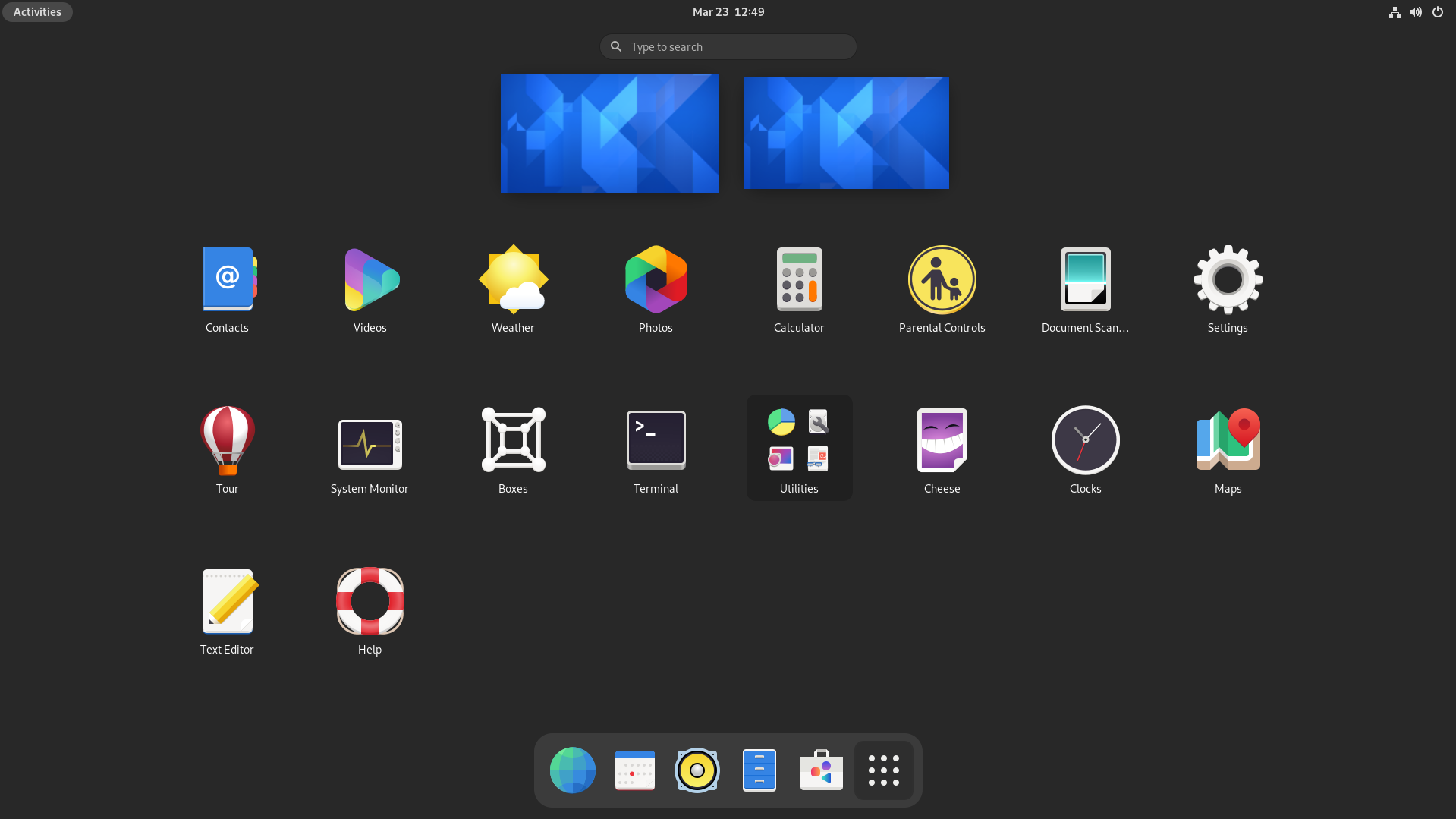

The macOS dock distinguishes itself aesthetically precisely by not being a taskbar with other functions and features. Every other taskbar implementation, even the ones that use icons (an approach that predates the Apple dock), sees it as important to not waste space and provide indicators and useful widgets on the same bar.
The "dock" approach is distinct in that it contains only large friendly application buttons, and doesn't use the full width of the screen. The thin taskbars common to other operating systems which also frequently use icons to switch applications shouldn't be considered docks, if for no other reason than that they predate Apple's approach. As you pointed out in your other comment, clicking on one of the icons doesn't even do the same thing in Windows as on macOS, and the task switcher part of the taskbar is the most comparable thing between taskbars and Apple's dock.
It’s true the Windows taskbar also does other things. But that’s not really my point. Gnome 2 didn’t have a component that acted like a dock.
Maybe, though it was probably inspired by a merger of the dock, which was not introduced by Apple but by NeXT in NeXTstep 1.0 (well, before 1.0, really), and the graphical shell menu/status bar in MacOS which MacOS had long before it had a dock, which it didn't get until OSX; the Windows task bar approximately merges those functions (but doesn't also serve as an application menu bar the way the MacOS one does.)
I don't really trust GNOME and KDE to have done actual UI research. Maybe Google did, but given the Android experience, I strongly doubt it.
So that leaves Apple as believing in the dock, Microsoft with their task bar thing they've had ever since Win95, and everyone else copying Apple. So it might be the settled approach, but "best" seems like it is really overselling it. It seems to me everyone beside Microsoft thinks that Apple's approach is good enough that they can't think of a better one. (Which is fine by me, I like the dock as long as it hides properly)
Starting with Windows 7, Microsoft merged the functionality of launching apps into the taskbar buttons. This way, when you "pin" an app to the taskbar and then click on the pinned item, the pinned item became the taskbar button which represented the running app. This is how the Mac dock works. I think that the only major feature of the Mac dock that Microsoft doesn't offer is "recent apps" but I could be forgetting something since I haven't used Windows for work in a while.
In the end, as per usual, Microsoft lets you have it both ways. If you want a dock you can leave the taskbar configured as default (grouping taskbar buttons and collapsing them into a single button) or you can turn that off and have the original taskbar functionality. If you add something like 7+ Taskbar Tweaker you can even ungroup them, drag and drop taskbar buttons to re-organize them and enable "middle click" to close the window represented by the taskbar buttons like you would with browser tabs.
When I moved my workstations/work laptop all to Manjaro/XFCE I was happily surprised to find that XFCE taskbar has all the features of 7+ Taskbar Tweaker. I don't know what XFCE's design philosophy is, but if I had to guess it's "Implement all the desirable features of Windows in a minimalist fashion and add features for power users."
https://ubuntu-mate.org/features/panel/
Linux Mint has a MATE flavor, so it too might have it.