One major difference in US soft power is, they don't censor media critical of them to an extent even close to what CCP does. Look at the commentary on the pointless Vietnam War originating from US in their media, try to find something similar on PRC's pointless war in Vietnam which they lost.
[1] https://www.les-crises.fr/wp-content/uploads/2014/06/sondage...
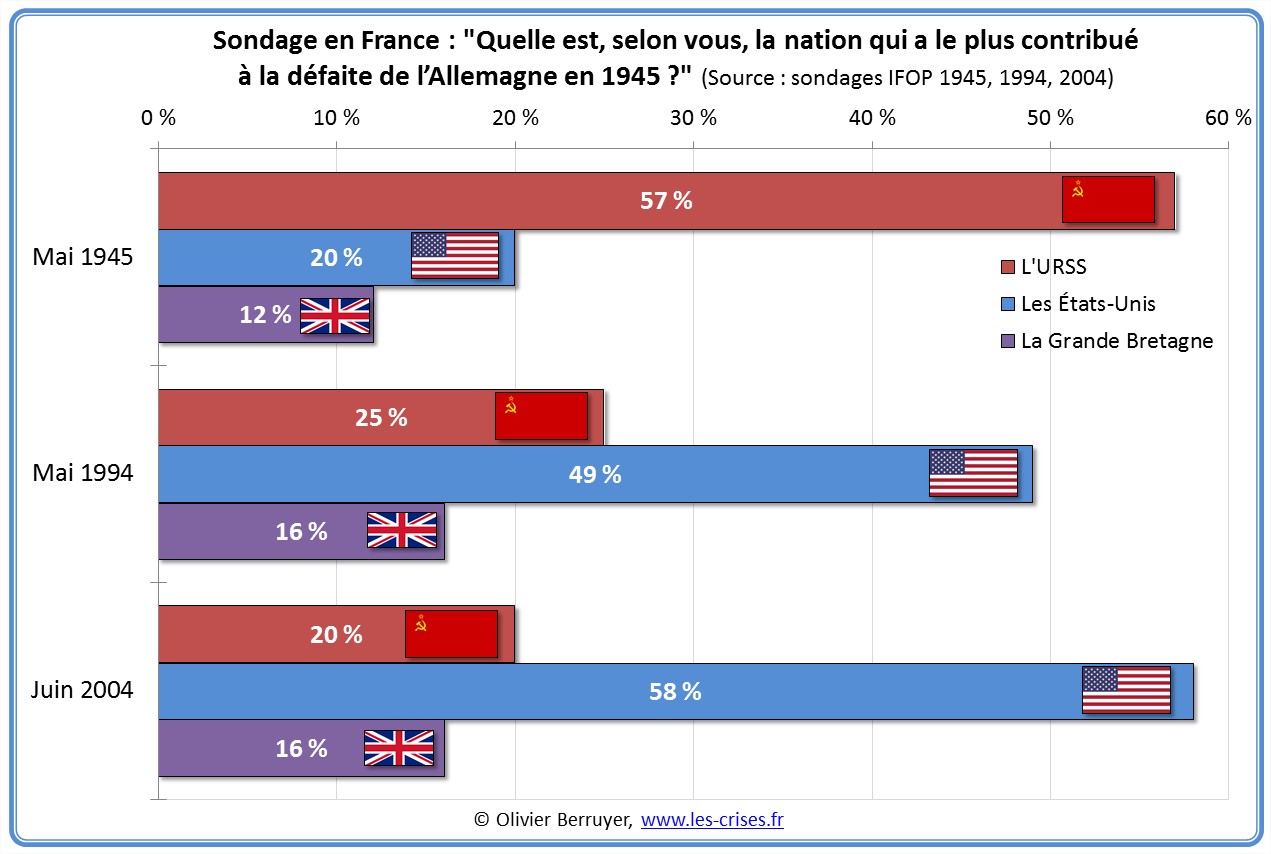
The US government doesn't engage in direct censorship like the Chinese government but it does have some power, in practice, to shape its portrayal in the media. The Pentagon pulled production assistance from The Hurt Locker because it didn't like certain aspects of how the military was portrayed[1], as is their right of course. Most films cannot afford this luxury. The relationship between the state and the press is also closer than many think, particularly when it comes to briefings from the intelligence community.
Social media companies like Twitter and Facebook admittedly do a pretty good job of allowing a wide range of views to be expressed, although this comes at the price of allowing massive amounts of disinformation as well.
>try to find something similar on PRC's pointless war in Vietnam which they lost.
How about this one? https://en.wikipedia.org/wiki/Youth_(2017_film)
[1] https://www.latimes.com/archives/la-xpm-2010-feb-25-la-et-hu...
Shining at its best, in terms of making a product that just sells well without the state taking much efforts at it. Like in case of WW2, they just made movies which glorify US's contribution at the expense of others, the product sold well because it was well made. So their role got pushed in the minds of people even outside US.
> How about this one? https://en.wikipedia.org/wiki/Youth_(2017_film)
I read the synopsis, it doesn't seem like anything critical of their role in the war or need for it or their defeat. It talks about how they won bravery medals there and then it seems like a drama around love/work life.
Watch the Vietnam War documentary by Ken Burns/PBS, that's the sort of media I am talking about.
That description seems like description of any war movie in general. While you are right about not everything has to be a documentary, my example was related to critical content like that.
To give an example which would be possibly more clear is, look at the current protests in HK. Do media in PRC cover the HKers side fairly on what they are demanding, the magnitude of ground support for the movement in HK, the excesses committed by the HK police daily? Contrast this with BLM protests where most coverage is anti establishment.
Is it possible, that rather than being a massive cover-up, that war simply wasn't a generation-defining moment for them?
Also: https://en.wikipedia.org/wiki/Sino-Vietnamese_War#Chinese_me...
Agreed. The CCP's censorship is an exhibition of weakness.
While it is currently tumultuous, there's an argument that the introspective and critical nature of US culture is a strength.