All this means that it isn't really evident that money doesn't translate into better results. It isn't strictly funding, that is true - poverty seriously affects how well students can perform, for example - but it should be quite obvious that a school that cannot afford maintenance, proper computers for students to learn on, or enough staff so that classes are a manageable size can't really teach as well as a moderately funded school.
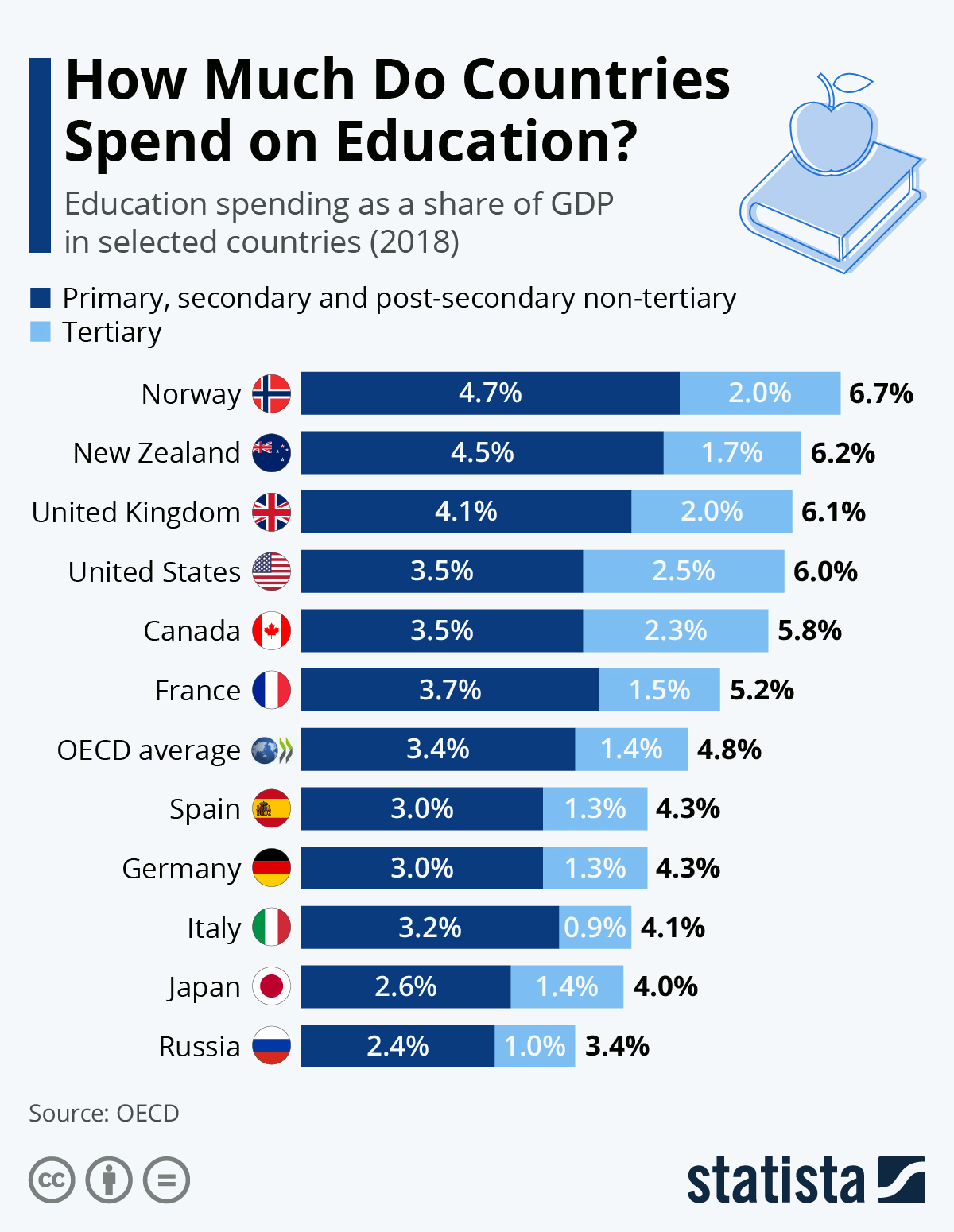
Some of the worst cities have the beat funded schools. Minneapolis spends as much per student as Switzerland. Baltimore spends more, and spends as much of more than the rich suburban schools around it. The US also has relatively low rates or private K-12 compared to the Scandinavian countries, the Netherlands, Belgium, etc.
"According to the Washington thinktank the National Center on Education and the Economy (NCEE), the average student in Singapore is 3.5 years ahead of her US counterpart in maths, 1.5 years ahead in reading and 2.5 in science. Children in countries as diverse as Canada, China, Estonia, Germany, Finland, Netherland, New Zealand and Singapore consistently outrank their US counterparts on the basics of education."
https://www.theguardian.com/us-news/2018/sep/07/us-education...